
How the Moon Turned Itself Inside Out
More than 50 years ago, Apollo astronauts brought basaltic lava rocks back from the moon with surprisingly high concentrations of titanium. Later, satellite observations found that these titanium-rich volcanic rocks are primarily located on the moon's nearside - but how and why they got there has remained a mystery – until now.How the Moon Turned Itself Inside Out

By Daniel Stolte, University Communications - April 8, 2024
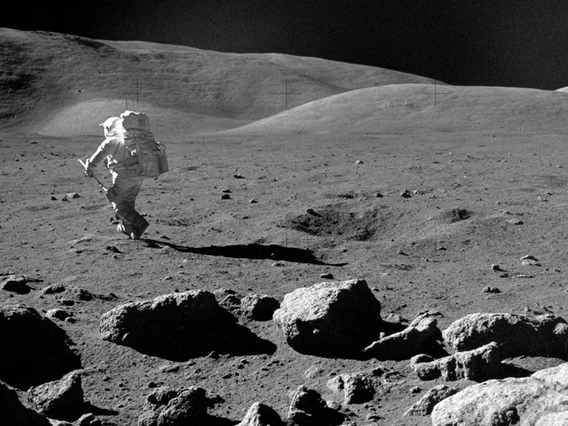
About 4.5 billion years ago, a small planet smashed into the young Earth, flinging molten rock into space. Slowly, the debris coalesced, cooled and solidified, forming our moon. This scenario of how the Earth's moon came to be is the one largely agreed upon by most scientists. But the details of how exactly that happened are "more of a choose-your-own adventure novel," according to researchers in the University of Arizona Lunar and Planetary Laboratory who published a paper in Nature Geoscience. The findings offer important insights into the evolution of the lunar interior, and potentially for planets such as the Earth or Mars.
Most of what is known about the origin of the moon comes from analyses of rock samples, collected by Apollo astronauts more than 50 years ago, combined with theoretical models. The samples of basaltic lava rocks brought back from the moon showed surprisingly high concentrations of titanium. Later satellite observations found that these titanium-rich volcanic rocks are primarily located on the moon's nearside, but how and why they got there has remained a mystery – until now.
Because the moon formed fast and hot, it was likely covered by a global magma ocean. As the molten rock gradually cooled and solidified, it formed the moon's mantle and the bright crust we see when we look up at a full moon at night. But deeper below the surface, the young moon was wildly out of equilibrium. Models suggest that the last dregs of the magma ocean crystallized into dense minerals including ilmenite, a mineral containing titanium and iron.

Schematic illustration with a gravity gradient map of the lunar nearside and a cross-section showing two ilmenite-bearing cumulate downwellings from lunar mantle overturn.
Adrien Broquet/University of Arizona & Audrey Lasbordes
"Because these heavy minerals are denser than the mantle underneath, it creates a gravitational instability, and you would expect this layer to sink deeper into the moon's interior," said Weigang Liang, who led the research as part of his doctoral work at LPL.
Somehow, in the millennia that followed, that dense material did sink into the interior, mixed with the mantle, melted and returned to the surface as titanium-rich lava flows that we see on the surface today.
"Our moon literally turned itself inside out," said co-author and LPL associate professor Jeff Andrews-Hanna. "But there has been little physical evidence to shed light on the exact sequence of events during this critical phase of lunar history, and there is a lot of disagreement in the details of what went down – literally."
Did this material sink as it formed a little at a time, or all at once after the moon had fully solidified? Did it sink into the interior globally and then rise up on the near side, or did it migrate to the near side and then sink? Did it sink in one big blob, or several smaller blobs?
"Without evidence, you can pick your favorite model. Each model holds profound implications for the geologic evolution of our moon," said co-lead author Adrien Broquet of the German Aerospace Center in Berlin, who did the work during his time as a postdoctoral research associate at LPL.
In a previous study, led by Nan Zhang at Peking University in Beijing, who is also a co-author on the latest paper, models predicted that the dense layer of titanium-rich material beneath the crust first migrated to the near side of the moon, possibly triggered by a giant impact on the far side, and then sunk into the interior in a network of sheetlike slabs, cascading into the lunar interior almost like waterfalls. But when that material sank, it left behind a small remnant in a geometric pattern of intersecting linear bodies of dense titanium-rich material beneath the crust.
"When we saw those model predictions, it was like a lightbulb went on," said Andrews-Hanna, "because we see the exact same pattern when we look at subtle variations in the moon’s gravity field, revealing a network of dense material lurking below the crust."
In the new study, the authors compared simulations of a sinking ilmenite-rich layer to a set of linear gravity anomalies detected by NASA's GRAIL mission, whose two spacecraft orbited the moon between 2011 and 2012, measuring tiny variations in its gravitational pull. These linear anomalies surround a vast dark region of the lunar near side covered by volcanic flows known as mare (Latin for "sea").

The lunar near side with its dark regions, or “mare,” covered by titanium-rich volcanic flows (center) makes up the moon’s familiar sight from Earth (left). The mare region is surrounded by a polygonal pattern of linear gravity anomalies (blue in image on the right) interpreted to be the vestiges of dense material that sank into the interior. Their presence provides the first physical evidence for the nature of the global mantle overturn more than 4 billion years ago.
Adrien Broquet/University of Arizona
The authors found that the gravity signatures measured by the GRAIL mission are consistent with ilmenite layer simulations, and that the gravity field can be used to map out the distribution of the ilmenite remnants left after the sinking of the majority of the dense layer.
"Our analyses show that the models and data are telling one remarkably consistent story," Liang said. "Ilmenite materials migrated to the near side and sunk into the interior in sheetlike cascades, leaving behind a vestige that causes anomalies in the moon's gravity field, as seen by GRAIL."
The team's observations also constrain the timing of this event: The linear gravity anomalies are interrupted by the largest and oldest impact basins on the near side and therefore must have formed earlier. Based on these cross-cutting relationships, the authors suggest that the ilmenite-rich layer sank prior to 4.22 billion years ago, which is consistent with it contributing to later volcanism seen on the lunar surface.
"Analyzing these variations in the moon's gravity field allowed us to peek under the moon's surface and see what lies beneath," said Broquet, who worked with Liang to show that the anomalies in the moon’s gravitational field match what would be expected for the zones of dense titanium-rich material predicted by computer simulation models of lunar overturn.
Lopsided moon
While the detection of lunar gravity anomalies provides evidence for the sinking of a dense layer in the moon’s interior and allows for a more precise estimate of how and when this event occurred, what we see on the surface of the moon adds even more intrigue to the story, according to the research team.
"The moon is fundamentally lopsided in every respect," Andrews-Hanna said, explaining that the near side facing the Earth, and particularly the dark region known as Oceanus Procellarum region, is lower in elevation, has a thinner crust, is largely covered in lava flows, and has high concentrations of typically rare elements like titanium and thorium. The far side differs in each of these respects. Somehow, the overturn of the lunar mantle is thought to be related to the unique structure and history of the near side Procellarum region. But the details of that overturn have been a matter of considerable debate among scientists.
"Our work connects the dots between the geophysical evidence for the interior structure of the moon and computer models of its evolution," Liang added.
"For the first time we have physical evidence showing us what was happening in the moon’s interior during this critical stage in its evolution, and that's really exciting," Andrews-Hanna said. "It turns out that the moon’s earliest history is written below the surface, and it just took the right combination of models and data to unveil that story."
"The vestiges of early lunar evolution are present below the crust today, which is mesmerizing," Broquet said. "Future missions, such as with a seismic network, would allow a better investigation of the geometry of these structures."
Liang added: "When the Artemis astronauts eventually land on the moon to begin a new era of human exploration, we will have a very different understanding of our neighbor than we did when the Apollo astronauts first set foot on it."
UA News - How the Moon Turned Itself Inside Out
Teams Behind OSIRIS-REx Win Prestigious Aviation Award
The team behind the University of Arizona-led NASA mission to sample the asteroid Bennu joins the ranks of the Apollo 11 crew and Orville Wright to earn the Robert J. Collier Trophy.Teams Behind OSIRIS-REx Win Prestigious Aviation Award

By Mikayla Mace Kelley, University Communications - March 26, 2024
The University of Arizona, NASA and Lockheed Martin have won the Robert J. Collier Trophy for their work on the OSIRIS-REx mission that returned a sample of the asteroid Bennu last fall.
The National Aeronautic Association, which gives the award every year, made the announcement Tuesday. The Collier Trophy, awarded since 1911, is one of the most prestigious honors in aviation, recognizing the "performance, efficiency and safety of air or space vehicles."
In earning the trophy, the OSIRIS-REx team joins ranks that include the team behind the James Webb Space Telescope and the crew of NASA's Apollo 11 mission, as well as legendary aviators such as Orville Wright and Chuck Yeager. The list of Collier recipients represents a timeline of the most groundbreaking aviation achievements that created today's aerospace industry.
"It's an awesome crowd to be affiliated with," said Dante Lauretta, OSIRIS-REx principal investigator and a Regents Professor of planetary sciences at the UArizona Lunar and Planetary Laboratory. "It hammers home the magnitude of the accomplishment. I always understood we were doing something important, but it shows the recognition the country and world is bestowing upon us."
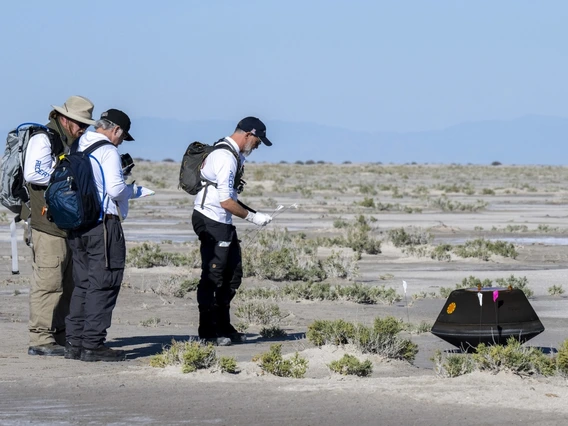
The OSIRIS-REx spacecraft delivered 4.29 ounces, or 121.6 grams, of rocks and dust from the near-Earth asteroid Bennu on Sept. 24. The delivery, shot back to Earth in a capsule to scientists waiting in the Utah desert, was a first in U.S. history, and the largest sample returned since the Apollo missions.
The sample delivery went according to plan thanks to the massive effort of hundreds of people who remotely directed the spacecraft's seven-year journey to Bennu and back, starting with launch on Sept. 8, 2016. The team guided it to arrival at Bennu on Dec. 3, 2018, followed by the search for a safe sample-collection site in 2019 and 2020, sample collection on Oct. 20, 2020, and the return trip home starting on May 10, 2021. During the asteroid encounter, the team set new Guinness World Records for smallest object orbited and closest orbit achieved by a spacecraft.
Initial studies of the Bennu sample in October showed evidence of water-bearing minerals and high carbon content, indicating the building blocks of life might be found in the rock. A sample of the asteroid is available for the public to see at the UArizona's Alfie Norville Gem & Mineral Museum.
"I have been avidly following the progress of OSIRIS-REx ever since I came to the University of Arizona, and it was such an incredible moment to witness the delivery of the asteroid sample," said University of Arizona President Robert C. Robbins. "I am proud to see the outstanding achievements of the OSIRIS-REx team recognized with the Robert J. Collier Trophy.
The work this team has done to advance the knowledge of our solar system and its origin is awe-inspiring, and the Collier Trophy is richly deserved." "The award really focuses on accomplishments within the last year," Lauretta said. "The entry, descent, and landing of the sample return capsule in the fall allowed the Air Force to test and calibrate sensors for other incoming hazards."
The mission also provided unprecedented insight into potentially hazardous near-Earth asteroids like Bennu through the science team's characterization of the Yarkovsky effect, a small amount of thrust generated by heat from the sun being radiated off an asteroid's surface. The team also developed a natural feature tracking system, which is onboard software for targeting the sample site and hazard avoidance during sample collection. As a result, OSIRIS-REx became the first mission to fly image-based guidance in deep space.
UArizona-led science and operations teams supported the spacecraft navigators at NASA Goddard Space Flight Center, KinetX and Lockheed Martin in achieving these successes.
Ultimately, the mission wrapped on time and exceeded the mission sample requirement laid out by NASA, Lauretta said.
UA News - Teams Behind OSIRIS-REx Win Prestigious Aviation Award
Loathed By Scientists, Loved By Nature: Sulfur and The Origin Of Life
A University of Arizona-led study shines a spotlight on sulfur, a chemical element that, while all familiar, has proved surprisingly resistant to scientific efforts in probing its role in the origin of life.Loathed By Scientists, Loved By Nature: Sulfur and The Origin Of Life

By Daniel Stolte, University Communications - March 13, 2024
Many artists have tried to depict what Earth might have looked like billions of years ago, before life made its appearance. Many scenes trade snow-covered mountains for lava-gushing volcanoes and blue skies for lightning bolts pummeling what's below from a hazy sky.
But what did early Earth actually look like? This question has been the subject of intense scientific research for decades.
A publication led by Sukrit Ranjan, an assistant professor in the University of Arizona's Lunar and Planetary Laboratory, shines a spotlight on sulfur, a chemical element that, while all familiar, has proved surprisingly resistant to scientific efforts in probing its role in the origin of life.
"Our picture of early Earth is pretty fuzzy," said Ranjan, who explores sulfur concentrations in early Earth's waters and atmosphere. The same processes that make our planet habitable – liquid water and plate tectonics – constantly destroy the rocks that hold Earth's geologic record, he argues. "It's great for us because it recycles nutrients that would otherwise be locked up in Earth's crust, but it's terrible for geologists in the sense that it removes the messengers."
Published in the journal AGU Advances in December, Ranjan's paper was selected as an editor's highlight, in recognition of "experiments that were extremely difficult to perform but provide constraints for ongoing laboratory prebiotic chemistry experiments."
At the core of efforts to pull back the curtain on the emergence of life on Earth has been a concept known as the "RNA world," Ranjan said, referring to ribonucleic acid, a class of molecules that are present in every living cell and crucial to life as we know it.
The RNA world hypothesis is based on an interesting feature of modern biology, which is that of the four major categories of biomolecules – amino acids, carbohydrates, lipids and nucleic acids – RNA is the only one that can perform the role of an enzyme and the storage and replication of genetic information, by making copies of itself, all by itself. There’s just one problem: It's really hard to make.
"For about 50 years, people have tried to figure out how to make RNA without enzymes, which is how biology does it," Ranjan said, explaining that it wasn't until the last five years that researchers figured out non-enzymatic pathways to make RNA.
"If we can get RNA, then on the far horizon we see a pathway to get everything else going," he said. "And this begs the question: Was this molecule actually available earlier in any quantities whatsoever? And this is actually a major open question."
Recently, scientists have completed a half-century quest to make RNA molecules without biological enzymes, a huge step forward to demonstrating the RNA world. However, these chemical pathways all rely on a critical sulfur molecule, called sulfite. By studying rock samples from some of Earth's oldest rocks, scientists know there was plenty of sulfur to go around on the early, prebiotic Earth. But how much of it was in the atmosphere? How much of it ended up in water? And how much of it ended up as RNA-producing sulfite? Those are the questions Ranjan and his team set out to answer.
"Once it's in the water, what happens to it? Does it stick around for a long time, or does it go away quickly?" he said. "For modern Earth we know the answer – sulfite loves to oxidize, or react with oxygen, so it'll go away super-fast."
By contrast, as geological evidence indicates, there was very little oxygen in early Earth's atmosphere, which could have allowed sulfite to accumulate and last much longer. However, even in the absence of oxygen, sulfite is very reactive, and many reactions could have scrubbed it from the early Earth environment.
One such reaction is known as disproportionation, a process by which several sulfites react with each other, turning them into sulfate, and elemental sulfur, which are not useful for origin-of-life chemistry. But how fast is this process? Would it have allowed for sufficient quantities of sulfites to build up to kickstart life?
"No one has actually looked into this in depth outside of other contexts, mainly wastewater management," Ranjan said.
His team then set out to investigate this problem under various conditions, an effort that took five years from designing the experiments to publishing the results.
"Of all the atoms that stock the prebiotic shipyard, including carbon, hydrogen, nitrogen, oxygen, phosphorus and sulfur, sulfur is perhaps the thorniest," wrote Sonny Harman of NASA's Ames Research Center, in a viewpoint article accompanying the publication. Because of its eagerness to enter into chemical reactions, "sulfur compounds tend to be more unstable, posing hazards to lab personnel and equipment, clogging up instrumentation and gumming up experiments."
A lab tech's nightmare
In their setup, Ranjan and his co-authors dissolved sulfite in water at various levels of acidity or alkalinity, locked it into a container under an oxygen-free atmosphere and let it "age," as Ranjan put it. Every week, the team measured the concentrations of various sulfites with ultraviolet light. At the end of the experiment, they subjected them to a suite of analyses, all geared toward answering a relatively simple question, he said: "Just how much of this original molecule is left, and what did it turn into?"
Sulfites, it turned out, disproportionate much slower than what conventional wisdom held. Earlier studies, for example, had floated the idea of a sulfur haze engulfing the early Earth, but Ranjan's team found that sulfites break down under ultraviolet light more quickly than expected. In the absence of an ozone layer during Earth's early days, this process, known as photolysis, would have quickly purged sulfur compounds from the atmosphere and the water, albeit not quite as efficiently as the abundant oxygen in today's world.
While it's plausible that slow disproportionation could have allowed sulfites to accumulate, photolysis would have made that very unlikely except in certain environments such as shallow water pools, shaded from UV radiation, particularly if fed by surface runoff to provide mineral shields. Examples include underground pools or closed basin carbonate lakes, drainage-less depressions where sediments accumulate but water can only leave by evaporation.
"Think bodies of water like the Great Salt Lake in Utah or Mono Lake in California," Ranjan said, adding that hydrothermal environments are emerging as hot candidates for life's first appearance. Here, groundwater carrying dissolved minerals comes into contact with heat from volcanic activity, creating unique micro-environments that offer "safe spaces" for chemical process that could not occur elsewhere.
Such places can be found at mid-ocean ridges in the deep sea, but also on land, Ranjan said.
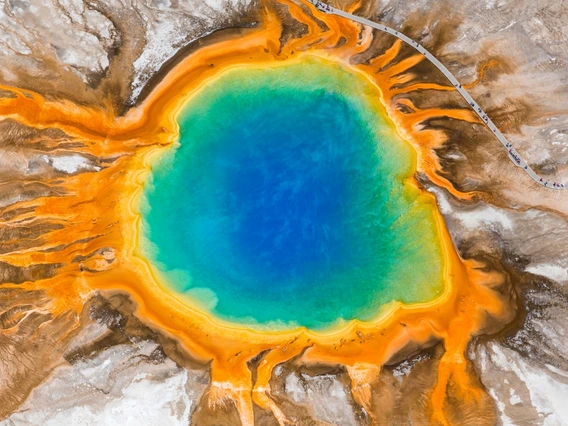
"A modern-day example of this is Yellowstone National Park, where we find pools that accumulate lots of sulfite, despite the oxygen," he said, "and that can happen just because the sulfite is continually being replenished by volcanic outgassing."
The study provides opportunities to test the hypothesis of sulfite availability in the evolution of the first molecules of life experimentally, the authors point out. Ranjan said one field of research in particular has him excited – phylogenetic microbiology, which uses genome analysis to reconstruct the blueprints of sulfur-using microorganisms believed to represent the oldest phyla on Earth.
There is evidence that these bacteria gain energy by reducing highly oxidized forms of sulfur to less oxidized ones. Intriguingly, Ranjan pointed out, they depend on a fairly complex enzyme machinery for the first step, reducing sulfate, sulfur's abundant "modern" form, to sulfite, suggesting these enzymes are the product of a long evolutionary process. In contrast, only one enzyme is involved in the conversion from sulfite – the proposed key ingredient in "prebiotic puddle environments" – to sulfide.
"If true, this implies that sulfite was present in the natural environment in at least some water bodies, similar to what we argue here," he said. "Geologists are just now turning to this. Can we use ancient rocks to test if they're rich in sulfite? We don't know the answer yet. This is still cutting-edge science."
UA News - Loathed By Scientists, Loved By Nature: Sulfur and The Origin Of Life
A Pebble Scooped from an Asteroid is now on Display at UArizona Museum
Tucson’s Alfie Norville Gem & Mineral Museum is one of only three places in the world where the public can see a piece of the asteroid Bennu, collected during NASA's LPL-led OSIRIS-REx mission.A Pebble Scooped from an Asteroid is now on Display at UArizona Museum

It might not be the heftiest or flashiest stone on display at the University of Arizona's Alfie Norville Gem & Mineral Museum, but it certainly is its most unique, if not downright alien: a piece from an asteroid in space, brought to Earth by NASA's UArizona-led OSIRIS-REx mission in September.
After seven years in space and over 4 billion miles traveled, it touched down in a remote area of the Utah desert, tucked safely inside a capsule protecting the sample from the harsh conditions in space and the rough ride through Earth's atmosphere.
The museum is one of only three places in the world to display an extraterrestrial rock sample collected in space, other than the moon. The other two samples from asteroid Bennu available for public viewing are at Space Center Houston in Texas and the Smithsonian National Museum of Natural History in Washington, D.C. Sample curation specialists at NASA's Johnson Space Center in Houston carefully selected the specimen suitable for public display, and visitors can check it out as of today.
Canister open.jpeg
 The spacecraft's sample canister with the lid open, inside a glovebox at NASA's Johnson Space Center in Houston. In all, OSIRIS-REx brought 121.6 grams (4.29 ounces) of material to Earth on Sept. 24. NASA/Johnson Space Center
"What's so special about the Bennu sample is that it was collected directly at the asteroid, in space, and that's something that we really try to help our visitors understand," said the museum's director, Violetta Wolf, explaining that while many are familiar with seeing meteorites on display, it is important to realize that those are very different.
While meteorites come from space, too, by the time they reach the ground, they have been in contact with all sorts of Earthly influences – during their fall, they are exposed to extreme heat, altering their appearance as well as possibly their structure and chemical makeup. Then they smack into the ground, sometimes digging into the soil. By the time they are found and collected, they have been exposed to the air, water, microbes and who knows what.
"To have something that actually has never been in contact with our atmosphere or anything else on our planet, is exceptional and incredibly rare," Wolf said. "We only have two pieces in the museum like that, and that's the lunar sample and now the sample from Bennu."
In all, OSIRIS-REx brought 121.6 grams (4.29 ounces) of material to Earth on Sept. 24. Of that amount, UArizona scientists received 200 milligrams (approximately 7 thousandths of an ounce) of asteroid material for scientific study. Initial analyses indicate the samples contain plentiful amounts of water locked up in minerals like clays and are also rich in carbon, nitrogen, sulfur and phosphorus.
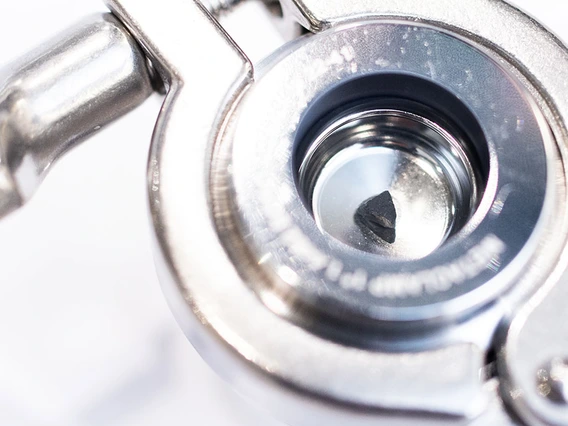
Bigger than the sand-size science samples that are currently being analyzed at the university, the specimen that NASA allocated for public display in Tucson is a small, dark pebble with well-defined structure and texture. It will go on display next to a moon rock brought to Earth by astronauts of the Apollo 15 mission.
"It's not huge, of course, but for a sample of this significance, it's actually pretty large," Wolf said, adding that the roughly pinky-nail-size display specimen is actually larger than expected.
"You can actually see it's a small pebble, very dark, almost black," she said. "It almost seems like something that you would shake out your shoe after a long hike. If you look closely, you can see some different textures in it, some different colors."
Educational samples are specifically portioned out to recognize the importance of not just the scientific research, but the potential to inspire and encourage future scientists, Wolf said.
The specimen is tucked inside a clear container held by a metal casing to protect it from mechanical damage. A protective nitrogen atmosphere protects it from being exposure to air and prevents chemical alteration.
"NASA's approach to scientific research is that it has to also benefit the public through interpretation and getting young people excited about careers in science and space-related research and technology," Wolf said. "Putting it in its display case really was a humbling moment – recognizing what just passed through our hands."
And while that small piece of asteroid Bennu will sit in its case, shielded from Earth's ever-changing environment, its story has only just begun. As OSIRIS-REx scientists are beginning to probe the stuff left over from the formation of the solar system about 4.6 billion years ago, they will make countless discoveries, and with each one, a little bit more will be known about the display sample.
"This is not a 'one and done' kind of exhibit," Wolf said. "We're going to keep adding more information as we learn. Having this on display is a huge milestone, but there's still so much to come."
As new analytic technologies become available and new papers are being published, researchers such as Dante Lauretta, the mission's principal investigator at the UArizona Lunar and Planetary Laboratory, will share those insights with the public, and Wolf and her team already look forward to updating the information on the display to share them with the public.
"Having this asteroid sample on display is a testament to the incredible achievements of the OSIRIS-REx mission and the dedication of the team behind it," Lauretta said. "It's a tangible reminder of humanity's ability to explore the cosmos and unravel the mysteries of our universe."
James Webb Space Telescope Captures the End of Planet Formation
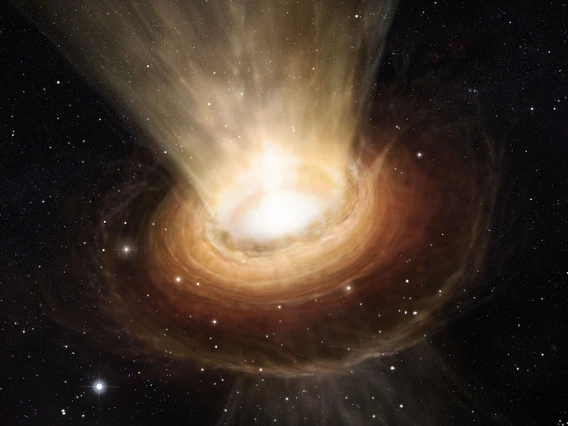
We know that there is nearly 100 times more gas than solids present when planets form. But today we see only a fraction of that gas in the solar system (stored within gas giant planets like Jupiter). So, when and how did the remaining gas leave the system? New research featuring LPL graduate student Naman Bajaj as lead author seeks to answer this exact question.James Webb Space Telescope Captures the End of Planet Formation

Scientists believe that planetary systems like our solar system contain more rocky objects than gas-rich ones. Around our sun, these include the inner planets – Mercury, Venus, Earth and Mars – the asteroid belt and the Kuiper belt objects such as Pluto.
Jupiter, Saturn, Uranus and Neptune, on the other hand, contain mostly gas. But scientists also have known for a long time that planet-forming disks start out with 100 times more mass in gas than solids, which leads to a pressing question: When and how does most of the gas leave a nascent planetary system?
A new study led by Naman Bajaj at the University of Arizona Lunar and Planetary Laboratory, published in the Astronomical Journal, provides answers. Using the James Webb Space Telescope, or JWST, the team obtained images from such a nascent planetary system – also known as a circumstellar disk – in the process of actively dispersing its gas into surrounding space.
"Knowing when the gas disperses is important as it gives us a better idea of how much time gaseous planets have to consume the gas from their surroundings," said Bajaj, a second-year doctoral student at UArizona's Lunar and Planetary Laboratory. "With unprecedented glimpses into these disks surrounding young stars, the birthplaces of planets, JWST helps us uncover how planets form."
During the very early stages of planetary system formation, planets coalesce in a spinning disk of gas and tiny dust around the young star, according to Bajaj. These particles clump together, building up into bigger and bigger chunks called planetesimals. Over time, these planetesimals collide and stick together, eventually forming planets. The type, size and location of planets that form depend on the amount of material available and how long it remains in the disk.
"So, in short, the outcome of planet formation depends on the evolution and dispersal of the disk," Bajaj said.
At the heart of this discovery is the observation of T Cha, a young star – relative to the sun, which is about 4.6 billion years old – enveloped by an eroding circumstellar disk notable for a vast dust gap, spanning approximately 30 astronomical units, or au, with one au being the average distance between the Earth and the sun.
Bajaj and his team were able, for the first time, to image the disk wind, as the gas is referred to when it slowly leaves the planet-forming disk. The astronomers took advantage of the telescope's sensitivity to light emitted by an atom when high-energy radiation – for example, in starlight – strips one or more electrons from its nucleus. This is known as ionization, and the light emitted in the process can be used as a sort of chemical "fingerprint" – in the case of the T Cha system, tracing two noble gases, neon and argon. The observations also mark the first time a double ionization of argon has been detected in a planet-forming disk, the team writes in the paper.
"The neon signature in our images tells us that the disk wind is coming from an extended region away from the disk," Bajaj said. "These winds could be driven either by high-energy photons – essentially the light streaming from the star – or by the magnetic field that weaves through the planet-forming disk."
In an effort to differentiate between the two, the same group, this time led by Andrew Sellek, a postdoctoral researcher at Leiden University in the Netherlands, performed simulations of the dispersal driven by stellar photons, the intense light streaming from the young star. They compared these simulations to the actual observations and found dispersal by high-energy stellar photons can explain the observations, and hence cannot be excluded as a possibility. That study concluded that the amount of gas dispersing from the T Cha disk every year is equivalent to that of Earth's moon. These results will be published in a companion paper, currently under review with the Astronomical Journal.
While neon signatures had been detected in many other astronomical objects, they weren't known to originate in low-mass planet-forming disks until first discovered in 2007 with JWST's predecessor, NASA's Spitzer Space Telescope, by Ilaria Pascucci, a professor at LPL who soon identified them as a tracer of disk winds. Those early findings transformed research efforts focused on understanding gas dispersal from circumstellar disks. Pascucci is the principal investigator on the most recent observing project and a co-author on the publications reported here.
"Our discovery of spatially resolved neon emission – and the first detection of double ionized argon – using the James Webb Space Telescope could become the next step towards transforming our understanding of how gas clears out of a planet-forming disk," Pascucci said. "These insights will help us get a better idea of the history and impact on our own solar system."
In addition, the group has also discovered that the inner disk of T Cha is evolving on very short timescales of decades; they found that the spectrum observed by JWST differs from the earlier spectrum detected by Spitzer. According to Chengyan Xie, a second-year doctoral student at LPL who leads this in-progress work, this mismatch could be explained by a small, asymmetric disk inside of T Cha that has lost some of its mass in the short 17 years that have elapsed between the two observations.
"Along with the other studies, this also hints that the disk of T Cha is at the end of its evolution," Xie said. "We might be able to witness the dispersal of all the dust mass in T Cha's inner disk within our lifetime."
Co-authors on the publications include Uma Gorti with the SETI Institute, Richard Alexander with the University of Leicester, Jane Morrison and Andras Gaspar with the UArizona's Steward Observatory, Cathie Clarke with the University of Cambridge, Giulia Ballabio with Imperial College London, and Dingshan Deng with the Lunar and Planetary Laboratory.
NASA's OSIRIS-REx Curation Team Clears Hurdle to Access Remaining Bennu Sample
Before this milestone, the curation team already had collected more than the 60 grams required to declare the mission a success.NASA's OSIRIS-REx Curation Team Clears Hurdle to Access Remaining Bennu Sample

NASA Johnson Space Center and University Communications - January 11, 2024
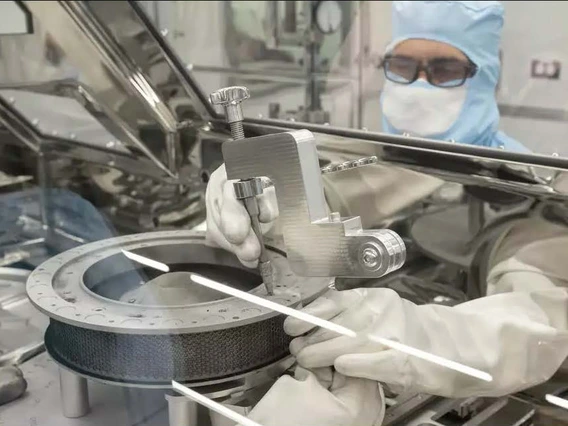
NASA's Johnson Space Center curation team members have successfully removed the two fasteners from the sampler head that had prevented the remainder of OSIRIS-REx's asteroid Bennu sample material from being accessed.
Steps now are underway to complete the disassembly of the Touch-and-Go Sample Acquisition Mechanism, or TAGSAM, head to reveal the rest of the rocks and dust delivered by NASA's first asteroid sample return mission. The mission, which launched in 2016 and spent the next seven years traveling to Bennu and imaging the asteroid before collecting the sample, returned the sample to Earth on Sept. 24.
The sample is thought to contain the leftovers from the formation of the solar system 4.5 billion years ago.
"Finally having the TAGSAM head open and full access to the returned Bennu samples is a monumental achievement that reflects the unwavering dedication and ingenuity of our team," said the mission's principal investigator, Dante Lauretta, Regents Professor at the University of Arizona Lunar and Planetary Laboratory. "This success reaffirms the significance of OSIRIS-REx and our commitment to advancing our understanding of the cosmos. We eagerly anticipate the next chapter as we share these precious samples with the global scientific community and continue our journey of discovery."
The remainder of the bulk sample will be fully visible after a few additional disassembly steps, at which point image specialists will take ultra-high-resolution pictures of the sample while it is still inside the TAGSAM head. This portion of the sample will then be removed and weighed, and the team will be able to determine the total mass of Bennu material captured by the mission.
"Our engineers and scientists have worked tirelessly behind the scenes for months to not only process the more than 70 grams of material we were able to access previously, but also design, develop and test new tools that allowed us to move past this hurdle," said Eileen Stansbery, division chief for Astromaterials Research and Exploration Science at Johnson. "The innovation and dedication of this team has been remarkable. We are all excited to see the remaining treasure OSIRIS-REx holds."
Curation processors paused disassembly of the TAGSAM head hardware in mid-October after they discovered that two of the 35 fasteners could not be removed with the tools approved for use inside the OSIRIS-REx glovebox. In response, two new multi-part tools were designed and fabricated to support further disassembly of the TAGSAM head. These tools include newly custom-fabricated bits made from a specific grade of surgical, non-magnetic stainless steel – the hardest metal approved for use in the pristine curation gloveboxes.
"In addition to the design challenge of being limited to curation-approved materials to protect the scientific value of the asteroid sample, these new tools also needed to function within the tightly confined space of the glovebox, limiting their height, weight and potential arc movement," said Nicole Lunning, OSIRIS-REx curator at Johnson. "The curation team showed impressive resilience and did incredible work to get these stubborn fasteners off the TAGSAM head so we can continue disassembly. We are overjoyed with the success."
Prior to the successful removal, the team at Johnson tested the new tools and removal procedures in a rehearsal lab. After each successful test, engineers increased the assembly torque values – or twisting force – and repeated the testing procedures until the team was confident the new tools would be able to remove the fasteners while minimizing the risk of any potential damage to the TAGSAM head or any contamination of the sample within.
Despite not being able to fully disassemble the TAGSAM head, the curation team members had already collected 2.48 ounces, or 70.3 grams, of asteroid material from the sample hardware, surpassing the agency's goal of bringing at least 60 grams to Earth. They have fulfilled all the sample requests received from the OSIRIS-REx science team so far and have hermetically sealed some of the Bennu sample for better preservation over decades, storing some at ambient temperature conditions and others at minus-112 degrees Fahrenheit.
Meanwhile, scientists at UArizona's Kuiper-Arizona Laboratory for Astromaterials Analysis have begun analyzing some of the pristine extraterrestrial material that the mission delivered from Bennu.
Later this spring, the curation team will release a catalog of the OSIRIS-REx samples, which will be available to the global scientific community.
UA News - NASA's OSIRIS-REx Curation Team Clears Hurdle to Access Remaining Bennu Sample
UArizona-led Asteroid Sampling Mission's New Journey: OSIRIS-APEX
Under the leadership of the University of Arizona's Dani Mendoza DellaGiustina, the former OSIRIS-REx spacecraft sets off on a journey to study asteroid Apophis and take advantage of the asteroid's 2029 flyby of Earth.UArizona-led Asteroid Sampling Mission's New Journey: OSIRIS-APEX

By University Communications and NASA Goddard Space Flight Center - January 8, 2024
At the end of a long-haul road trip, it might be time to kick up your feet and rest awhile – especially if it was a seven-year, 4-billion-mile journey to bring Earth a sample of asteroid Bennu.
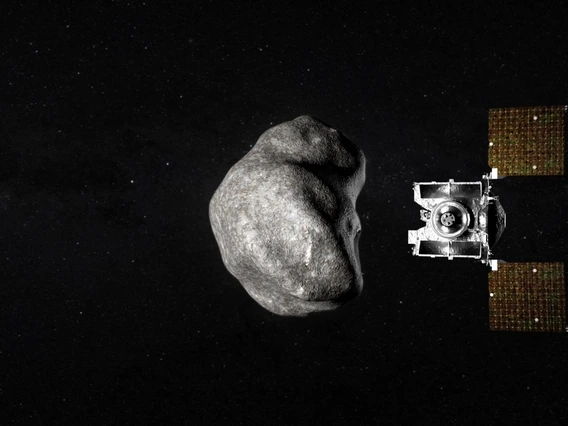
But OSIRIS-REx, the NASA mission that accomplished this feat in September, is already well on its way – with a new name – to explore a new destination, this time under the leadership of Dani Mendoza DellaGiustina, an assistant professor at the University of Arizona's Lunar and Planetary Laboratory who previously served as the deputy principal investigator of OSIRIS-REx.
When OSIRIS-REx left Bennu in May 2021 with a sample aboard, its instruments were in great condition, and it still had a quarter of its fuel left. So instead of shutting down the spacecraft after it delivered the sample, the team proposed to dispatch it on a bonus mission to asteroid Apophis, with an expected arrival in April 2029. NASA agreed, and OSIRIS-APEX (Origins, Spectral Interpretation, Resource Identification, and Security – Apophis Explorer) was born.
A rare opportunity at Apophis
After considering several destinations, including Venus and various comets, NASA chose to send the spacecraft to Apophis, an "S-type" asteroid made of silicate materials and nickel-iron – a fair bit different from the carbon-rich, "C-type" Bennu.
The intrigue of Apophis is its exceptionally close approach of our planet on April 13, 2029. Although Apophis will not hit Earth during this encounter or in the foreseeable future, the pass in 2029 will bring the asteroid within 20,000 miles (32,000 kilometers) of the surface – closer than some satellites, and close enough that it could be visible to the naked eye in the Eastern Hemisphere.
Apophis' close encounter with Earth will change the asteroid’s orbit and the length of its 30.6-hour day. The encounter also may cause quakes and landslides on the asteroid's surface that could churn up material and uncover what lies beneath.
"The close approach is a great natural experiment," DellaGiustina said. "We know that tidal forces and the accumulation of rubble pile material are foundational processes that could play a role in planet formation. They could inform how we got from debris in the early solar system to full-blown planets."
 OSIRIS-APEX mission principal investigator Dani DellaGiustina.Chris Richards/University Communications
Scientists estimate that asteroids of Apophis' size, about 367 yards (or 340 meters) across, come this close to Earth only once every 7,500 years.
"OSIRIS-APEX will study Apophis immediately after such a pass, allowing us to see how its surface changes by interacting with Earth's gravity," said Amy Simon, the mission's project scientist based at NASA's Goddard Space Flight Center in Greenbelt, Maryland.
Apophis represents more than just the opportunity to learn more about how solar systems and planets form: As it happens, most of the known potentially hazardous asteroids – those whose orbits come within 4.6 million miles of Earth – are also S-types. What the team learns about Apophis can inform planetary defense research, a top priority for NASA.
OSIRIS-APEX: Travel itinerary
By April 2, 2029 – around two weeks before Apophis' close encounter with Earth – OSIRIS-APEX's cameras will begin taking images of the asteroid as the spacecraft catches up to it. Apophis will also be closely observed by Earth-based telescopes during this time. But in the hours after the close encounter, Apophis will appear too near the sun in the sky to be observed by ground-based optical telescopes. This means any changes triggered by the close encounter will be best detected by the spacecraft.
OSIRIS-APEX will arrive at the asteroid later in April 2029, and operate in its proximity for about the next 18 months. In addition to studying changes to Apophis caused by its Earth encounter, the spacecraft will conduct many of the same investigations OSIRIS-REx did at Bennu, including using its instrument suite of imagers, spectrometers and a laser altimeter to closely map the surface and analyze its chemical makeup.
As an encore, OSIRIS-APEX will reprise one of OSIRIS-REx's most impressive acts (minus sample collection), dipping within 16 feet of the asteroid's surface and firing its thrusters downward. This maneuver will stir up surface rocks and dust to give scientists a peek at the material that lies below.
Dante Lauretta, principal investigator of the OSIRIS-REx mission, said he is excited about the extended mission as it holds the promise of uncovering new insights into the solar system's formation and planetary defense.
"As we transition from OSIRIS-REx to OSIRIS-APEX, I'm proud to pass the torch to Dani DellaGiustina and the extended mission team," he said. "OSIRIS-APEX carries the legacy of OSIRIS-REx, and I'm eager to see the discoveries it will make. This mission embodies our relentless pursuit of knowledge and the spirit of exploration."
Although the rendezvous with Apophis is more than five years away, the next milestone on its journey is the first of six close sun passes. Those near approaches, along with three gravity assists from Earth, will put OSIRIS-APEX on course to reach Apophis in April 2029.
UArizona-led Asteroid Sampling Mission's New Journey: OSIRIS-APEX - UA News
Sweating The Small Stuff: UArizona Scientists Have Begun To Study Samples From Asteroid Bennu
At the university's Kuiper-Arizona Laboratory for Astromaterials Analysis (K-ALFAA), a suite of instruments allows researchers to study the particles collected by the OSIRIS-REx mission the down to the atomic scale.Sweating The Small Stuff: UArizona Scientists Have Begun To Study Samples From Asteroid Bennu

By Daniel Stolte, University Communications - December 20, 2023
Lately, Tom Zega has been watching his caffeine intake before heading to work.
As a co-investigator of NASA's OSIRIS-REx sample analysis team, Zega is one of a small, but growing, number of scientists who have begun to work on analyzing the pristine extraterrestrial material that the University of Arizona-led mission brought back from Bennu, a near-Earth asteroid thought to be a leftover from the formation of the solar system 4.5 billion years ago.
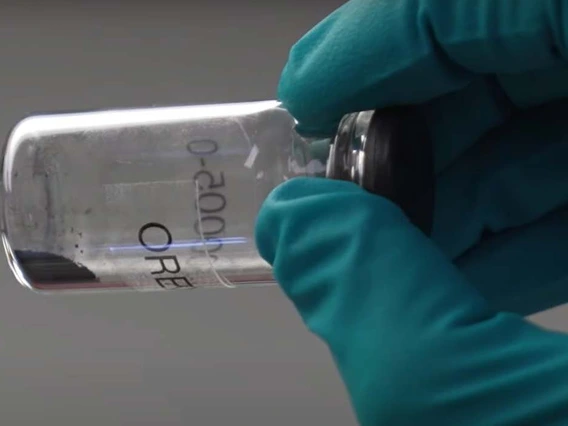
 University of Arizona scientists have received 200 milligrams – roughly seven-thousandths of an ounce – of the asteroid Bennu sample for analysis. The small particles pictured here in a concavity slide are observed under an optical microscope. Chris Richards/University Communications
Some particles in the Bennu sample are tiny, barely visible with the unaided eye, and manipulating them requires a very steady hand, said Zega, a professor of planetary science at the UArizona Lunar and Planetary Laboratory.
"I sometimes joke with my students about this – if you've had not enough caffeine or too much, your hand might be somewhat shaky, and the smaller the particle you're working with, the more careful you obviously have to be," he said. Currently, his team at LPL has been allocated about 200 milligrams of sample from Bennu – roughly seven-thousandths of an ounce.
Thanks to the extremely sophisticated equipment at UArizona's Kuiper-Arizona Laboratory for Astromaterials Analysis, they can extract a wealth of information from sample particles down to the nanogram, even picogram level, referring to a billionth or trillionth of a gram, respectively.
The team's main interest lies in how these materials found on the asteroid came to be, and what clues they hold for the origin of the planets, including Earth. A quarter of the sample, which is being curated at NASA's Johnson Space Center in Houston, may be allocated to the members of the mission’s science team, who are spread across the world, while about 70% will be preserved for researchers outside the mission team and for future generations, much like was done with the rocks and soil brought back by the astronauts of the Apollo moon landings, according to Zega.
"NASA preserved a large fraction of those samples for subsequent generations of scientists to look at, and we're still doing groundbreaking science on lunar samples that were brought back in the late 1960s and early 1970s," he said. "Just like the instruments we have now surpass the instruments that they had available at that time, in the future, we'll have instruments that surpass those that we have now."
 University of Arizona scientists have received a small portion of the asteroid Bennu sample and analysis has begun in their lab. Here, doctoral student Lucas Smith loads Bennu sample into an electron microscope for analysis. Chris Richards/University Communications
What makes these samples unique and precious is that they were collected at the place they originated, unlike meteorites, which don't make it into the lab until after a long journey to Earth's surface. Meteorites are no longer pristine because they have been exposed to heat during their fall through the atmosphere and weathering on the ground, and they could come from anywhere. They lack, as geologists say, "context."
"With these samples from Bennu, we now have all the contextual information that will enable us to study these materials at the fundamental levels and tell the story of the origins and history of asteroid Bennu," Zega said.
A suite of instruments at the LPL's lab, ranging from optical to electron microscopes allows the team to probe the sample down to the atomic scale, according to Pierre Haenecour, assistant professor of planetary science at LPL and OSIRIS-REx co-investigator.
"We literally can look at single atoms," he said. "We also have a nanoscale secondary ion mass spectrometer, or nanoSIMS for short. It allows us to look at isotopes (different variations of atoms) to understand how each particular component in the sample originated."
Early findings confirm the predictions made about Bennu from the remote survey the OSIRIS-REx spacecraft performed during two years at the asteroid, prior to going in for the sample grab.
As suggested by remote observation of the asteroid, Bennu samples contain copious amounts of water locked up in minerals like clays. The samples are also rich in carbon, nitrogen, sulfur, and phosphorous, according to LPL assistant professor Jessica Barnes, who also is an OSIRIS-REx co-investigator.
"The abundance and isotopic composition of these and other elements will allow us to investigate where in the solar system Bennu’s parent body formed and from which constituents," she said. "The study of organic molecules may help us unravel the chemical processes that turned these simple elements into complex molecules that may have helped start life on Earth and possibly elsewhere."
Training students in cutting-edge science is an important part of the OSIRIS-REx mission. The opportunity to come to the university as a graduate student and spend four or five years working on a sample from a mission as historic as OSIRIS-REx is one that Haenecour said he would have loved.
"It really is a historic opportunity to get involved in and get to do some groundbreaking science," he said.
 Discussing sample analysis measurements in the lab: doctoral students Zoë Wilbur, Lucas Smith and Iunn Ong (front to back). Chris Richards/University Communications
Working with samples of such significance comes with a responsibility that everyone takes seriously, Zega said. Getting everything right is important, and much work goes into the actual measurement itself – calibrating the instruments, taking meticulous notes and laying out the entire thought process before beginning the experiments. Some of the analytical techniques consume sample material in the process, and everyone on the sample analysis team is conscious of that, Zega said.
"I'd be lying if I said I didn't feel pressure when I'm working with one of these samples," he said, adding that when he is working in the lab, he tends to not want an audience. "Sometimes, when I have a collaborator in the lab, and we are working together, I tell them, 'I need you to not talk for the next few minutes, because we're in a really critical step here.'"
Per NASA's science requirement, the OSIRIS-REx mission was tasked with bringing 60 grams, or about two ounces, of sample to Earth. With a confirmed sample mass so far of just over 70 grams, and more sample still waiting to be extracted from the sampling head, the mission has already achieved this milestone, Zega said.
"It is very exciting to have samples from Bennu inside our labs, in the same building where the mission was first conceived by the late LPL Director Mike Drake," said Mark Marley, head of the Department of Planetary Sciences and director of LPL. "I am so proud of our faculty, staff and students who have carried his vision to completion."
The sample analysis team comprises about 200 researchers from all over the world, who coordinate the types of measurements and analyses to ensure that they maximize the science they get from the sample. Hundreds of scientific papers describing analyses of the Bennu sample are expected just in the next couple of years.
According to Haenecour, one 10-microgram particle is enough to produce science for years at a time, and the amount of sample already at UArizona is enough to keep students busy for years.
UArizona's Dante Lauretta is the principal investigator for OSIRIS-REx (formally the Origins, Spectral Interpretation, Resource Identification and Security – Regolith Explorer), and he leads the science team and the mission’s science observation planning and data processing. NASA's Goddard Space Flight Center in Greenbelt, Maryland, provides overall mission management. Lockheed Martin Space in Littleton, Colorado, built the spacecraft. Goddard and KinetX Aerospace were responsible for navigating the OSIRIS-REx spacecraft.
Sweating The Small Stuff: UArizona Scientists Have Begun To Study Samples From Asteroid Bennu - UA News
OSIRIS-REx Sample Analysis Begins at the University of Arizona - YouTube Video
Recent Volcanism on Mars Reveals a Planet More Active than Previously Thought
University of Arizona researchers reconstructed lava flows from spacecraft images and radar to better understand Mars' surprisingly turbulent history.Recent Volcanism on Mars Reveals a Planet More Active than Previously Thought

By Daniel Stolte, University Communications - December 18, 2023
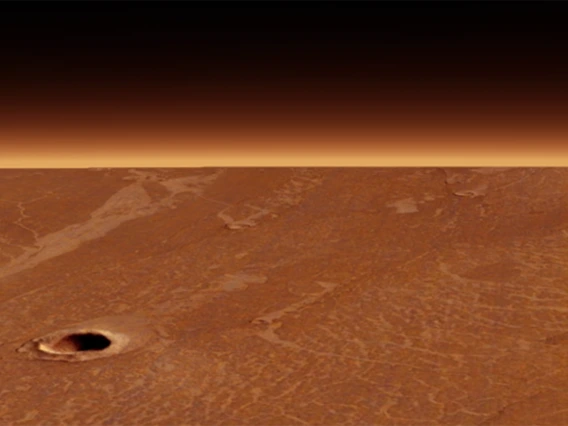
A vast, flat, "featureless" plain on Mars surprised researchers by revealing a much more tumultuous geologic past than expected, according to a study led by researchers at the University of Arizona. Enormous amounts of lava have erupted from numerous fissures as recently as one million years ago, blanketing an area almost as large as Alaska and interacting with water in and under the surface, resulting in large flood events that carved out deep channels.
Lacking plate tectonics – shifting chunks of crust that constantly reshape Earth's surface – Mars has long been thought to be a geologically "dead" planet where not much is happening. Recent discoveries have researchers questioning this notion, however. Just last year, a team of planetary scientists, also at UArizona, presented evidence for a giant mantle plume underneath the region Elysium Planitia, driving intense volcanic and seismic activity in a relatively recent past.
In the most recent study, a team led by Joana Voigt and Christopher Hamilton at UArizona's Lunar and Planetary Laboratory combined spacecraft images and measurements from ground-penetrating radar to reconstruct in three-dimensional detail every individual lava flow in Elysium Planitia. The extensive survey revealed and documented more than 40 volcanic events, with one of the largest flows infilling a valley named Athabasca Valles with almost 1,000 cubic miles of basalt.
"Elysium Planitia is the youngest volcanic terrain on the planet, and studying it helps us to better understand Mars' past as well as recent hydrological and volcanic history," the authors write in their paper. Although no volcanic activity has so far been observed on Mars, "Elysium Planitia was volcanically much more active than previously thought and might even still be volcanically alive today," said Voigt, the first author of the study, published in the Journal of Geophysical Research: Planets. A plethora of Mars quakes recorded by NASA's InSight lander between 2018 until 2022 has provided proof that beneath its surface, the red planet is anything but dead.
 The fractures of the Cerberus Fossae landscape, located in the vast plain Elysium Planitia on Mars, cut through hills and craters, indicating their relative youth. A new study providing the most detailed three-dimensional map of volcanic features in this area paints a picture of Mars as planet with a much more tumultuous geologic past than previously thought. ESA/DLR/FU Berlin
"Our study provides the most comprehensive account of geologically recent volcanism on a planet other than Earth," said Hamilton, associate professor at LPL. "It is the best estimate of Mars' young volcanic activity for about the past 120 million years, which corresponds to when the dinosaurs roaming the Earth at their peak to present."
The findings have implications for research surrounding whether Mars could have harbored life at some point in its history, according to the authors. Elysium Planitia experienced several large floods of water, and there is evidence that the outpouring lava interacted with water or ice, shaping the landscape in dramatic ways. Across Elysium Planitia, Voigt and her co-authors found ample evidence of steam explosions, interactions that are of great interest to astrobiologists because they may have created hydrothermal environments conducive to microbial life.
The team used images from the Context camera onboard NASA's Reconnaissance Orbiter, or MRO, combined with even higher-resolution images from MRO's UArizona-led HiRISE camera in selected areas. To obtain topographical information, they took advantage of data records from the Mars Orbiter Laser Altimeter on another NASA spacecraft, Mars Global Surveyor. These survey data were then combined with subsurface radar measurements taken with NASA's Shallow Radar, or SHARAD, probe.
"With SHARAD, we were able to look as deep as 140 meters (460 feet) below the surface," said Voigt, who completed the study as part of earning her doctoral degree at UArizona. She is now a postdoctoral researcher at Caltech's Jet Propulsion Laboratory, or JPL, in Pasadena, California.
"Combining the datasets allowed us to reconstruct a three-dimensional view of the study area, including what the topography was like before lava erupted from multiple cracks and filled basins and channels previously carved by running water, Voigt added."
Mars' interior is thought to be very different from Earth's, and a detailed reconstruction of its geological features provides scientists with glimpses into the processes that shaped it in the past. The relationship between volcanoes and the structure of the Martian crust is key to understanding the planet's paleo-environmental conditions, Hamilton said. In addition to water contained within the magma being flung into the atmosphere and then freezing out on the surface, a volcanic eruption can allow for a catastrophic groundwater release onto the surface.
"When there is a crack in the Martian crust, water can flow onto the surface," Hamilton said. "Because of the low atmospheric pressure, that water is likely to literally just boil away. But if there's enough water coming out during that period, you can get a huge flood that comes through, racing over the landscape and carving out these huge features that we see."
Understanding how water has moved around on Mars in the past and where it is today is a "holy grail" question, the authors said. Because the equatorial regions, where Elysium Planitia is located, are much easier to land on than the planet's higher latitudes, the presence of water and understanding mechanisms of its release inform future human missions, which will critically depend on that resource.
"Elysium Planitia is the perfect location to try to understand the link between what we see at the surface and the interior dynamics that manifested itself through volcanic eruptions," Voigt said. "I paid a lot of attention to the details on the lava surfaces to try and untangle the different eruption events and reconstruct the entire history of these geologic entities."
The team plans to continue taking advantage of large, complex datasets obtained with different imaging methods to create highly detailed, three-dimensional insights of the Martian surface and what lies beneath, combined with a time sequence of events of other volcanically active regions.
Voigt likened lava flow surfaces to "open books that provide a wealth of information about how they came to be if you know how to read them."
"These areas that used to be considered featureless and boring, like Elysium Planitia, I think they contain a lot of secrets, and they want to be read," she said.
The work was supported by a NASA Future Investigators in NASA Earth and Space Science and Technology grant. Co-authors on the paper are Gregor Steinbrügge and Laura Kerber at JPL, S. Nerozzi, Jack Holt and Lynn Carter at UArizona's LPL, and Michael Christofferson at the University of Alaska Fairbanks.
Recent Volcanism on Mars Reveals a Planet More Active than Previously Thought
Citizen Science Project Nets a New Asteroid, and It's a Close One
Members of the public helped the University of Arizona's Catalina Sky Survey spot a previously unknown near-Earth asteroid on its orbit around the sun. The asteroid, TW 2023, has no chance of colliding with Earth.Citizen Science Project Nets a New Asteroid, and It's a Close One

By Penny Duran, NASA Space Grant Science Writing Intern - December 6, 2023
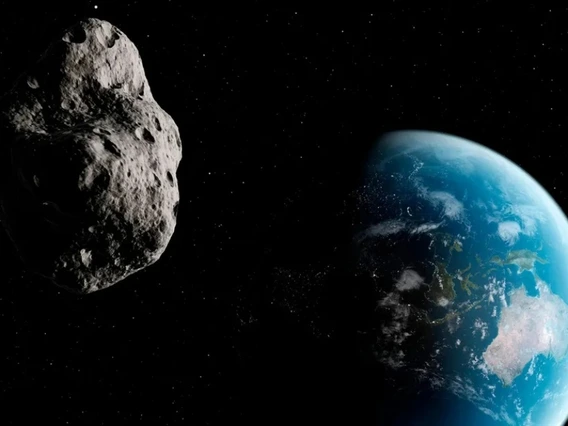
Discovering asteroids in space used to be a privilege reserved for astronomers – until now, thanks to a project led by the University of Arizona Catalina Sky Survey, which made it possible for several members of the public to spot a previously unknown near-Earth asteroid on its orbit around the sun.
Named 2023 TW, the newly discovered asteroid is the closest to ever be discovered by a citizen science initiative, according to Catalina Sky Survey researchers. Initial calculations indicate it ventures into Earth's vicinity at a "mean orbital intercept distance" of 375,000 miles, about 35,000 miles past the average distance between the Earth and the moon.
"The mean orbital intercept distance describes how close an object approaches Earth's orbit," said Carson Fuls, director of the Catalina Sky Survey, which is based in the UArizona Lunar and Planetary Laboratory. "Earth might not be anywhere near the asteroid when it approaches a spot in its orbit."
Despite its close proximity to Earth, 2023 TW does not pose a threat. There is no chance of 2023 TW impacting Earth, and even if this asteroid did enter our atmosphere, severe consequences would be unlikely, Fuls said.
Spanning 164 feet, 2023 TW's diameter is similar in size to the meteor that created the 0.8-mile-wide Barringer Crater, also known as Meteor Crater, a popular sightseeing stop along Interstate 40 east of Flagstaff, Arizona. This is well below the threshold of 459 feet for potentially hazardous asteroids, according to Fuls.
"For an object to be considered a potentially hazardous asteroid, both the distance and size need to be taken into account," Fuls says. "This asteroid meets the distance requirement, but not the size requirement."
The project's public-facing portal, dubbed the Daily Minor Planet, began operating in June and allows volunteers to pore over images collected with a telescope on Mount Lemmon. Each night, the telescope surveys about 200 patches of the sky. A software algorithm flags anything that appears like it might be an object that is moving relative to the fixed stars in the background. A typical night of observing yields hundreds of such candidate detections. This is where the volunteer observers come in. Their task: decide which detections are actual asteroids and which ones are artifacts or other phenomena unrelated to asteroids.
Aside from discovering 2023 TW, the project has reached the milestone of reporting 1,200 newly discovered, individual objects to the Minor Planet Center of the International Astronomical Union – the clearinghouse that decides whether objects detected anywhere in the solar system are real. Most of the objects reported through the project have been asteroids, but it also picked up the occasional comet. Comets are different from asteroids in that they contain water and other ices and typically reside in the outer reaches of the solar system.
Before 2023 TW was found, the project's volunteers detected many other candidates for near-Earth asteroids. However, the timing is tricky: Many asteroids, particularly those close to Earth, whip around our planet quickly before heading out into space for another trip around the sun.
To establish and publish an asteroid as a new discovery, asteroid trackers need to understand the object's orbit, which requires repeated observations over several days.
 The Catalina Sky Survey uses three Steward Observatory telescopes in the Santa Catalina Mountains north of Tucson, including this 1.5-meter reflector telescope. Catalina Sky Survey
"Close approaching asteroids appear so briefly in our sky and are moving so quickly that any delay in processing or reviewing the data increases the chance that they cannot be re-observed and confirmed," Fuls said. "Very close approaching asteroids may zip right past the Earth and quickly become too faint due to distance or go into the daytime sky where we can no longer see them."
In other words: Time is of the essence. The recent asteroid discovery was made only two days after the initial observation. Beyond the time pressure, knowing how to tell real objects and false detections apart is a central component of the data collection process.
"A real object has a very consistent appearance in that the images follow a linear pattern," Fuls said. "Often there are false detections that are image artifacts, which are caused by factors like dust on the telescope's optics. Any real object will move in a fairly straight line, whereas most artifacts will make a star pattern."
Recognizing the differences between artifacts and real objects is easier said than done, said Elisabeth Chaghafi, one of the volunteers involved in the discovery of 2023 TW.
"It took me about 10,000 images to get a proper sense of what I was looking for," she said. "Initially I kept getting it wrong, which was a little frustrating, but after a couple of weeks of getting thrown by background stars and artifacts I noticeably improved, and by now I'm able to classify most images in a couple of seconds."
Why citizen science matters
Chaghafi, who is a Renaissance scholar at the University in Tübingen, Germany, is one of the more than 3,700 volunteers tracking down asteroids for the project. The fact that the initiative is open to the general public helps lighten the load for individual observers.
"Each observer may look at 4,000 candidates each night," Fuls said. "Our volunteers help divide up an entire night shift."
The project's tangibility feeds into its accessibility. Volunteers do not need a background in astronomy to hunt for asteroids.
"There is a sense of familiarity because almost everyone has seen movies like 'Deep Impact,' 'Armaggeddon' or 'Don't Look Up,' or might have even held a meteorite in their hands," Fuls said. "Because we work with images, it makes asteroids feel a lot more tangible."
Chaghafi said she is convinced the skill sets from other fields complement the project.
"Pattern recognition and spotting details are integral to my area of expertise," she said. "I work with old manuscripts, and to do well at that you do need a good eye for detail – which applies to identifying asteroids as well."
The accessible and collaborative nature of the project has established a strong sense of community. Through Zooniverse, the online portal the project uses, volunteers discuss broad topics in astronomy – everything from irregular galaxies volunteers observed to the annular solar eclipse this past October.
Virgilio Gonano, another member of the team that discovered 2023 TW, said, "I have met people from all over the world with the same passion as me, and we enrich ourselves by exchanging advice and experiences. Working with professional astronomers is also a beautiful thing."
"Asteroids are the leftovers from the formation of our solar system," Fuls said. "They are essentially the test particles that can help us understand how planets and other objects in the solar system came to be. By identifying asteroids we are filling in the map of our solar system via telescopes."
To date, the Catalina Sky Survey has turned up about 10,700 near-Earth asteroids of the NASA-specified size requirement of measuring 460 feet or more. It is thought that this number represents about 45% of the total population of objects in that size range, according to Fuls.
"Of the larger near-Earth asteroids, those spanning 1 kilometer (0.6 miles) or more, we have discovered about 1,000," he said, "which accounts for 98% of that population."
To achieve its goal of finding and cataloging all near-Earth asteroids, the Catalina Sky Survey will continue to rely on volunteers. Case in point: In the short time between researching and writing this article, the citizen science project netted yet another near-Earth object, dubbed 2023 VN3, filling in another blank spot on the vast map of our solar system.
Citizen science project nets a new asteroid, and it's a close one