

Ali Bramson Receives Ronald Greeley Early Career Award
Dr. Ali Bramson, 2018 LPL Alum, receives 2024 Ronald Greeley Early Career Award in Planetary Sciences from the American Geophysical Union.Ali Bramson Receives Ronald Greeley Early Career Award


The Art of Planetary Science 2025
The Art of Planetary Science is an annual art exhibition run by the University of Arizona's Lunar and Planetary Laboratory. This year's theme - "50 Years of Discovery and Mystery on Mars".The Art of Planetary Science 2025

The Art of Planetary Science is an annual art exhibition run by the University of Arizona's Lunar and Planetary Laboratory to celebrate the beauty and elegance of space science.
We encourage people to submit visual, audio, and/or written art in up to three categories:
This year's theme, "50 Years of Discovery and Mystery on Mars," invites artists to reflect on the exploration of Mars starting with the Viking 1 lander and/or how this knowledge has expanded our understanding of other worlds.

Bennu Holds the Solar System's 'Original Ingredients,' Might have Been Part of a Wet World
OSIRIS-REx sample scientists took a deep dive into the rocks and dust returned from asteroid Bennu. They found that the sample is rich in carbon, nitrogen and organic compounds - essential components for life as we know it.Bennu Holds the Solar System's 'Original Ingredients,' Might have Been Part of a Wet World

By Mikayla Mace Kelley, University Communications - June 26, 2024
A deep dive into the sample of rocks and dust returned from near-Earth asteroid Bennu by NASA's University of Arizona-led OSIRIS-REx mission has revealed some long-awaited surprises.
Bennu contains the original ingredients that formed our solar system, the OSIRIS-REx Sample Analysis Team found. The asteroid's dust is rich in carbon and nitrogen, as well as organic compounds, all of which are essential components for life as we know it. The sample also contains magnesium sodium phosphate, which was as a surprise to the research team, because it wasn't seen in the remote sensing data collected by the spacecraft at Bennu. Its presence in the sample hints that the asteroid could have splintered off from a long-gone, tiny, primitive ocean world.
Launched on Sept. 8, 2016, the Origins, Spectral Interpretation, Resource Identification, and Security–Regolith Explorer spacecraft, dubbed OSIRIS-REx, began its journey to near-Earth asteroid Bennu to collect a sample of rocks and dust from the surface. OSIRIS-REx was the first U.S. mission to collect a sample from an asteroid. The spacecraft delivered the sample, weighing 4.3 ounces, or 121.6 grams, to Earth on Sept. 24, 2023.
"Finally having the opportunity to delve into the OSIRIS-REx sample from Bennu after all these years is incredibly exciting," said Dante Lauretta, principal investigator for OSIRIS-REx and Regents Professor of planetary sciences in the University of Arizona Lunar and Planetary Laboratory. "This breakthrough not only answers longstanding questions about the early solar system but also opens new avenues of inquiry into the formation of Earth as a habitable planet. The insights outlined in our overview paper have sparked further curiosity, driving our eagerness to explore deeper."
Lauretta is co-lead author of a paper published in Meteoritics & Planetary Science that details the nature of the asteroid sample. The paper also serves as an introduction to the Bennu sample catalog, an online resource where information about the sample is made publicly available and where scientists can request sample material for their own research.
"The publication of the first paper led by Dr. Lauretta and Dr. Connolly describing the Bennu sample is an exciting milepost for the mission and for the Lunar and Planetary Laboratory," said Mark Marley, director of the UArizona Lunar and Planetary Laboratory and head of the Department of Planetary Sciences. "Our faculty, scientists and students will continue to study the sample for years and decades to come. For now, we can only imagine the stories of the origins of our planet and the life upon it still to be told by the Bennu grains already in our laboratories."
A 'watery past' for Bennu?
Analysis of the Bennu sample unveiled intriguing insights into the asteroid's composition. Dominated by clay minerals, particularly serpentine, the sample mirrors the type of rock found at mid-ocean ridges on Earth, where material from the mantle, the layer beneath Earth's crust, encounters water.
This interaction between ocean water and materials from the Earth's mantle results in clay formation and gives rise to a variety of minerals including carbonates, iron oxides and iron sulfides. But the most unexpected discovery in the Bennu sample is the presence of water-soluble phosphates, Lauretta said. These compounds are components of biochemistry for all known life on Earth today.
A similar phosphate was found in the asteroid Ryugu sample delivered by the Japan Aerospace Exploration Agency's Hayabusa2 mission in 2020. But the magnesium sodium phosphate detected in the Bennu sample stands out for the lack of inclusions, which are like little bubbles of other minerals trapped within the rock, and the size of its grains, unprecedented in any meteorite sample, Lauretta said.
The finding of magnesium sodium phosphates in the Bennu sample raises questions about the geochemical processes that brought these elements together, and provides valuable clues about Bennu's historic conditions.
"The presence and state of phosphates, along with other elements and compounds on Bennu, suggest a watery past for the asteroid," Lauretta said. "Bennu potentially could have once been part of a wetter world. Although, this hypothesis requires further investigation."
From a young solar system
Despite its possible history of interaction with water, Bennu remains a chemically primitive asteroid, with elemental proportions closely resembling those of the sun.
"The sample we returned is the largest reservoir of unaltered asteroid material on Earth right now," Lauretta said.
The asteroid's composition offers a glimpse into the early days of our solar system, over 4.5 billion years ago. The rocks have retained their original state, having neither melted nor resolidified since their creation, affirming their pristine nature and ancient origins.
Hints at life's building blocks
The team has also confirmed the asteroid is rich in carbon and nitrogen. These elements are crucial in understanding the environments from which Bennu's materials originated and the chemical processes that transformed simple elements into complex molecules, potentially laying the groundwork for life on Earth.
"These findings underscore the importance of collecting and studying material from asteroids like Bennu – especially low-density material that would typically burn up upon entering Earth's atmosphere," said Lauretta. "This material holds the key to unraveling the intricate processes of solar system formation and the prebiotic chemistry that could have contributed to life emerging on Earth."
What's next
Dozens more labs in the United States and around the world will receive portions of the Bennu sample from NASA's Johnson Space Center in Houston in the coming months, and many more scientific papers describing the Bennu sample are expected in the next few years from the OSIRIS-REx Sample Analysis Team.
"The Bennu samples are tantalizingly beautiful extraterrestrial rocks," said the paper's co-lead author, Harold Connolly, the mission sample scientist who leads the Sample Analysis Team, professor at Rowan University in Glassboro, New Jersey, and a visiting research scientist at UArizona. "Each week, analysis by the OSIRIS-REx Sample Analysis Team provides new and sometimes surprising findings that are helping place important constraints on the origin and evolution of Earthlike planets."
UA News - Bennu Holds the Solar System's 'Original Ingredients,' Might have Been Part of a Wet World

Space Sciences, Water Resources, Geosciences Excel in Latest US News Global Ranking
The University of Arizona earned its best scores in the space science category, placing No. 8 overall, No. 6 in the U.S. and No. 2 among public universities.Space Sciences, Water Resources, Geosciences Excel in Latest US News Global Ranking

By Nick Prevenas, University Communications - June 26, 2024
From space sciences to water resources, the University of Arizona is again recognized as one of the world's top research institutions.
UArizona ranked No. 115 out of 2,250 higher education institutions across more than 100 countries in the 2024-2025 Best Global Universities ranking, released Tuesday by U.S. News & World Report. The university ranked No. 44 among universities in the U.S. and No. 23 among public U.S. universities.
The ranking placed UArizona among the top 10% of all ranked universities across the globe.
UArizona earned its best scores in the space science category, placing No. 8 overall, No. 6 in the U.S. and No. 2 among public universities. The university earned top marks in this category for its research reputation, along with the number of citations and publications by UArizona researchers.
UArizona also retained its stellar rankings in water resources (No. 2 in the U.S., No. 29 globally) and geosciences (No. 10 in the U.S., No. 25 globally).
UArizona also earned top-100 global placements for its programs in meteorology and atmospheric sciences (No. 47), environment/ecology (No. 59), arts and humanities (tied for No. 78) and plant/animal sciences (No. 78).
"I am continually in awe of the brilliant scientists and scholars who teach and conduct research at the University of Arizona," said University of Arizona President Robert C. Robbins. "Their groundbreaking discoveries across a wide variety of disciplines help foster an environment of bold thinking that is necessary to address and solve the world’s biggest challenges. I am very proud to see the University of Arizona recognized as one of the world's top research institutions."
U.S. News & World Report's Best Global Universities ranks colleges and universities in 51 subjects – up from 47 the last time this list was updated, in October 2022. The University of Arizona earned a spot on 38 of the subject ranking lists.
The university's overall research reputation was ranked No. 47 in the U.S. and No. 98 globally.
The 10th annual Best Global Universities rankings provide insight into how research institutions compare throughout the world. To produce the global rankings, which are based on data and metrics provided by the analytics company Clarivate, U.S. News & World Report uses a methodology that focuses on a university's global and regional reputation and academic research performance using indicators such as citations and publications.
U.S. News uses a separate methodology for the subject-specific rankings that is based on academic research performance in each subject. U.S. News uses various measures, including publications and citations as well as indicators for global and regional reputation in each specific subject area.
UA News - Space Sciences, Water Resources, Geosciences Excel in Latest US News Global Ranking

Studying Arctic Glaciers with Airborne Radar: UArizona Project Attracts $30M from NASA
The Snow4Flow mission will measure glaciers' ice and snow thickness and help scientists better predict how glacial melting contributes to sea level change.Studying Arctic Glaciers with Airborne Radar: UArizona Project Attracts $30M from NASA

By Daniel Stolte, University Communications - June 10, 2024
A University of Arizona-led project that uses advanced airborne radar mounted to low-flying aircraft to study arctic glaciers is one of six new missions that have received funding by NASA.
Dubbed Snow4Flow, the mission is led by Jack Holt, a professor in the 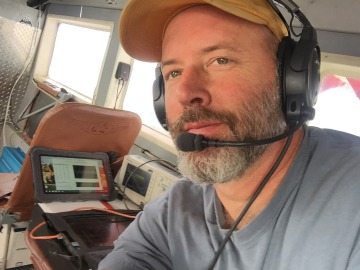 UArizona Lunar and Planetary Laboratory and the Department of Geosciences. It is one of only two missions, selected from 42 proposals, to be funded at $30 million. Four other projects will each receive $15 million.
The funding, announced April 19, comes from NASA's Earth Venture program, which focuses on missions that use instruments mounted on aircraft to make measurements that cannot be made from space.
Snow4Flow's goal is to get a better handle on the snowfall feeding into glaciers and how fast those glaciers move. In combination with climate models, this will allow researchers to make more accurate predictions about how glaciers shrink and grow, and how much they contribute to sea level change, Holt said.
"Those glaciers are retreating fast, and they're making a large contribution to sea level rise, but we don't know exactly how much and how that's going to change in the future," he said. "Right now, we can't accurately measure how much snow feeds into the glacier systems, and without knowing their ice thickness, you don't know the volume of ice flowing out from the glacier. Those are things that you can't measure with satellites from space."
Snow4Flow is designed to address a critical need of climate scientists in their efforts to develop accurate projections of sea level rise from the melting of land glaciers. Across four major study regions representing many hundreds of glaciers in the Northern Hemisphere – Alaska/Yukon, southeastern Greenland, the Canadian Arctic Archipelago and Svalbard archipelago in Norway – the Snow4Flow team will use microwave and long-wavelength radar sounders mounted to low-flying aircraft to measure snow accumulation and glacial ice thickness. The resulting data will inform models of glacier dynamics and their contributions to sea level rise.

One of Alaska's most iconic glaciers, the Malaspina Glacier spills out from the St. Elias Mountains onto the coastal plain as a "pancake of ice". Around the world, glaciers are threatened by a warming climate, and scientists need as much data as possible to refine climate prediction models. This photo was taken during a previous NASA-funded mission tasked with measuring annual changes in the thickness of glaciers, sea ice and ice sheets. - Brandon Tober/University of Arizona
While Holt's team will focus on studying glaciers in the Northern Hemisphere, the group expects the data collected over the course of the five-year project will be applicable to glaciers in other parts of the world. The measurements can be used to calibrate observations from different satellite missions, allowing scientists to monitor glaciers from space and improve models that predict how glaciers across the globe will behave and respond to climate change.
Snow4Flow centers around two instruments: one with low-frequency radar that generates the very long wavelengths needed to penetrate thick ice sheets, and another that operates at shorter wavelengths and is optimized to probe blankets of snow.
"We will mount them to small aircraft – fixed-wing, helicopters or both – which will fly low over glaciers that pass through mountain valleys," Holt said. "During those flights, we will collect data that essentially produce cross sections of the snow and glacier ice thickness."
"At the same time, these missions improve our ability to use satellites by calibrating algorithms that attempt to use spaceborne data for such purposes," he said.
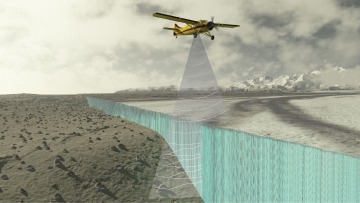
The Snow4Flow team will use microwave and long-wavelength radar sounders mounted to low-flying aircraft to measure snow accumulation and glacial ice thickness. - Russell Mitchell
Rather than having science and instrument teams defined at the time of the proposal, the projects selected for the NASA funding will be open to other scientists who are interested in applying to join the effort. Holt expects to have a final team assembled by fall 2025 and to begin flight operations in spring 2026. The mission will take place over three years, capturing winter snowfall before snowmelt begins in the summer months.
Holt attributes Snow4Flow's success in attracting federal funding to a strategic cluster hire at the university that included Ali Behrangi in the Department of Hydrology and Atmospheric Sciences and Chris Harig in the Department of Geosciences, through the university's Earth Dynamics Observatory. In cluster hires, multiple scholars are recruited into one or more departments based on shared research interests. Behrangi studies snowfall in high-latitude, high-altitude regions and Harig studies ice mass loss using gravity measurements from space satellites.
"The University of Arizona's continued success in attracting this level of research funding is a direct consequence of our efforts to focus our recruitment in key areas in which we offer unparalleled expertise and strength," said University of Arizona President Robert C. Robbins. "Snow4Flow is a perfect example of such an opportunity, in which our researchers will get to assemble a dream team capable of developing solutions to some of the most pressing challenges of our time."
The university's Earth Dynamics Observatory, or EDO, combines UArizona strengths in space exploration, instrumentation and Earth sciences to learn more about our planet. Collecting information about Earth from space provides new information about how Earth systems work, how they are changing and how humans might anticipate and respond to changes.
Behrangi, a professor of hydrology and atmospheric sciences, said the observatory played a crucial role in the success of the Snow4Flow proposal "by encouraging innovative thinking, allowing the team to break free from conventional ideas and envision a broader, more impactful mission instead of settling for smaller, less ambitious proposals."
"These large federal programs are increasingly interdisciplinary, where they need teams assembled from many disciplines to come together and answer the big science questions of the day," said Harig, an assistant professor of geophysics. "Jack (Holt) was able to use our expertise within EDO to refine the project idea over the last few years and be very well positioned when the solicitation finally came out."
UA News - Studying Arctic Glaciers with Airborne Radar: UArizona Project Attracts $30M from NASA

Webb Telescope Finds Plethora of Carbon Molecules Around Young Star
An international team of astronomers, including University of Arizona scientists, has used NASA's James Webb Space Telescope to study the disk of gas and dust around a young, very low-mass star.Webb Telescope Finds Plethora of Carbon Molecules Around Young Star

By ESA/Webb, STScI/NASA and University Communications - June 6, 2024
An international team of astronomers, including scientists from the University of Arizona, has used NASA's James Webb Space Telescope to study the disk of gas and dust around a young, very low-mass star. The results reveal the largest number of carbon-containing molecules seen to date in such a disk. The findings have implications for the potential composition of any planets that might form around this star.
Rocky planets are more likely than gas giants to form around low-mass stars, making them the most common planets around the most common stars in our galaxy. Little is known about the chemistry of such worlds, which may be similar to or very different from Earth. By studying the disks from which such planets form, astronomers hope to better understand the planet formation process and the compositions of the resulting planets.

The scientists' findings, published today in the journal Science, build on a 2009 study led by Ilaria Pascucci, a UArizona professor of lunar and planetary sciences, who is also a co-author of the new study. In their previous work, Pascucci's team used the Spitzer Space Telescope to identify that the gas composition of disks around very-low mass stars differs from that around solar-type stars or stars that have higher mass. Spitzer detected acetylene and hydrogen cyanide, which are simpler molecules that have a smaller number of carbons.
"The James Webb spectrum is fantastic. With higher resolution and sensitivity than Spitzer, it enabled detection of many carbon-bearing molecules – even complex ones like benzene," Pascucci said.
The study's findings demonstrate that the gas composition is very hydrocarbon rich and expands scientists' knowledge of the chemical complexity of disks around very low-mass stars, Pascucci said. These exoplanets could build an early atmosphere that is hydrocarbon rich – very different from the early atmosphere that Earth built.
Planet-forming disks around very low-mass stars are difficult to study because they are smaller and fainter than disks around high-mass stars. A program called the MIRI Mid-INfrared Disk Survey, or MINDS, aims to use Webb's unique capabilities to build a bridge between the chemical inventory of disks and the properties of exoplanets.
"Webb has better sensitivity and spectral resolution than previous infrared space telescopes," said lead study author Aditya Arabhavi, a Ph.D. student at the University of Groningen in the Netherlands. "These observations are not possible from Earth, because the emissions from the disk are blocked by our atmosphere."
In the new study, researchers explored the region around a very low-mass star known as ISO-ChaI-147, a 1 to 2 million-year-old star that weighs just 0.11 times as much as the sun. The spectrum revealed by Webb's Mid-Infrared Instrument, or MIRI, shows the richest hydrocarbon chemistry seen to date in a protoplanetary disk – a total of 13 different carbon-bearing molecules. The team’s findings include the first detection of ethane outside of our solar system, as well as ethylene, propyne and the methyl radical CH3.
"These molecules have already been detected in our solar system, like in comets such as 67P/Churyumov–Gerasimenko and C/2014 Q2 (Lovejoy)," Arabhavi said. "Webb allowed us to understand that these hydrocarbon molecules are not just diverse but also abundant. It is amazing that we can now see the dance of these molecules in the planetary cradles. It is a very different planet-forming environment than we usually think of."
The team indicates that the results have significant implications for the chemistry of the inner disk and the planets that might form there. Since Webb revealed the gas in the disk is so rich in carbon, there is likely little carbon left in the solid materials from which planets would form. As a result, the planets that might form there may ultimately be carbon-poor like Earth.
"This is profoundly different from the composition we see in disks around solar-type stars, where oxygen-bearing molecules like water and carbon dioxide dominate," said team member Inga Kamp, professor at the University of Groningen. "This object establishes that these are a unique class of objects."
"It's incredible that we can detect and quantify the amount of molecules that we know well on Earth, such as benzene, in an object that is more than 600 light-years away," said team member Agnés Perrin, research director at the Centre National de la Recherche Scientifique in France.
Next, the science team intends to expand their study to a larger sample of such disks around very low-mass stars to develop their understanding of how common or exotic such carbon-rich terrestrial planet-forming regions are.
"The expansion of our study will also allow us to better understand how these molecules can form," said team member and principal investigator of the MINDS program Thomas Henning, director of the Planet and Star Formation department at the Max-Planck-Institute for Astronomy in Germany. "Several features in the Webb data are also still unidentified, so more spectroscopy is required to fully interpret our observations."
UA News - Webb Telescope Finds Plethora of Carbon Molecules Around Young Star

Near-Earth Asteroid Was Blasted From a Crater on the Moon, Study Finds
For the first time, scientists have traced an asteroid to its exact place of origin – a particular crater on the moon.Near-Earth Asteroid Was Blasted From a Crater on the Moon, Study Finds

By Daniel Stolte, University Communications - April 25, 2024
For the first time, scientists have traced an asteroid to its exact place of origin – a particular crater on the moon. Unlike most near-Earth asteroids, which are thought to hail from the main asteroid belt between the orbits of Mars and Jupiter, asteroid 2016 HO3, also known as Kamo'oalewa, was likely blasted from the Giordano Bruno crater on the moon's far side and has been hurtling through space for several million years, according to a study published in the journal Nature Astronomy.
Selected as the target of China’s Tianwen-2 mission, Kamo'oalewa has been in space for several million years as one of a few of Earth’s co-orbital asteroids, meaning it travels around the sun on a similar orbit as Earth. Measuring between 150 and 190 feet in diameter, the asteroid is about half the size of the "London Eye" Ferris wheel.
According to lead study author Yifei Jiao, a visting scholar at the University of Arizona Lunar and Planetary Laboratory who is also a doctoral student at Tsinghua University in Beijing, the report is the first account of a potentially hazardous near-Earth asteroid that has been linked to a specific crater on the moon.
Previous research pointing to Kamo'oalewa likely originating from the moon included its reflectance spectrum, which is more compatible with lunar materials rather than the general population of near-Earth asteroids, and its low orbital velocity relative to Earth, suggesting it originated close to the Earth-moon system. However, scientists had not succeeded in pinpointing its likely point of origin until now.
To shed light on the mystery, the research team used impact and dynamical modeling. The team included colleagues from Tsinghua University, UArizona, Beihang University in Beijing, the University of British Columbia and the Observatoire de la Côte d’Azur in France.
According to the simulations, it would have required an impactor of at least 1 kilometer (0.6 mile) in diameter to launch a large fragment like Kamo'oalewa beyond the moon's gravitational pull. According to the group's model, the impact would have dug up Kamo'oalewa from deep beneath the moon's surface, leaving behind an impact crater larger than 10 to 20 kilometers (6-12 miles) in diameter. Additionally, the crater would have to be younger than the average lifetime for near-Earth objects, which spans about 10 million to 100 million years, a very short and recent period in the history of the solar system.
While the lunar surface is riddled with thousands of craters from impacts spanning the moon's 4.5 billion year-history, only Giordano Bruno with its 14-mile diameter and estimated 4 million years of age fits the bill in terms of size and age, making it the most probable source of Kamo'oalewa's origin. The team also showed that this scenario is feasible from an impact dynamics perspective.
The discovery comes on the heels of two previous studies led by the UArizona Lunar and Planetary Laboratory: In 2021, a team obtained the first evidence suggesting that Kamo'oalewa was different from typical near-Earth asteroids and likely a fragment of the moon. Another team then concluded that there were indeed orbital pathways, albeit rare, for lunar crater fragments to reach an unusual orbit like Kamo'oalewa's.
"This was a surprise, and many were skeptical that it could come from the moon," said co-author and Lunar and Planetary Laboratory professor Erik Asphaug. "For 50 years we have been studying rocks collected by astronauts on the surface of the moon, as well as hundreds of small lunar meteorites that were ejected randomly by asteroid impacts from all over the moon that ended up on Earth. Kamo'oalewa is kind of a missing link that connects the two."
According to co-author and UArizona planetary sciences professor Renu Malhotra, the findings open up a source of near-Earth asteroids that has not been seriously studied until now, and they have revealed previously unknown orbital pathways for the transport of rocks from and between planetary bodies.
"Testing the new model of Kamo'oalewa's origin from a specific, young lunar crater paves the way for obtaining ground-truth knowledge of the damage that asteroid impacts can cause to planetary bodies," Malhotra said. In other words, it provides scientists with a natural laboratory to test ideas around asteroid impacts and get a better idea of what the consequences of such an event might be, should humankind ever experience one.
For a strip mall-size rock to be blasted out of the moon at several miles per second and sent into orbit required very specific circumstances, Malhotra explained.
"You’d think the impact event would pulverize and distribute the ejecta far and wide," Asphaug said. "But there it is. So, we turned the problem around and asked ourselves, 'How can we make this happen?'"
According to Asphaug, the model provides more than just an explanation for the origin story of one particular asteroid. How massive rocks can be ejected from the surface of a planet and survive intact can be informative for fundamental questions, such as the origin of life in the universe. One such theory, known as panspermia, suggests that life – or its ingredients – could have been brought to planetary bodies from other sources across space, in the form of "organic hitchhikers" coming along for the ride, Asphaug explained.
"While Kamo'oalewa comes from a lifeless planet, it demonstrates how rocks ejected from Mars could carry life – at least in principle," he said.
The Giordano Bruno impact event likely would have produced tens of hundreds of 10-meter-size ejecta fragments into space, according to Jiao.
"While most of that debris would have impacted the Earth as lunar meteorites over the course of less than a million years," he said, "a few lucky objects can survive in heliocentric orbits as near-Earth asteroids, yet to be discovered or identified."
The upcoming Tianwen-2 mission aims to return samples from Kamo'oalewa, potentially confirming its lunar origin and enriching our understanding of lunar impact dynamics and space weathering effects. Additionally, NASA's NEO Surveyor mission is anticipated to identify more members of this lunar-derived near-Earth population.
"Fans of crime drama know the importance of arriving at the scene while all the evidence is fresh," Asphaug said, pointing out the importance of sample return missions such as the UArizona-led OSIRIS-REx mission. "They open up the unsolved cases surrounding the origins of meteorites in our collections, which are thought to have come from hundreds of other primitive asteroids."
Because Kamo'oalewa is not a surface rock but was ejected from much deeper than any mission had ever sampled, Asphaug has high hopes for the Kamo'oalewa sample Tianwen-2 is expected to bring to Earth: "It will be different in important ways from any of the specimens we have so far – one of those connecting pieces that help you solve the puzzle."
UA News - Near-Earth Asteroid Was Blasted From a Crater on the Moon, Study Finds
Two UArizona Astrobiology Researchers Named AAAS Fellows
Lunar and Planetary Laboratory Regents Professor Dante Lauretta and Professor Dániel Apai named AAAS Fellows.Two UArizona Astrobiology Researchers Named AAAS Fellows

By Niranjana Rajalakshmi, University Communications - April 18, 2024
Two University of Arizona faculty members have been elected 2023 Fellows of the American Association for the Advancement of Science, the world's largest general scientific society, which includes more than 250 affiliated societies and academies of science, serving 10 million individuals.
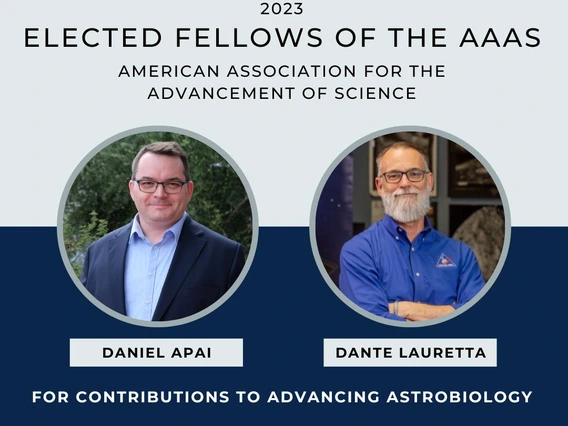
The newest class of AAAS Fellows, announced Thursday, includes 502 scientists, engineers and innovators, including two UArizona researchers who were recognized for their contributions to astrobiology: Dante Lauretta, Regents Professor of Planetary Sciences in the College of Science and director of the Arizona Astrobiology Center, and Daniel Apai, professor of astronomy in the College of Science .
"I could not be more proud to have two of our star faculty members in astronomy and planetary sciences receive this prestigious recognition," said University of Arizona President Robert C. Robbins. "The University of Arizona has long been a powerhouse in space exploration, and the work of talented faculty like Dante Lauretta and Daniel Apai further cement the university's unrivaled legacy in astronomy, planetary sciences and astrobiology."
The annual Fellows Forum will be held in Washington, D.C., on Sept. 21 in conjunction with the 150th anniversary celebration of the AAAS Fellows program.
"As we celebrate the150th anniversary of the AAAS Fellows, AAAS is proud to recognize the newly elected individuals," said Sudip Parikh, AAAS chief executive officer and executive publisher of the Science family of journals. "This year's class embodies scientific excellence, fosters trust in science throughout the communities they serve, and leads the next generation of scientists while advancing scientific achievements."
Dante Lauretta
Lauretta, Regents Professor at the UArizona Lunar and Planetary Laboratory, has been recognized as a AAAS Fellow for "distinguished contributions to the field of astrobiology, particularly for leadership and advancements through the OSIRIS-REx mission."

Dante Lauretta
"It's quite an honor and I'm super excited – AAAS is a very prestigious organization at the forefront of science and science policy in the United States," Lauretta said.
Lauretta was the principal investigator of OSIRIS-REx, NASA's first U.S. mission to collect a sample from an asteroid. After its launch on Sept. 8, 2016, the OSIRIS-REx spacecraft traveled to the asteroid Bennu, collected a sample from the surface and returned the sample to Earth on Sept. 24, 2023. The sample will help scientists understand more about planet formation and the origin of life on Earth.
"We are getting into the detailed organic chemistry of the samples and really starting to test some of the fundamental ideas surrounding the origin of life," Lauretta said.
Lauretta did his undergraduate work at UArizona, where we earned a bachelor's degree in physics and mathematics from the College of Science and a bachelor's degree in Oriental studies with an emphasis in Japanese from the College of Humanities. He earned his doctorate in Earth and planetary sciences from Washington University in 1997 and worked as a postdoctoral research associate and associate research scientist at Arizona State University prior to joining the University of Arizona as an assistant professor in 2001.
Lauretta is also the director of the university's Arizona Astrobiology Center, which launched in October. The center focuses on astrobiological research on the origins, evolution and distribution of life in the universe. More than 40 faculty members across 13 disciplines from four colleges conduct research at the center.
"A lot of our research involves undergraduate and graduate students," Lauretta said. " We have some of the greatest laboratory instruments in the world for analyzing materials and we are looking forward to new students coming on board to continue this great work."
Daniel Apai
Apai, a professor in the Department of Astronomy and Steward Observatory and the Lunar and Planetary Laboratory and interim associate dean for research in the College of Science, is being honored for his "distinguished contributions to the field of astrobiology and astrophysics, particularly for advancements in understanding of habitable exoplanets and planetary systems."

Daniel Apai
Apai's research is centered around planet formation, planetary atmospheres, exoplanet discovery and characterization. He is the principal investigator of Alien Earths, a NASA-funded astrobiology project that explores the potential of nearby planetary systems for supporting life.
Alien Earths is a multidisciplinary project with 40 members and is one of the largest astrobiology research projects that NASA is funding, Apai said.
"We are integrating knowledge from several disciplines like astronomy, atmospheric sciences, chemistry, material sciences and cosmochemistry," he said. "We made very exciting discoveries."
Apai earned a doctorate in astrophysics from the University of Heidelberg in 2004 and joined the UArizona faculty in 2011.
Apai also leads another project, the Nautilus Space Telescope, in collaboration with colleagues at the UArizona Wyant College of Optical Sciences. Nautilus is a novel space telescope concept that involves the launch of a large fleet of identical telescopes made up of ultra-lightweight optics. The project's goal is to characterize 1,000 potentially Earthlike exoplanets to search for signatures of life.
"We are very close to completing a milestone; we are working on bringing this completely new type of telescope up to Mount Lemmon (north of Tucson) to test it on the sky," Apai said.
Humans Will Again Set Foot on the Moon; This Time, They'll Have UArizona Science in Tow
UArizona scientists mapped the moon for the Apollo missions. Now, as NASA astronauts prepare to return to the moon, two of the three instruments they'll bring have UArizona ties.Humans Will Again Set Foot on the Moon; This Time, They'll Have UArizona Science in Tow

NASA and University Communications - April 12, 2024
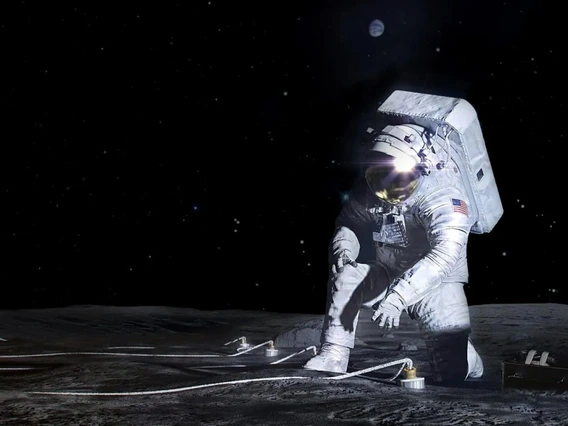
University of Arizona Lunar and Planetary Laboratory researchers will have a hand in two of the three instruments NASA selected for deployment on the lunar surface by Artemis III astronauts.
Once installed near the moon's South Pole, the instruments will collect valuable scientific data about the lunar environment, the lunar interior and how to sustain a long-duration human presence on the moon, which will help prepare NASA to send astronauts to Mars.
The instruments were specifically chosen because of their unique installation requirements that necessitate deployment by humans during moonwalks, a NASA press release explained. All three payloads were selected for further development towards flight on Artemis III, which is targeted to launch in 2026. Final manifesting decisions about the mission will be determined at a later date. Members of these payload teams will become members of NASA's Artemis III science team.
Artemis III, the first mission to return astronauts to the surface of the moon in more than 50 years, will explore the south polar region of the moon. Several proposed landing regions for the mission are located amid some of the oldest parts of the moon. Together with the permanently shadowed regions, they provide the opportunity to learn about the history of the moon through previously unstudied lunar materials.
Mapping moonquakes
Dani DellaGiustina, assistant professor of planetary sciences in the UArizona Lunar and Planetary Laboratory, is working as part of the team to design and build two seismometers for the Lunar Environment Monitoring Station, or LEMS. One will be tuned to detect deep moonquakes and the other to detect shallow moonquakes.
"I am stoked because I have been working for years to develop seismic instruments not just for the moon, but also for asteroids and other bodies like Europa," DellaGiustina said. "So, to see one of them make it to the next step, which is flight opportunity, is really exciting."
LEMS is led by Mehdi Benna from the University of Maryland, Baltimore County. NASA Goddard will build and operate LEMS. DellaGiustina is a co-investigator along with Hop Bailey, a UArizona Space Institute program manager, and Angela Marusiak, an assistant research professor of planetary sciences. Veronica Bray, associate research professor in planetary sciences, is assisting with science operations.
LEMS is a compact, autonomous seismometer suite designed to carry out continuous, long-term monitoring of ground motion from moonquakes, in the lunar south polar region. The instrument will characterize the regional structure of the moon's crust and mantle, which will add valuable information to lunar formation and evolution models. LEMS is intended to operate on the lunar surface from three months up to two years and may become a key station in a future global lunar geophysical network.
Moonquakes have a few sources, including the same gravitational tug between the moon and Earth that causes ocean tides. Also, in the same way that houses creak as temperatures rise, the moon trembles as it expands and contracts in response to dramatic temperature swings.
"The big difference between the Earth and the moon is the moon does not have plate tectonics. There is some evidence of faults on the moon, however," Marusiak said. "One of our goals is to figure out if those faults are active and how active they are, and if they could cause a risk for the astronauts or their habitats."
Lastly, the researchers also anticipate that LEMS will detect meteor impacts.
Treasures beneath the surface
Erik Asphaug, professor of planetary sciences in the UArizona Lunar and Planetary Laboratory, is a collaborator on the Lunar Dielectric Analyzer, or LDA, which will reveal what lies a meter deep in the moon's regolith, which is airless soil.
"As a child of the Apollo era, I find it amazing to be part of this adventure to put an instrument on the moon," Asphaug said. "I've always been a big fan of radio and radar techniques to find out what's inside of things. I'm most excited to see if the regolith near the south pole has active frost."
LDA will measure how the moon's regolith responds to an electric field, which depends on porosity and the presence of volatiles – substances that evaporate – especially ice. It will gather essential information about the structure of the moon's subsurface and monitor whether volatiles migrate as the LDA goes in and out of shadow.
Hideaki "Hirdy" Miyamoto – a University of Tokyo professor, Planetary Science Institute affiliated scientist and adjunct professor at the University of Adelaide – leads the LDA, which is supported by the Japan Aerospace Exploration Agency.
"Different materials propagate radio signals at different speeds," Asphaug said, "so when you send a signal and measure its reflection, its speed tells you about composition and porosity. This will be important not only for lunar science, but for establishing a permanent human presence on the moon."
With the Artemis campaign, NASA will land the first woman, first person of color and its first international partner astronaut on the moon, and establish long-term exploration for scientific discovery and preparation for human missions to Mars for the benefit of all.
"It is exciting to see a new generation of Lunar and Planetary Laboratory scientists build on our legacy of lunar exploration, dating back to even before Apollo," said Mark Marley, the Lunar and Planetary Laboratory director. "Our first major research program was to map the moon. Now we are helping send instruments to detect what lies beneath that surface."
UA News - Humans Will Again Set Foot on the Moon; This Time, They'll Have UArizona Science in Tow
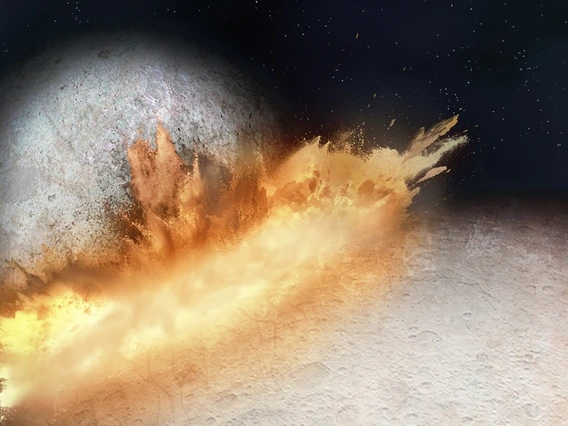
How Pluto Got Its 'Heart'
The mystery of how Pluto got a giant heart-shaped feature on its surface has finally been solved by an international team of astrophysicists.How Pluto Got Its 'Heart'

University Communications - April 14, 2024
Ever since the cameras of NASA's New Horizons mission discovered a large heart-shaped structure on the surface of the dwarf planet Pluto in 2015, this "heart" has puzzled scientists because of its unique shape, geological composition and elevation. Scientists from the University of Bern in Switzerland and the University of Arizona used numerical simulations to investigate the origins of Sputnik Planitia, the western teardrop-shaped part of Pluto's heart surface feature.
According to their research, Pluto's early history was marked by a cataclysmic event that formed Sputnik Planitia: a collision with a planetary body a little over 400 miles in diameter, roughly the size of Arizona from north to south. The team’s findings, published in Nature Astronomy, also suggest that the inner structure of Pluto is different from what was previously assumed, indicating that there is no subsurface ocean.
"The formation of Sputnik Planitia provides a critical window into the earliest periods of Pluto's history," said Adeene Denton, a planetary scientist at the UArizona Lunar and Planetary Laboratory who co-authored the paper. "By expanding our investigation to include more unusual formation scenarios, we've learned some totally new possibilities for Pluto's evolution, which could apply to other Kuiper Belt objects as well."
A divided heart
The heart, also known as the Tombaugh Regio, captured the public's attention immediately upon its discovery. But it also immediately caught the interest of scientists because it is covered in a high-albedo material that reflects more light than its surroundings, creating its whiter color. However, the heart is not composed of a single element. Sputnik Planitia covers an area of approximately 750 by 1,250 miles, equivalent to a quarter of Europe or the United States. What is striking, however, is that this region is roughly 2.5 miles lower in elevation than most of Pluto's surface.
"While the vast majority of Pluto's surface consists of methane ice and its derivatives covering a water-ice crust, the Planitia is predominantly filled with nitrogen ice, which most likely accumulated quickly after the impact due to the lower altitude," said the lead author of the study, Harry Ballantyne, a research associate at Bern. The eastern part of the heart is also covered by a similar but much thinner layer of nitrogen ice, the origin of which is still unclear to scientists, but is probably related to Sputnik Planitia.
An oblique impact
The elongated shape of Sputnik Planitia and its location at the equator strongly suggest that the impact was not a direct head-on collision but rather an oblique one, according to Martin Jutzi of the University of Bern, who initiated the study. Like several others around the world, the team used Smoothed Particle Hydrodynamics simulation software to digitally re-create such impacts, varying both the composition of Pluto and its impactor, as well as the velocity and angle of the impactor. These simulations confirmed the scientists' suspicions about the oblique angle of impact and determined the composition of the impactor.
"Pluto's core is so cold that the rocks remained very hard and did not melt despite the heat of the impact, and thanks to the angle of impact and the low velocity, the core of the impactor did not sink into Pluto's core, but remained intact as a splat on it," Ballantyne said. This core strength and relatively low velocity were key to the success of these simulations: Lower strength would result in a very symmetrical leftover surface feature that does not look like the teardrop shape observed by NASA's New Horizons probe during its fly-by of Pluto in 2015.
"We are used to thinking of planetary collisions as incredibly intense events where you can ignore the details except for things like energy, momentum and density," said Lunar and Planetary Laboratory professor and study co-author Erik Asphaug, whose team has collaborated with its Swiss colleagues since 2011, exploring the idea of planetary "splats" to explain, for instance, features on the far side of Earth's moon. "In the distant solar system, velocities are so much slower than closer to the sun, and solid ice is strong, so you have to be much more precise in your calculations. That's where the fun starts."
No subsurface ocean on Pluto
The current study sheds new light on Pluto's internal structure as well. In fact, a giant impact like the one simulated is much more likely to have occurred very early in Pluto's history than during more recent times. However, this poses a problem: A giant depression like Sputnik Planitia is expected to slowly drift toward the pole of the dwarf planet over time due to the laws of physics, since it is less massive than its surroundings. Yet it has remained near the equator. The previous theorized explanation invoked a subsurface liquid water ocean, similar to several other planetary bodies in the outer solar system. According to this hypothesis, Pluto's icy crust would be thinner in the Sputnik Planitia region, causing the ocean to bulge upward, and since liquid water is denser than ice, causing a mass surplus that induces migration toward the equator.
The new study offers an alternative perspective, according to the authors, pointing to simulations in which all of Pluto's primordial mantle is excavated by the impact, and as the impactor's core material splats onto Pluto's core, it creates a local mass excess that can explain the migration toward the equator without a subsurface ocean, or at most a very thin one.
Denton, who already has embarked on a research project to estimate the speed of this migration, said this novel and creative origin hypothesis for Pluto's heart-shaped feature may lead to a better understanding of the dwarf planet's origin.
UA News - How Pluto Got Its 'Heart'