

Asteroid Bennu Comes From a Long-lost Salty World With Ingredients For Life
Two research publications by the OSIRIS-REx sample analysis team suggest that conditions for the emergence of life were widespread across the early solar system.Asteroid Bennu Comes From a Long-lost Salty World With Ingredients For Life

By NASA and Daniel Stolte/University Communications - January 29, 2025
Nature had the conditions to "cook up" the chemical precursor ingredients for life before Earth formed, according to two studies published by the sample analysis team of NASA's OSIRIS-REx mission, which is led by Dante Lauretta at the University of Arizona.
The OSIRIS-REx spacecraft returned a sample from asteroid Bennu in 2023, and following a year of in-depth analyses in labs across the globe, researchers conclude that these conditions and ingredients may have been common across the solar system, increasing the odds of life forming on other planets and moons.
"These samples from Bennu are an incredible discovery, showing that the building blocks of life were widespread across the early solar system," said Lauretta, Regents Professor of Planetary Science and Cosmochemistry at the U of A Lunar and Planetary Laboratory and a co-author on both papers. "By studying how these ingredients interacted in environments like those on Bennu and in places inferred for the early Earth – such as salty ponds similar to those Darwin once imagined – we can better understand how life might emerge and where to search for it beyond our planet."

Zoe Zeszut, lab manager and research scientist at the University of Arizona Kuiper-Arizona Laboratory for Astromaterials Analysis, prepares a vial containing extraterrestrial sample material for analysis.
Bennu coalesced from a small portion of the leftover rubble resulting from a giant collision of asteroids. Preserved in the vacuum of space since the solar system's formation about 4.5 billion years ago, the samples have provided scientists with unparalleled insights into the conditions of that era.
Based on their findings, presented in two publications in Nature and Nature Astronomy on Jan. 29, the researchers share several theories about the history of Bennu and the solar system.
Bennu’s molecular composition suggests the ice and organic compounds in its parent body originated in the extremely cold outermost disk of gas and dust that gave rise to the solar system.
Temperatures in the outer disk could dip to minus 400 degrees Fahrenheit, allowing volatile gases that easily evaporate in warmer conditions to accumulate and freeze – among them water vapor, carbon dioxide, methane and ammonia, which was detected in "exceptionally high" abundances in the Bennu samples, according to the Nature Astronomy paper.

Up-close image of a combined focused ion beam and secondary electron microscope in the Kuiper-Arizona Laboratory for Astromaterials Analysis. This instrument allows scientists to first scan a sample to find an interesting target, then cut it into cross sections.
Given the right environment, ammonia can react with formaldehyde, which was also detected in the samples, to form complex molecules such as amino acids – the building blocks of proteins. Fourteen of the 20 amino acids that life on Earth uses to make proteins are found in the Bennu sample. The research team also found all five nucleobases that life on Earth uses to encode structural information in more complex biomolecules like DNA and RNA.
"Besides pointing to the outer solar system origin of abundant ammonia in Bennu's ancestor, our work also supports the idea that objects that formed far from the sun could have been an important source of the raw ingredients for life throughout the solar system," said Danny Glavin, a senior sample scientist at NASA's Goddard Space Flight Center in Greenbelt, Maryland. Glavin, together with colleague Jason Dworkin, led the paper in Nature Astronomy.
With life's ingredients found in Bennu samples, the big question is: How did these building blocks turn into the chains of molecules needed to activate biology?
"You can have all the ingredients for whatever you want to make, but you have to have the environment to make them do something," said Tim McCoy, curator of meteorites at the Smithsonian's National Museum of Natural History in Washington, D.C.
Along with Sara Russell of the Natural History Museum in London, McCoy co-led 66 scientists from four continents in a study of minerals in the Bennu samples. In the Nature paper, they describe evidence of an ancient environment well-suited to kickstart the chemistry of life.
Ranging from calcite to halite and sylvite, scientists identified 11 minerals that comprise a complete set of "evaporites" from a brine, or salt-saturated water. These evaporites form as water containing dissolved salts evaporates over long periods of time, leaving behind the salts as solid crystals.
"We're seeing minerals in Bennu samples that we have never seen before in a meteorite or any extraterrestrial sample," McCoy said.
Finding evaporites indicates that the interior of Bennu's ancestor was warm enough to support liquid water for a substantial amount of time. Liquid water is necessary for life, as it facilitates its essential chemical reactions, while salts can prevent water from freezing. Salts also help concentrate simple molecules, making it easier for them to combine into the complex compounds life depends on.
While several evaporites have been reported from meteorite samples, the Bennu sample represents the first time researchers have seen a complete set preserving an evaporation process that could have lasted thousands of years or more. This process happens in basins of water on Earth, including drying lakes and shallow seas. The researchers deem it possible that on Bennu's ancestor, water could have existed in underground pockets or veins, but not on the surface, as it would have quickly boiled away due to lack of atmospheric pressure.
U of A co-authors on the two publications include Jessica Barnes, Harold Connolly, Dani DellaGiustina, Pierre Haenecour, Dolores Hill, Tom Zega and Zoe Zeszut, all of whom helped with sample analysis taking advantage of the advanced technological resources of U of A's Kuiper-Arizona Laboratory for Astromaterials Analysis. The following graduate students also were part of this work: Maizey Benner, Kana Ishimaru, Nicole Kerrison, Iunn Ong, Beau Prince, Lucas Smith.
UA News - Asteroid Bennu Comes From a Long-lost Salty World With Ingredients For Life


NASA's Pandora Mission One Step Closer to Probing Alien Atmospheres, With Mission Operations Based at U of A
Pandora, a small satellite mission poised to provide in-depth study of at least 20 known planets orbiting distant stars to determine the composition of their atmospheres cleared an important milestone by completing the spacecraft bus, which acts as the spacecraft's "brains."NASA's Pandora Mission One Step Closer to Probing Alien Atmospheres, With Mission Operations Based at U of A

By Francis Reddy/NASA Goddard Space Flight Center and Daniel Stolte/University Communications - January 16, 2025.
Pandora, NASA's newest exoplanet mission, is one step closer to launch with the completion of the spacecraft bus, which provides the structure, power and other systems that will allow the mission to carry out its work. Pandora's exoplanet science working group is led by the University of Arizona, and Pandora will be the first mission to have its operations center at the U of A Space Institute.
The completion of the bus was announced Thursday during a press briefing at the 245th Meeting of the American Astronomical Society in National Harbor, Maryland.
"This is a huge milestone for us and keeps us on track for a launch in the fall," said Elisa Quintana, Pandora's principal investigator at NASA's Goddard Space Flight Center in Greenbelt, Maryland. "The bus holds our instruments and handles navigation, data acquisition and communication with Earth – it's the brains of the spacecraft."
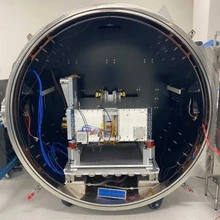
Pandora is a small satellite poised to provide in-depth study of at least 20 known planets orbiting distant stars to determine the composition of their atmospheres – especially the presence of hazes, clouds and water. The data will establish a firm foundation for interpreting measurements by NASA's James Webb Space Telescope and future missions aimed at searching for habitable worlds.
"Although smaller and less sensitive than Webb, Pandora will be able to stare longer at the host stars of extrasolar planets, allowing for deeper study," said Pandora co-investigator Daniel Apai, professor of astronomy and planetary sciences at the U of A Steward Observatory and Lunar and Planetary Laboratory who leads the mission's Exoplanets Science Working Group. "Better understanding of the stars will help Pandora and its 'big brother,' the James Webb Space Telescope, disentangle signals from stars and their planets."
Astronomers can sample an exoplanet's atmosphere when it passes in front of its star as seen from Earth's perspective, during an event known as a transit. Part of the star's light skims the planet's atmosphere before making its way to the observer. This interaction allows the light to interact with atmospheric substances, and their chemical fingerprints – dips in brightness at characteristic wavelengths – become imprinted in the light.
The concept of Pandora was born out of necessity to overcome a snag in observing starlight passing through the atmospheres of exoplanets, Apai said.
"In 2018, a doctoral student in my group, Benjamin Rackham – now an MIT research scientist – described an astrophysical effect by which light coming directly from the star muddies the signal of the light passing through the exoplanet's atmosphere," Apai explained. "We predicted that this effect would limit Webb's ability to study habitable planets."
Telescopes see light from the entire star, not just the small amount grazing the planet. Stellar surfaces aren't uniform. They sport hotter, unusually bright regions called faculae and cooler, darker regions similar to the spots on our sun, both of which grow, shrink and change position as the star rotates. As a result, these "mixed signals" in the observed light can make it difficult to distinguish between light that has passed through an exoplanet's atmosphere and light that varies based on a star's changing appearance. For example, variations in light from the host star can mask or mimic the signal of water, a likely key ingredient researchers look for when evaluating an exoplanet's potential for harboring life.
Using a novel all-aluminum, 45-centimeter-wide telescope, jointly developed by Lawrence Livermore National Laboratory and Corning Specialty Materials in Keene, New Hampshire, Pandora's detectors will capture each star's visible brightness and near-infrared spectrum at the same time, while also obtaining the transiting planet's near-infrared spectrum. This combined data will enable the science team to determine the properties of stellar surfaces and cleanly separate star and planetary signals.
The observing strategy takes advantage of the mission's ability to continuously observe its targets for extended periods, something flagship observatories like Webb, which offer limited observing time due to high demand, cannot regularly do.
Over the course of a yearlong mission, Pandora will observe at least 20 exoplanets 10 times, with each stare lasting a total of 24 hours. Each observation will include a transit, which is when the mission will capture the planet's spectrum.
Karl Harshman, who leads the Mission Operations Team at the U of A Space Institute that will support the spacecraft's operation, said: "We have a very excited team that has been working hard to have our Mission Operations Center running at full speed at the time of launch and look forward to receiving science data. Just this week, we performed a communications test with our antenna system that will transmit commands to Pandora and receive the telemetry from the spacecraft."
Pandora is led by NASA's Goddard Space Flight Center. Lawrence Livermore National Laboratory provides the mission's project management and engineering. Pandora's telescope was manufactured by Corning and developed collaboratively with Livermore, which also developed the imaging detector assemblies, the mission's control electronics, and all supporting thermal and mechanical subsystems. The infrared sensor was provided by NASA Goddard. Blue Canyon Technologies provided the bus and is performing spacecraft assembly, integration and environmental testing. NASA's Ames Research Center in California's Silicon Valley will perform the mission's data processing. Pandora's mission operations center is located at the U of A, and a host of additional universities support the science team.
UA News - NASA's Pandora Mission One Step Closer to Probing Alien Atmospheres, With Mission Operations Based at U of A

Newly Discovered 'Kiss and Capture' Mechanism Explains the Formation of Pluto and Its Largest Moon
By NiranjanaNewly Discovered 'Kiss and Capture' Mechanism Explains the Formation of Pluto and Its Largest Moon

By Niranjana Rajalakshmi, University Communications - January 6, 2025
Billions of years ago, in the frigid outer reaches of our solar system, two icy worlds collided. Rather than destroying each other in a cosmic catastrophe, they spun together like a celestial snowman, finally separating while remaining forever linked in orbit. This is how Pluto and its largest moon, Charon, originated, according to a new University of Arizona study that challenges decades of scientific assumptions.

A study led by Adeene Denton, a NASA postdoctoral fellow who conducted the research at the U of A Lunar and Planetary Laboratory, has revealed this unexpected "kiss and capture" mechanism, which could help scientists better understand how planetary bodies form and evolve. By considering something planetary scientists had overlooked over decades – the structural strength of cold, icy worlds – researchers have discovered an entirely new type of cosmic collision.
The findings were published in the journal Nature Geoscience.
For decades, scientists have theorized that Pluto's unusually large moon Charon formed through a process similar to Earth's moon – a massive collision followed by the stretching and deformation of fluid-like bodies, Denton said. This model worked well for the Earth-moon system, where the intense heat and larger masses involved meant the colliding bodies behaved more like fluids. However, when applied to the smaller, colder Pluto-Charon system, this approach overlooked a crucial factor: the structural integrity of rock and ice.
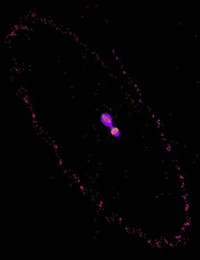
"Pluto and Charon are different – they're smaller, colder and made primarily of rock and ice. When we accounted for the actual strength of these materials, we discovered something completely unexpected," Denton said.
Using advanced impact simulations on the U of A's high-performance computing cluster, the research team found that instead of stretching like silly putty during the collision, Pluto and the proto-Charon actually became temporarily stuck together, rotating as a single snowman-shaped object before separating into the binary system we observe today. A binary system occurs when two celestial bodies orbit around a common center of mass, much like two figure skaters spinning while holding hands.
"Most planetary collision scenarios are classified as 'hit and run' or 'graze and merge.' What we've discovered is something entirely different – a 'kiss and capture' scenario where the bodies collide, stick together briefly and then separate while remaining gravitationally bound," said Denton.

"The compelling thing about this study, is that the model parameters that work to capture Charon, end up putting it in the right orbit. You get two things right for the price of one," said senior study author Erik Asphaug, a professor in the Lunar and Planetary Laboratory.
The study also suggests that both Pluto and Charon remained largely intact during their collision, with much of their original composition preserved. This challenges previous models that suggested extensive deformation and mixing during the impact, Denton said. Additionally, the collision process, including tidal friction as the bodies separated, deposited considerable internal heat into both bodies, which may provide a mechanism for Pluto to develop a subsurface ocean without requiring formation in the more radioactive very early solar system – a timing constraint that has troubled planetary scientists.
The research team is already planning follow-up studies to explore several key areas. The team wants to investigate how tidal forces influenced Pluto and Charon's early evolution when they were much closer together, analyze how this formation scenario aligns with Pluto's current geological features, and examine whether similar processes could explain the formation of other binary systems.
"We're particularly interested in understanding how this initial configuration affects Pluto's geological evolution," Denton said. "The heat from the impact and subsequent tidal forces could have played a crucial role in shaping the features we see on Pluto's surface today."
UA News - Newly Discovered 'Kiss and Capture' Mechanism Explains the Formation of Pluto and Its Largest Moon

Study Sheds Light on Origin of Genetic Code
Nearly all living organisms use the same genetic code, the building blocks of life. A new study suggests conventional wisdom about how the code evolved is likely flawed.Study Sheds Light on Origin of Genetic Code

By Daniel Stolte, University Communications - December 12, 2024
Despite awe-inspiring diversity, nearly every lifeform – from bacteria to blue whales – shares the same genetic code. How and when this code came about has been the subject of much scientific controversy.
Taking a fresh approach at an old problem, Sawsan Wehbi, a doctoral student in the Genetics Graduate Interdisciplinary Program at the University of Arizona, discovered strong evidence that the textbook version of how the universal genetic code evolved needs revision. Wehbi is the first author of a study published in the journal PNAS suggesting the order with which amino acids – the code's building blocks – were recruited is at odds with what is widely considered the "consensus" of genetic code evolution.
"The genetic code is this amazing thing in which a string of DNA or RNA containing sequences of four nucleotides is translated into protein sequences using 20 different amino acids," said Joanna Masel, the paper's senior author and aprofessor of ecology and evolutionary biology at the U of A. "It's a mind-bogglingly complicated process, and our code is surprisingly good. It's nearly optimal for a whole bunch of things, and it must have evolved in stages."
The study revealed that early life preferred smaller amino acid molecules over larger and more complex ones, which were added later, while amino acids that bind to metals joined in much earlier than previously thought. Finally, the team discovered that today's genetic code likely came after other codes that have since gone extinct.
The authors argue that the current understanding of how the code evolved is flawed because it relies on misleading laboratory experiments rather than evolutionary evidence. For example, one of the cornerstones of conventional views of genetic code evolution rests on the famous Urey-Miller experiment of 1952, which attempted to simulate the conditions on early Earth that likely witnessed the origin of life.
While valuable in demonstrating that nonliving matter could give rise to life's building blocks, including amino acids, through simple chemical reactions, the experiment's implications have been called into question. For example, it did not yield any amino acids containing sulfur, despite the element being abundant on early Earth. As a result, sulfuric amino acids are believed to have joined the code much later. However, the result is hardly surprising, considering that sulfur was omitted from the experiment's ingredients.
According to co-author Dante Lauretta, Regents Professor of Planetary Science and Cosmochemistry at the U of A Lunar and Planetary Laboratory, early life's sulfur-rich nature offers insights for astrobiology, particularly in understanding the potential habitability and biosignatures of extraterrestrial environments.
"On worlds like Mars, Enceladus and Europa, where sulfur compounds are prevalent, this could inform our search for life by highlighting analogous biogeochemical cycles or microbial metabolisms," he said. "Such insights might refine what we look for in biosignatures, aiding the detection of lifeforms that thrive in sulfur-rich or analogous chemistries beyond Earth."
The team used a new method to analyze sequences of amino across the tree of life, all the way back to the last universal common ancestor, or LUCA, a hypothesized population of organisms that lived around 4 billion years ago and represents the shared ancestor of all life on Earth today. Unlike previous studies, which used full-length protein sequences, Wehbi and her group focused on protein domains, shorter stretches of amino acids.
"If you think about the protein being a car, a domain is like a wheel," Wehbi said. "It's a part that can be used in many different cars, and wheels have been around much longer than cars."
To get a handle on when a specific amino acid likely was recruited into the genetic code, the researchers used statistical data analysis tools to compare the enrichment of each individual amino acid in protein sequences dating back to LUCA, and even farther back in time. An amino acid that shows up preferentially in ancient sequences was likely incorporated early on. Conversely, LUCA's sequences are depleted for amino acids that were recruited later but became available by the time less ancient protein sequences emerged.
The team identified more than 400 families of sequences dating back to LUCA. More than 100 of them originated even earlier and had already diversified prior to LUCA. These turned out to contain more amino acids with aromatic ring structures, like tryptophan and tyrosine, despite these amino acids being late additions to our code.
"This gives hints about other genetic codes that came before ours, and which have since disappeared in the abyss of geologic time," Masel said. "Early life seems to have liked rings."
UA News - Study Sheds Light on Origin of Genetic Code

U of A Projects Research Expenditures Surpassed $1B for FY 2024, Joining a Select Group of US Research Institutions
UniversityU of A Projects Research Expenditures Surpassed $1B for FY 2024, Joining a Select Group of US Research Institutions

University Communications and Research, Innovation and Impact - December 17, 2024
Retrieving the largest asteroid sample ever brought to Earth, advancing a vaccine for Valley fever to human clinical trial – the world's first against fungal infection to reach this stage – and mitigating the effects of extreme heat are examples of the power of the University of Arizona faculty, staff and student research and innovation. University officials project research activity has exceeded $1 billion in fiscal year 2024, which ended on June 30, 2024, and are submitting this data to the National Science Foundation for review. The official number will be confirmed in the fall.
"Our faculty members tackle urgent global challenges, from energy and environmental issues to national security, human health and the societal impact of technological change," said University of Arizona President Suresh Garimella. "The scale of our research enterprise provides the capacity to lead multi-institution and interdisciplinary successes like the OSIRIS-REx mission and to pursue revolutionary advancements that will benefit people everywhere, such as personalized medical treatments with the Center for Advanced Molecular and Immunological Therapies. Research advances human knowledge and is a core part of our mission: It provides the hands-on learning experience that prepares our students to pursue their goals and contributes to the cutting-edge workforce Arizona needs while also strengthening communities and creating opportunity throughout the state."
Reaching this milestone places the U of A among a select group of top research institutions, including Stanford University, Duke University, Harvard University, the University of California, Los Angeles, the University of Florida, the University of Michigan, and the University of North Carolina.
Newly released data from the NSF's Higher Education Research and Development Survey confirmed that the university delivered $955 million in total research activity in FY23 (including more than $356 million in health sciences); this year's submission for the survey exceeds that mark. The survey ranks institutions based on research expenditures, providing a comprehensive measure of research vitality, and for the sixth consecutive year, the U of A ranks among the nation’s top 20 public research institutions and the top 4% of over 900 universities and colleges that invested in research and development.
The U of A also maintained its No. 1 ranking in astronomy and astrophysics – a distinction held annually since 1987. Additional key rankings include:
- No. 4: High Hispanic enrollment
- No. 6: NASA-funded activity
- No. 7: Physical sciences
- No. 20: Public universities overall
- No. 36: All universities
"Research is the cornerstone of the University of Arizona's standing as a world-class institution, and our latest rankings reaffirm this excellence," said Tomás Díaz de la Rubia, senior vice president of research and innovation. "Our extraordinary research community – faculty, postdocs, students and staff – continues to tackle the world's most pressing challenges while forging transformative partnerships with government, industry and nonprofit organizations. This work is guided by our land-grant mission, driving innovation and discovery, enriching student learning, and strengthening Arizona's economy, workforce and communities."
Read more about U of A Research, Innovation & Impact.
"The University of Arizona offers a unique environment to pursue groundbreaking research across diverse fields, including my work on Alzheimer's disease and related dementias at the U of A Health Sciences Center for Innovation in Brain Science," said Coco Tirambulo, an M.D./Ph.D. student at the U of A College of Medicine – Tucson. "Growing up in my parents' adult care home, I witnessed the challenges faced by patients and caregivers, which fuels my commitment to advancing precision medicine therapies. I hope our research leads to transformative solutions for families navigating neurodegenerative diseases."
UA News - U of A projects research expenditures surpassed $1B for FY 2024, joining a select group of US research institutions

New 'Spectral Fingerprint' Atlas of Satellites Aims to Improve Space Security
LPL researchers have created the first astronomical equivalent of a fingerprint database for satellites, a critical first step toward easily identifying human-made objects in the increasingly crowded geostationary orbit.New 'Spectral Fingerprint' Atlas of Satellites Aims to Improve Space Security

By Stephanie Doster, Space 4 Center - November 12, 2024
University of Arizona researchers have created the first astronomical equivalent of a fingerprint database for satellites, a critical first step toward easily identifying human-made objects in the increasingly crowded geostationary orbit.
This database, or spectral atlas, includes 96 satellites in the geostationary orbit, or GEO – home to satellites used for communications, imaging, navigation and other purposes – that are visible from Tucson.
Adam Battle, a Ph.D. candidate in the U of A Lunar and Planetary Laboratory supported by the Space4 Center, led the research, which was published Tuesday in The Planetary Science Journal.
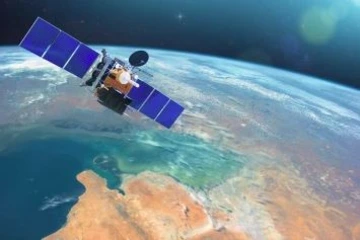
"Satellites look like tiny dots in the sky, even through most telescopes. For decades, humans have launched tens of thousands of objects into space with no mechanism for
identifying them easily," Battle said. "This is the first time this sort of systematic, big atlas of spectral data has been collected for these objects. It gives us a baseline for differentiating space objects, for knowing where everything is and what has changed and keeping that space safe."
The United States Space Surveillance Network, part of the U.S. Space Command, tracks more than 45,000 artificial objects in Earth's orbit, including about 350 active payloads in GEO.
The GEO belt is a unique orbit about 22,000 miles above Earth's equator. Satellites in GEO orbit at the same rate and direction as Earth; from the ground, they appear to stand still. Only so many orbital slots are available in GEO, making them valuable to companies and nations looking to put satellites there. The average lifespan of a satellite in GEO is about 15 to 20 years, after which they are maneuvered into a higher, "graveyard" orbit where they remain as space junk.
"The orbital space around the Earth is getting congested, and we unfortunately do not have license places for satellites to identify them easily. This work is the first step towards making space safe, secure and sustainable," said Vishnu Reddy, director of the university's Space4 Center and a planetary science professor who co-authored the paper. Reddy, Battle's Ph.D. advisor, initiated the project when he started at the U of A nearly a decade ago.
Other co-authors of the research include Roberto Furfaro, professor of systems and industrial engineering and Space4 deputy director, and Space4 Center software engineer Tanner Campbell.
The U of A team used the power of spectroscopy to create the atlas. With spectroscopy, the team can measure how the sun's light interacts with materials on the satellites like metals, paint and solar panels, and how these interactions change with illumination conditions. The results are a detailed pattern of colors for those unique conditions – a color fingerprint – that can be used to identify that specific object.
Using a telescope built by U of A students and housed on campus, Battle observed objects in GEO for 192 nights during every season between January 2020 and June 2022, except for the cloudy summer months. A typical night's worth of observing involved imaging one object every 45 seconds for the entire night. This generated 284 separate datasets and about 190,000 spectra.
As part of his study, Battle focused on repeated observations of five satellite bus types – the central structure to which communications arrays, thrusters and solar panels are mounted – to determine how their spectra varied over nights and seasons and how they differed from the spectra of natural objects.
The resulting atlas contains the unique detailed patterns of colors for 96 individual satellites observed in GEO from Tucson.
"Historically, scientists have used brightness measurements, as the phase angle changes.
But using spectroscopy allows you to add another layer of information, and the ultimate goal is to be able to uniquely identify different satellites with machine learning algorithms trained on these 'fingerprints,'" Battle said. "We can also compare these spectra to samples in the lab to begin estimating what materials are used on the spacecraft."
David Cantillo, another Lunar and Planetary Laboratory graduate student working with Reddy, is building a telescope in Australia, where he plans to expand the atlas by studying space objects in GEO that aren't visible from the United States.
"The next step is to combine the power of machine learning with this incredible dataset for fast and credible identification of satellites," Furfaro said. "We are working towards the goal where we can operationally deploy this tool for a wide range of space applications."
UA News - New 'Spectral Fingerprint' Atlas of Satellites Aims to Improve Space Security

U of A Scientists Have Their Eyes on Europa, Jupiter's Mysterious, Icy Moon
The largest spacecraft to ever explore the solar system, NASA's Europa Clipper, will orbit Jupiter and make 49 planned flybys of its moon Europa to study the moon's icy shell and help researchers better understand what lies beneath.U of A Scientists Have Their Eyes on Europa, Jupiter's Mysterious, Icy Moon

By Daniel Stolte, University Communications - October 28, 2024
The largest spacecraft to ever explore the solar system blasted into the sky above NASA's Kennedy Space Center in Cape Canaveral, Florida, on Oct. 14. NASA's Europa Clipper will orbit Jupiter and make 49 planned flybys of its moon Europa to study the moon's icy shell and help researchers better understand what lies beneath.
Scientists at the University of Arizona Lunar and Planetary Lab, which has longstanding expertise imaging other worlds in unprecedented detail, will participate in many aspects of the mission, with emphasis on developing the data processing methods to produce beautiful images, mosaics and topographic data.
Europa Clipper carries nine scientific instruments to provide a comprehensive study of the moon Europa, which is covered by a thick, icy crust, under which scientists believe lies a vast ocean of liquid water. This makes Europa one of the prime destinations in the solar system to search for extraterrestrial life, as scientific evidence suggests that the ingredients for life may exist on Europa right now. If the mission determines Europa is habitable, it may mean there are more habitable worlds in our solar system and beyond than previously imagined.
At the heart of the science instrument suite on board the orbiter is the Europa Imaging System, or EIS (pronounced "ice"), which will capture Europa's valleys, ridges, dark bands and other features in detail. Developed at the Johns Hopkins Applied Physics Laboratory in Laurel, Maryland, EIS consists of a wide-angle camera and a narrow-angle camera, each with an 8-megapixel sensor, that will map Europa with high-resolution color and stereoscopic images.
"I look forward to seeing the surface of Europa at a level of detail we have never seen before," said Sarah Sutton, a research and development engineer and scientist in the U of A Lunar and Planetary Laboratory who will work on Europa image processing and planning.
Sutton, who has researched Mars for most of her career, is part of a group at the university led by Regents Professor Alfred McEwen, who is also principal investigator of NASA's HiRISE camera on the agency's Mars Reconnaissance Orbiter, which has been photographing the surface of Mars for over a decade and a half.
"It will be exciting to test our ideas about Europa's surface evolution and to discover new things about this intriguing ocean world," Sutton said. "I hope we get to observe active changes happening on the surface, or even actively erupting plumes of gas and dust."
McEwen, who serves as deputy principal investigator on the EIS instrument, wants to answer key questions, including: How deep is Europa's ocean, and how thick is the ice shell? Is Europa currently active? Are there eruptions or plumes that can carry subsurface materials to the surface? Are there complex organic molecules on Europa's surface?
"EIS will be essential or helpful to all of these objectives," he said. "At closest approach, about 50 kilometers (30 miles) from the moon's surface, we'll be able to image small patches of the surface down to about 50 centimeters (20 inches). Together, our cameras will provide essential information needed for a future landing mission to Europa."
Another instrument, REASON, short for Radar for Europa Assessment and Sounding: Ocean to Near-surface, is an ice-penetrating radar designed to look inside Europa's icy crust and study the nature of the interior. Reaching as deep as 30 kilometers (nearly 20 miles) into Europa's icy crust, the observations will allow scientists to build a picture of how the crust of Europa evolved to its present state and how it functions today, according to Lynn Carter, associate professor of planetary sciences and University Distinguished Scholar who serves a co-investigator on the REASON team.
"Our observations will place real constraints on the nature of the icy crust and how it changes through time and interacts with the subsurface ocean," she said. "This is a really critical part of the puzzle for determining if Europa could be habitable. I'm excited that we could see something new and unexpected."
Europa Clipper is the first mission designed to conduct a detailed study of Jupiter's moon Europa. During its journey, the spacecraft will travel 1.8 billion miles (2.9 billion kilometers) to reach Jupiter in April 2030. To power its extensive instrument suite in the faint sunlight that reaches Jupiter, Europa Clipper carries the largest solar arrays NASA has ever used for an interplanetary mission. With arrays extended, the spacecraft spans 100 feet from end to end. With propellant loaded, its launch weight registered at a whopping 13,000 pounds.
Elizabeth Turtle of APL, who serves as the principal investigator on the EIS camera, obtained her doctorate at the U of A's Lunar and Planetary Laboratory and later held a faculty position there. All in all, at least 20 other LPL alumni work on the Europa Clipper mission in one form or another.
Managed by Caltech in Pasadena, California, the Jet Propulsion Laboratory led the development of the Europa Clipper mission in partnership with the Johns Hopkins Applied Physics Laboratory for NASA's Science Mission Directorate in Washington. The Applied Physics Laboratory designed the main spacecraft body in collaboration with the Jet Propulsion Laboratory and NASA's Goddard Space Flight Center, Marshall Space Flight Center and Langley Research Center. The Planetary Missions Program Office at the Marshall Space Flight Center in Huntsville, Alabama, executes program management of the Europa Clipper mission.
U of A Scientists Have Their Eyes on Europa, Jupiter's Mysterious, Icy Moon - UA News

Winds of Change: James Webb Space Telescope Reveals Elusive Details in Young Star Systems
Planet-forming disks, maelstroms of gas and dust swirling around your stars, are nurseries that give rise to planetary systems, including our solar system. U of A astronomers have discovered new details of gas flows that sculpt those disks and shape them over time.Winds of Change: James Webb Space Telescope Reveals Elusive Details in Young Star Systems

By Daniel Stolte, University Communications - October 4, 2024
Every second, more than 3,000 stars are born in the visible universe. Many are surrounded by what astronomers call a protoplanetary disk – a swirling "pancake" of hot gas and dust from which planets form. The exact processes that give rise to stars and planetary systems, however, are still poorly understood.
A team of astronomers led by University of Arizona researchers has used NASA's James Webb Space Telescope to obtain some of the most detailed insights into the forces that shape protoplanetary disks. The observations offer glimpses into what our solar system may have looked like 4.6 billion years ago.
Specifically, the team was able to trace so-called disk winds in unprecedented detail. These winds are streams of gas blowing from the planet-forming disk out into space. Powered largely by magnetic fields, these winds can travel tens of miles in just one second. The researchers' findings, published in Nature Astronomy, help astronomers better understand how young planetary systems form and evolve.
According to the paper's lead author, Ilaria Pascucci, a professor at the U of A Lunar and Planetary Laboratory, one of the most important processes at work in a protoplanetary disk is the star eating matter from its surrounding disk, which is known as accretion.
"How a star accretes mass has a big influence on how the surrounding disk evolves over time, including the way planets form later on," Pascucci said. "The specific ways in which this happens have not been understood, but we think that winds driven by magnetic fields across most of the disk surface could play a very important role."
Young stars grow by pulling in gas from the disk that's swirling around them, but in order for that to happen, gas must first shed some of its inertia. Otherwise, the gas would consistently orbit the star and never fall onto it. Astrophysicists call this process "losing angular momentum," but how exactly that happens has proved elusive.
To better understand how angular momentum works in a protoplanetary disk, it helps to picture a figure skater on the ice: Tucking her arms alongside her body will make her spin faster, while stretching them out will slow down her rotation. Because her mass doesn't change, the angular momentum remains the same.
For accretion to occur, gas across the disk has to shed angular momentum, but astrophysicists have a hard time agreeing on how exactly this happens. In recent years, disk winds have emerged as important players funneling away some gas from the disk surface – and with it, angular momentum – which allows the leftover gas to move inward and ultimately fall onto the star.
Because there are other processes at work that shape protoplanetary disks, it is critical to be able to distinguish between the different phenomena, according to the paper's second author, Tracy Beck at NASA's Space Telescope Science Institute.
While material at the inner edge of the disk is pushed out by the star's magnetic field in what is known as X-wind, the outer parts of the disk are eroded by intense starlight, resulting in so-called thermal winds, which blow at much slower velocities.
"To distinguish between the magnetic field-driven wind, the thermal wind and X-wind, we really needed the high sensitivity and resolution of JWST (the James Webb Space Telescope)," Beck said.
Unlike the narrowly focused X-wind, the winds observed in the present study originate from a broader region that would include the inner, rocky planets of our solar system – roughly between Earth and Mars. These winds also extend farther above the disk than thermal winds, reaching distances hundreds of times the distance between Earth and the sun.
"Our observations strongly suggest that we have obtained the first images of the winds that can remove angular momentum and solve the longstanding problem of how stars and planetary systems form," Pascucci said.
For their study, the researchers selected four protoplanetary disk systems, all of which appear edge-on when viewed from Earth.
"Their orientation allowed the dust and gas in the disk to act as a mask, blocking some of the bright central star's light, which otherwise would have overwhelmed the winds," said Naman Bajaj, a graduate student at the Lunar and Planetary Laboratory who contributed to the study.
By tuning JWST's detectors to distinct molecules in certain states of transition, the team was able to trace various layers of the winds. The observations revealed an intricate, three-dimensional structure of a central jet, nested inside a cone-shaped envelope of winds originating at progressively larger disk distances, similar to the layered structure of an onion. An important new finding, according to the researchers, was the consistent detection of a pronounced central hole inside the cones, formed by molecular winds in each of the four disks.
Next, Pascucci's team hopes to expand these observations to more protoplanetary disks, to get a better sense of how common the observed disk wind structures are in the universe and how they evolve over time.
"We believe they could be common, but with four objects, it's a bit difficult to say," Pascucci said. "We want to get a larger sample with James Webb, and then also see if we can detect changes in these winds as stars assemble and planets form."
UA News - Winds of Change: James Webb Space Telescope Reveals Elusive Details in Young Star Systems

OSIRIS-REx, 1 Year Later: Asteroid Sample Continues to Provide Clues About Early Solar System and Origins of Life on Earth
It's been a year since NASA's OSIRIS-REx spacecraft successfully delivered the largest-ever asteroid sample to Earth on Sept. 24, 2023.OSIRIS-REx, 1 Year Later: Asteroid Sample Continues to Provide Clues About Early Solar System and Origins of Life on Earth

It's been a year since NASA's OSIRIS-REx spacecraft successfully delivered the largest-ever asteroid sample to Earth on Sept. 24, 2023.
Since then, intriguing clues about the early solar system and potential origins of life on Earth have emerged from study of the sample, under the leadership of OSIRIS-REx principal investigator Dante Lauretta, a Regents Professor of planetary sciences at the University of Arizona.
The successful delivery of 4.3 ounces (122 grams) of material from near-Earth asteroid Bennu marked a pivotal moment in space exploration. The mission collected more than twice the initial requirement of 2 ounces, or 60 grams, of the asteroid's surface material. Initial examinations of the material revealed crucial information about the asteroid's composition. Researchers identified significant quantities of carbon-based compounds and hydrated minerals in the sample, supporting hypotheses about the potential role of asteroids in bringing essential components for life to early Earth.
Scientists also discovered in the sample the presence of magnesium sodium phosphate, a specific phosphate mineral that did not get captured during remote sensing of the asteroid. This suggests that Bennu's origins may be more complex than initially thought. It also hints that the asteroid could have been born from a larger, water-rich celestial body.
"A year after OSIRIS-REx returned its sample to Earth, I am amazed by the discoveries we've made," Lauretta said. "Finding organic compounds and signs of a watery past on Bennu brings us closer to understanding the origins of our solar system and the chemistry that may have sparked life on Earth. It's a powerful reminder of how deeply we are connected to the universe."
While the majority of the asteroid material remains under careful curation at NASA's specialized facilities, portions have been allocated to key research institutions, including the U of A. Select museums across the U.S. now display fragments of the extraterrestrial material, as part of an initiative to encourage more public engagement with this scientific achievement. The U of A's Alfie Norville Gem & Mineral Museum is one of three places in the U.S. to showcase a piece of Bennu.

Museum sample Tucked inside a clear container protected by a metal casing, this pebble collected from asteroid Bennu by the OSIRIS-REx spacecraft is on display at the University of Arizona's Alfie Norville Gem & Mineral Museum. By Chris Richards/University Communications
"The journey of OSIRIS-REx has surpassed our greatest expectations, thanks in large part to the dedication and insight of the students who have been at the heart of this mission," Lauretta said. "As a university-led project, we've been able to involve students directly in groundbreaking discoveries. These findings not only expand our scientific knowledge but also showcase the unique role a university can play in advancing space exploration, fostering a hands-on learning environment that prepares the next generation to lead the future of planetary science."
The OSIRIS-REx mission scope has expanded beyond its initial objectives. The spacecraft, now redesignated as OSIRIS-APEX, has embarked on a new mission to study near-Earth asteroid Apophis. This extended mission is led by Dani Mendoza DellaGiustina, an assistant professor at the university's Lunar and Planetary Laboratory. The OSIRIS-APEX mission aims to observe Apophis during the asteroid's close approach to Earth in 2029, which could provide unprecedented data on the interactions between near-Earth objects and Earth's gravitational field.
The study of Apophis holds particular significance for planetary defense strategies. As an asteroid representative of potentially hazardous near-Earth objects, Apophis could provide critical data for developing future planetary protection measures.
Following the Bennu sample return last year, the U of A also established the interdisciplinary Arizona Astrobiology Center to connect experts from multiple fields to collaborate on investigations into life's origins on Earth and its potential existence on other worlds. The center will also explore the relevance of discoveries about life's origins to different cultures and traditions around the world. The center recently received a $1 million gift from Eugene Jhong, a retired Google software developer turned philanthropist, to support its work.
UA News - OSIRIS-REx, 1 Year Later: Asteroid Sample Continues to Provide Clues About Early Solar System and Origins of Life on Earth