

Bear Down 100: Mapping the Moon
By the time President John F. Kennedy announced in 1961 that the United States would land a man on the moon before the end of the decade, a small group of University of Arizona researchers were already studying the lunar surface. Their work would quickly become integral to the success of future robotic and Apollo missions.Bear Down 100: Mapping the Moon

By Logan Burtch-Buus, University Communications - March 6, 2026
As part of the 100th anniversary of our motto, "Bear Down," the University of Arizona is looking back at several of the most remarkable moments and accomplishments in the university’s illustrious history, with an eye toward the "Bear Down" moments of the future.
By the time President John F. Kennedy announced in 1961 that the United States would land a man on the moon before the end of the decade, a small group of University of Arizona researchers were already studying the lunar surface. Their work would quickly become integral to the success of future robotic and Apollo missions.
The moon maps created by Gerard P. Kuiper – widely considered the father of modern-day planetary science – not only helped NASA understand the lunar surface but also played a key role in selecting landing sites for Apollo 12 and other missions. But how did Kuiper and his colleagues manage to map a moon landing site? Through talent, dedication and a commitment to achieving what others thought impossible – the "Bear Down" spirit.

Ewen Whitaker (left) and Gerard Kuiper helped map the moon and built the Lunar and Planetary Laboratory into a leader in the field of planetary science.
Kuiper's Wildcat journey began in 1960, when he moved to Tucson and founded the Lunar and Planetary Laboratory at the U of A. Three years later, the University of Arizona Press published the Rectified Lunar Atlas, which included the first images of undistorted features on the near side of the moon. The images were designed to replicate the perspective of an astronaut flying overhead. Kuiper's team created that perspective by stitching together lunar photographs captured by Southern Arizona-based telescopes onto a globe and then photographing the model to eliminate the distortion that normally occurs when looking through a telescope.
Consolidated Lunar Atlas
In 1967, Kuiper's Consolidated Lunar Atlas was published by the Lunar and Planetary Laboratory for use by the U.S. Air Force. This atlas was comprised of the highest resolution images taken from the ground, most of which were taken using the NASA-funded 61-inch telescope nestled atop Mount Bigelow in the Catalina Mountains north of Tucson. The telescope is now managed by the university's Steward Observatory and bears Kuiper's name.
Kuiper and his team created the Consolidated Lunar Atlas by carefully focusing the telescope on the moon and systematically snapping thousands of film photos along the moon's terminator, the boundary between sunlight and darkness. At the terminator, sunlight hits the moon at a low angle, allowing the scientists to capture subtle variations in the lunar topography.
Kuiper became principal investigator of NASA's robotic Ranger missions, which mapped the moon ahead of the unmanned Surveyor missions. The success of the Surveyor landings reassured astronauts they could follow their robotic forbearers and step foot on the moon – and ultimately led to the pinpoint landing procedures demonstrated by Apollo 12 in 1969, the second manned mission on the moon.
Since Apollo, the U of A has imaged the surface of Mars in great detail using the High Resolution Imaging Science Experiment aboard the Mars Reconnaissance Orbiter. The university also led the team that imaged the surface of Saturn's moon Titan from under the clouds with the Cassini-Huygens probe, and led the OSIRIS-REx mission to collect material from an asteroid.
Explore more Bear Down 100 moments at Arizona.edu/BearDown.
UA News: Bear Down 100: Mapping the Moon

Large Craters Offer Clues to the Origin of Asteroid 16 Psyche
Using computer simulations, researchers at the Lunar and Planetary Laboratory model the formation of giant impact basins, or craters, on 16 Psyche in preparation for the arrival of NASA's Psyche mission in 2029.Large Craters Offer Clues to the Origin of Asteroid 16 Psyche

By Kylianne Chadwick, University Communications - March 16, 2026
Even 200 years after asteroid 16 Psyche was discovered, astronomers continue to puzzle over its formation.
Psyche is the 10th-most massive asteroid in the main belt between Mars and Jupiter, and the largest known metallic asteroid, at 140 miles in diameter. NASA's Psyche mission will arrive in 2029 to determine its origin. Psyche may be a leftover building block of an early planet, shredded by violent collisions, or a planetary fragment that once separated into layers before losing its rocky outer mantle.
Other hypotheses suggest Psyche is an ancient remnant that either started metal-rich or became a blend of rock and metal after repeatedly smashing into other asteroids. Each scenario has different implications for the origin of planets in the early Solar System.
To investigate these possibilities, researchers at the University of Arizona's Lunar and Planetary Laboratory ran simulations to predict how a large crater near Psyche's north pole could have formed under these competing ideas. In a study published in JGR Planets, the team outlines predictions designed to help scientists interpret the data that NASA's Psyche mission will collect when it arrives in 2029. Coupled with spacecraft observations, the predictions may help settle the mystery of Psyche's makeup once and for all.

The researchers used Smoothed Particle Hydrodynamics code to simulate the formation of Psyche's North Pole impact basin via an impactor striking the surface at a 45-degree angle. The colors represent density of the material, where yellow is the impactor and purple is the Psyche target.
Namya Baijal
"Large impact basins or craters excavate deep into the asteroid, which gives clues about what its interior is made of," said Namya Baijal, a doctoral candidate at the LPL and first author of the paper. "By simulating the formation of one of its largest craters, we were able to make testable predictions for Psyche's overall composition when the spacecraft arrives."
Fewer than 10% of asteroids in the main belt are metal-rich, and of those, Psyche is the largest. However, to learn more about how that metal is distributed inside the asteroid, scientists will have to wait until the Psyche spacecraft gets there.
"One of our main findings was that the porosity – the amount of empty space inside the asteroid – plays a significant role in how these craters form," said Baijal. "Porosity is often ignored because it's difficult to include in models, but our simulations show it can strongly affect the impact process and shape of craters left behind."
When an asteroid is porous, it is crushable and the impact energy is efficiently absorbed, leading to deeper, steeper craters, with less ejected material scattered across the surface. By comparing these simulated craters with what the spacecraft will observe, scientists will be able to investigate whether Psyche's interior is separated into layers of rock and metal, or instead a mixed-up jumble of materials.
Psyche's origins
The researchers liken their approach to walking into an abandoned pizza parlor, as Psyche and the other Main Belt asteroids are thought to be leftovers of planet formation. "The cooks have long left, but you can look at what's left behind – the ovens, scraps of dough, the toppings – and make inferences about how the pizzas were made," said Erik Asphaug, a professor in LPL and co-author of the study. "We can't get to the cores of Earth or Mars or Venus, but maybe we can get to the core of an early asteroid."
In other words, if Psyche turns out to be an exposed planetary core where most of the rocky crust was stripped away, it will offer a window into a violent stage of planet formation that scientists cannot observe otherwise.
"We tested two main interior structures for Psyche," said Baijal. "One is a layered structure with a metallic core and a thin, rocky mantle, which likely formed if a violent collision stripped away the outer layers. The other is a uniform mixture of metal and silicate, created by a more catastrophic impact that mixed everything together, like some metal-rich meteorites found on Earth."
The researchers used the best shape model of Psyche, derived from telescope observations, to create a 3D target. They reproduced the formation of a specific concavity in the model, about 30 miles across by three miles deep, as a simulated impact in which Psyche was hit at speeds typical of asteroid belt collisions – about three miles per second. The team varied the size of the virtual impactors and tested the two models (metallic core and mixed rock-and-metal) to see which could reproduce the crater's known dimensions. Each scenario produced slightly different crater shapes and ejecta patterns.
"We found that an impactor about three miles across would create a crater of the right dimensions," Baijal said. "The crater's formation is consistent with both scenarios of Psyche's makeup."
Unlike planets, many asteroids are not solid rock. Instead, they can contain large amounts of empty space or fractured material left over from past collisions. The team incorporated this porosity into their models and discovered it strongly affects not only the depth and shape of craters, but also the distribution of ejected material after impact.
"By rigorously treating Psyche's shape, porosity and composition, this work represents a true watershed moment for our capacity to realistically simulate impacts into unique types of asteroids," said Adeene Denton, a postdoctoral researcher and another co-author of the study.
The Psyche spacecraft carries instruments designed to study the asteroid's surface, gravitational field, magnetic field, and composition. In addition to crater shapes, which depend on internal structure and porosity, the simulations predict other observable patterns, including variations in density caused when impacts compress the asteroid's interior and the distribution of metal-rich debris blasted onto the surface.
"When the spacecraft arrives at Psyche in a few years, the geochemists, geologists and modelers on the team will all be looking at the same object and trying to interpret what we see," said Asphaug. "This work gives us a head start."
The Psyche mission is led by Arizona State University. Lindy Elkins-Tanton of the University of California, Berkeley, is the principal investigator. A division of Caltech in Pasadena, NASA's Jet Propulsion Laboratory is responsible for the mission's overall management, system engineering, integration and test, and mission operations. Maxar Technologies (now Intuitive Machines) in Palo Alto, California, provided the high-power solar electric propulsion spacecraft chassis.
Psyche is the 14th mission selected as part of NASA's Discovery Program, managed by the agency's Marshall Space Flight Center in Huntsville, Alabama. NASA's Launch Services Program, based at Kennedy, managed the launch service.
UA News - Large Craters Offer Clues to the Origin of Asteroid 16 Psyche

Jupiter’s Shape Redefined by the Juno Mission
A new study involving LPL Professor Emeritus William Hubbard updates our understanding of the shape of Jupiter.Jupiter’s Shape Redefined by the Juno Mission

By Joe Schools, Lunar and Planetary Laboratory - February 9, 2026
The biggest planet in our solar system is a little bit smaller and a little bit flatter than we thought. A new study involving LPL Professor Emeritus William Hubbard updates our understanding of the shape of Jupiter, which has implications for the structure of Jupiter’s atmosphere. This work is also important in a broader astronomy context, as Jupiter’s shape is commonly used as a reference point for describing or modeling various objects such as exoplanets.
Jupiter’s shape is known as an oblate spheroid, with a distinct bulge around the equator. The distance between Jupiter’s center and top of the atmosphere at the equator (the equatorial radius) is about 7% larger than the distance between its center and the top of the atmosphere at the poles (the polar radius). This equatorial bulge exists due to a combination of factors including Jupiter’s rapid 10-hour rotation rate, its complex internal structure, and wind effects in the atmosphere.
The current values for Jupiter’s radius and broader shape were calculated from Pioneer and Voyager radio occultations (changes in a radio wave as it passes through an atmosphere) in the 1970s. This work, published in Nature Astronomy, uses many high-precision radio occultation measurements from the Juno spacecraft, currently orbiting Jupiter, to make a much more precise determination of Jupiter’s shape. Jupiter’s polar radius and equatorial radius were found to be 12 km smaller and 4 km smaller, respectively, than previously thought, meaning that Jupiter itself is a little smaller than previously estimated, but its equatorial bulge is slightly more pronounced.

NASA/JPL-Caltech
The Pioneer and Voyager derived Jupiter shape did not account for the effect of wind induced variations. This new work accounts for the strong zonal winds that blow east-west around the equator, which raise regions of denser atmosphere and add to the equatorial bulge of Jupiter.
Professor Hubbard was involved in the original analysis of the first radio occultation data from Pioneers 10 and 11 (1973 and 1974 respectively). Now, more than 50 years later, he is a member of the team that plans the Juno radio occultations and analyzes the more precise and extensive data.
The Juno mission is managed by Southwest Research Institute with support from NASA’s Jet Propulsion Laboratory.

Lunar & Planetary Lab Director Mark Marley Awarded Prestigious Lecar Prize
Endowed by the estate of astrophysicist Myron S. Lecar, the prize honors exceptional contributions to the study of extrasolar planets and theoretical astrophysics.Lunar & Planetary Lab Director Mark Marley Awarded Prestigious Lecar Prize

By Scott Coleman, College of Science - February 3, 2026
Dr. Mark Marley, professor and director of the University of Arizona’s Lunar and Planetary Laboratory (LPL), has been awarded the Lecar Prize in recognition of his exceptional contributions to planetary and exoplanetary science.
Endowed by the estate of astrophysicist Myron S. Lecar, the prize honors groundbreaking research in extrasolar planets and theoretical astrophysics.
“I have been exceptionally fortunate that my career overlapped with the first discoveries and atmospheric studies of extrasolar planets,” Marley said. “It has been exhilarating to help bring the methods and insights of planetary science to the new field of exoplanet science.”
Marley’s fascination with space was sparked by the Apollo and Viking missions. As a high school student in Arizona, he once wrote to LPL asking if it was possible to make a career out of studying planets. The encouraging reply helped set him on a path that led to a B.S. in Geophysics and Planetary Science from Caltech, a Ph.D. in Planetary Science from LPL, and ultimately his return to the University of Arizona as its first LPL director who was also a program alumnus.
Marley has authored more than 310 scientific papers exploring subjects from Saturn’s rings to the atmospheres of giant planets, brown dwarfs, and a wide variety of exoplanets. Twice recognized with NASA’s Medal for Exceptional Scientific Achievement, he is also a Fellow of the American Astronomical Society and has played a key advisory role in shaping NASA’s future space telescope and science initiatives.
To learn more about Dr. Marley and his research, click here.

Kissing the Sun: U of A Researchers Unravel Mysteries of the Solar Wind
Using data collected by NASA's Parker Solar Probe during its closest approach to the sun, LPL Associate Professor Kris Klein and his research team measured the dynamics and ever-changing "shell" of hot gas from where the solar wind originates.Kissing the Sun: U of A Researchers Unravel Mysteries of the Solar Wind

By Daniel Stolte, University Communications - January 29, 2026
Using data collected by NASA's Parker Solar Probe during its closest approach to the sun, a University of Arizona-led research team has measured the dynamics and ever-changing "shell" of hot gas from where the solar wind originates.
Published in Geophysical Research Letters, the findings not only help scientists answer fundamental questions about energy and matter moving through the heliosphere – the volume of space controlled by the sun's activity – which affects not just the Earth and moon, but all planets in the solar system, reaching far into interstellar space. These effects include significant space weather events.
"One of the things that we care about as a technologically advancing society is how we are impacted by the sun, the star that we live with," said Kristopher Klein, associate professor in the U of A Lunar and Planetary Laboratory who led the research study.

When taking the measurements for this study, the Parker Solar Probe, pictured here in an artist's impression, traveled at more than 427,000 miles per hour, making it the fastest human-made object in history.
NASA/APL
For example, during a coronal mass ejection, the sun flings chunks of its atmosphere – highly energetic, charged particles – out into the solar system, where they interact with Earth's magnetic field, with varying impacts on satellites, radio communications and even the radiation airplane passengers are exposed to when they fly over the poles, Klein explained.
"If we can better understand the sun's atmosphere through which these energetic particles are moving, it improves our ability to forecast how these eruptions from the Sun will actually propagate through the solar system and eventually hit and possibly impact the Earth," he said.
While the idea of the sun having an atmosphere may seem difficult to imagine, since our star is essentially a roiling ball of plasma – hot, ionized hydrogen gas – with no appreciable surface, a century of studying its properties has led to a more nuanced picture. The core, where hydrogen undergoes nuclear fusion into helium, is the furnace driving the sun's activity, causing it to constantly radiate energy out into space.
Several layers wrap around the core, with the outermost ones forming the sun's atmosphere. The photosphere, where sunspots are located, is surrounded by a thin "peel" known as the chromosphere, from which flares may sprout and that forms the blotchy "surface" one may see when looking at the sun through a telescope equipped with special filters to allow for safe viewing. The sun's outermost atmospheric layer, the corona, is a fuzzy halo of plasma hidden from view at all times by the star's intense brilliance except for brief moments during a total solar eclipse.
Launched in 2018, Parker Solar Probe has approached the sun closer than any spacecraft mission before. Orbiting the sun in a complex orbit, involving seven passes by Venus, the probe reached its first closest approach on Christmas Eve 2024, and these close approaches have allowed the science team to map the sun's "outer boundary" in a way not possible until now.
In a counterintuitive twist, as the plasma bubbles up from the sun's core, it cools from 27 million degrees to about 10,000 degrees Fahrenheit in the visible photosphere, but as it fans out into the corona, it heats up again, to temperatures in excess of 2 million degrees.

The study was led by Kristopher
Klein, associate professor in the
U of A Lunar and Planetary
Laboratory.
The processes driving these strange dynamics involve complex interactions of the sun's charged particles with powerful magnetic fields that bend, twist and even snap back on themselves – with poorly understood details that have vexed heliophysicists to this day.
"We know there's this constant heat that's being input into the solar wind, and we want to understand what mechanisms are actually leading to that heating," Klein said. "We have made simplified models, we've run computer simulations, but by launching Parker Solar Probe, and by doing these detailed calculations of the structure of the velocity distribution of the particles, we can improve those models and calculate actually how the heating occurs at these at these extremely close distances where we have never measured before."
Before sending a robotic spacecraft capable of "kissing the sun," as the Parker team has referred to the probe's closest flyby, taking it to within 3.8 million miles above the sun's surface, researchers could only describe this heating using simple models for the charged particle distributions.
"One of the pressing questions we seek to answer is how the solar wind is heated as it is accelerated from the sun's surface," he said. "With these new measurements and calculations, we're rewriting our understanding of how energy moves through the sun's outer atmosphere."
A numerical code developed by Klein's team, dubbed Arbitrary Linear Plasma Solver, or ALPS, allowed the researchers to analyze the actual measured distribution rather than using a simplified model to determine how waves move through the plasma Parker is measuring, and – importantly – how the heating changes as the particles hurtle away from the sun. At the point of no return, where the solar wind is born, they begin to cool, but much more slowly than would be expected for a gas that is simply expanding, Klein explained – a process known as damping and yet another mystery waiting to be fully understood.
With ALPS and Parker's observations, the team can measure in detail how much energy is imparted onto the different species of charged particles in the solar wind, said Klein, explaining that this ability changes researchers' understanding of that process not just for the sun, but for all astrophysical objects involving heated plasma and magnetic fields.
"If we can understand the damping in the solar wind, we can then apply that knowledge of energy dissipation to things like interstellar gas, accretion disks around black holes, neutron stars and other astrophysical objects."
UA News - Kissing the Sun: U of A Researchers Unravel Mysteries of the Solar Wind

Pandora, a Keen-eyed Satellite Built to Study Exoplanets, Takes Flight
After clearing its last hurdle on its way to space, the University of Arizona-led Pandora satellite mission launched into orbit, where it will study at least 20 exoplanets and their host stars over long periods of time.Pandora, a Keen-eyed Satellite Built to Study Exoplanets, Takes Flight

By Daniel Stolte, University Communications - January 13, 2026
Update, Jan. 13: Pandora launched successfully aboard a SpaceX Falcon 9 at 6:44 a.m. MST on a clear Sunday morning at Vandenberg Space Force Base in California. About 2.5 hours later, Pandora successfully deployed in orbit. Blue Canyon Technologies, the company responsible for building and integrating the spacecraft’s main systems, was on hand to establish communications with Pandora. Upon verifying solar array deployment, the team confirmed that the batteries are charging and the spacecraft responds to commands. Later this week, control is expected to be handed over to the University of Arizona Mission Operations Center, whose team will continue the process of checkout and commissioning of the observatory.
Pandora, the latest in a long portfolio of University of Arizona's space science missions, has cleared its last major milestone on its journey into space.
The Pandora satellite will provide in-depth study of at least 20 known planets orbiting distant stars to determine the composition of their atmospheres – especially the presence of hazes, clouds and water. It consists of telescope with an 18-inch mirror and instrumentation that allow it to analyze light spectra and measure brightness to an extreme level of accuracy. Light spectra are like signatures that provide scientists with information about the chemical makeup of a star and the atmosphere of a planet that orbits it, while subtle dips in brightness are tell-tale signs that a planet is crossing in front of its star as seen from the observer.

Daniel Apai, a professor of astronomy and planetary sciences, leads the Pandora mission and its exoplanet science team on behalf of the U of A.
The first space telescope built specifically for detailed multi-color observations of starlight filtered through the atmospheres of exoplanets, Pandora will help interpret data both from previous missions like NASA's Kepler Space Telescope and ongoing missions such as the James Webb Space Telescope, said Daniel Apai, the U of A lead of the mission and its exoplanet science team, and a professor for astronomy and planetary sciences at the U of A Steward Observatory and Lunar and Planetary Laboratory.
"Pandora opens a new chapter in exoplanet science, and it will guide future projects in their search for habitable worlds," he said.
The Pandora SmallSat was selected as an inaugural NASA Astrophysics Pioneers mission in 2021. NASA Pioneers are fast-paced missions that are uniquely able to respond to exciting, newly emerging science questions, according to Apai. By design, more than half of the Pandora mission leadership roles filled by early-career scientists and engineers, providing an exciting opportunity for emerging leaders in space sciences. After launching into low Earth orbit, Pandora will undergo a month of commissioning before embarking on its one-year prime mission. All the mission's data will be publicly available.
Once the Pandora satellite has reached its orbit and passed all initial tests, the mission will be operated by the U of A's Multi-Mission Operation Center, or MMOC, which is part of the Arizona Space Institute. Through a contract with NASA, the MMOC, housed at the Applied Research Building on the U of A's main campus, will manage and track the spacecraft's operations in real time, monitor telemetry – data sent down from the satellite – and overall spacecraft health.
"This is the first time an orbiting astrophysics mission is operating from our new Mission Operations Center at the university," said Erika Hamden, director of the Arizona Space Institute. "The PHOENIX Mars Lander and the OSIRIS-REx asteroid sample return mission were operated very successfully from the U of A, and now we're excited to continue that legacy with Pandora. We hope this represents just the first of many transformational NASA missions that ASI will operate out of the Applied Research Building."
Pandora will stare at each of its 20 target planets and their host stars for 24 hours at a time before moving on to the next and repeat that process for a total of 10 observations for each system. The data will establish a firm foundation for interpreting measurements by NASA's James Webb Space Telescope and future missions aimed at searching for habitable worlds.
"From combining Pandora's observations with data from James Webb, we will better understand the atmospheres of those exoplanets," Apai said. "At this point, our goal is not to assess these planets for life, but to probe their atmospheres for any water vapor and – importantly – understand their host stars."

This view of the fully integrated Pandora spacecraft was taken May 19, 2025, following the mission’s successful environmental test campaign at Blue Canyon Technologies in Lafayette, Colorado. Visible are star trackers (center), multilayer insulation blankets (white), the end of the telescope (top), and the solar panel (right) in its launch configuration. - NASA/BCT
Until just over three decades ago, no one knew whether there were planets outside our solar system, let alone planets that could potentially be habitable to life forms. The first exoplanet was discovered in 1992, kicking off a hunt for planets hiding elsewhere in our home galaxy, the Milky Way. As of the time of writing, scientists have discovered more than 6,000 worlds orbiting stars other than our sun. Among exoplanets, the search for worlds that could potentially harbor life has naturally attracted outsized attention from researchers and the public alike.
To determine whether a planet even has the potential of sustaining life, scientists look for certain clues in its atmosphere, such as chemical signatures of oxygen or water.
"With the Pandora satellite poised for launch, we stand at the cusp of a new era in cosmic discovery — one in which we will, for the first time, peer deeply into the atmospheres of distant worlds and expand humanity's understanding of what lies beyond our own sky," said Tomás Díaz de la Rubia, senior vice president for research and partnerships. "At the University of Arizona, space missions like Pandora reflect our enduring legacy of excellence in observational astronomy and our commitment to research that deepens human knowledge and serves the public good."
Because of the enormous distances involved – dozens, if not hundreds of light-years from Earth – observing exoplanets directly has proven extremely challenging. Any planet with conditions conducive to life would be too cool to register in telescopic observations. To get around this, astronomers have resorted to zooming in on their host stars and detecting any planets that may be present through indirect means.
One such technique measures the tiny dip in brightness that occurs when a planet passes in front of its star while traveling along its orbit. Taking this so-called transit method a step further, astronomers such as Apai's group use spectroscopy to analyze the star light that is filtered as it passes through the planet's atmosphere, in search for clues about the chemical elements and molecules present in the atmosphere.
The only problem with that approach, Apai explained, is that stars aren't the immaculate, uniform, shiny objects familiar from books and illustrations. Most are swirling balls of roiling gas and plasma, their faces smudgy and dotted with sunspots, and some even have atmospheres with cloud-like features wafting across the bright disk. Depending on whether a transiting planet happens to be backlit by a "clean" section of its star or one that is "smudgy," the light measurements will vary, and all bets are off.
"Pandora is the first mission really designed to study the stars and their planets together," he said. "We will have a much better ability to separate the contribution from the star from that of the planet."
For more information on the University of Arizona's long history and achievements in space science, visit www.arizona.edu/research/space.
UA News - Pandoa, a Keen-eyed Satellite Built to Study Exoplants, Takes Flight

Life on Lava: How Microbes Colonize New Habitats
Taking advantage of a "natural laboratory" in Iceland, a research team from the University of Arizona studied how microbes colonize fresh lava flows as soon as they cooled.Life on Lava: How Microbes Colonize New Habitats

By Daniel Stolte, University Communications - December 18, 2025
Life has a way of bouncing back, even after catastrophic events like forest fires or volcanic eruptions. While nature's resilience to natural disasters has long been recognized, not much is known about how organisms colonize brand-new habitats for the first time. A new study led by a team of ecologists and planetary scientists from the University of Arizona provides glimpses into a poorly understood process.
The team conducted field research in Iceland following a series of eruptions of the Fagradalsfjall volcano, located on the southwestern tip of the island. The volcano erupted for a total of three times over the course of the study period, from 2021 until 2023. With each eruption, lava flows blanketed the tundra around the volcano, in some places even covering lava deposits from the previous year.

On March 23, 2021, glowing lava is seen oozing from Iceland's Fagradalsfjall volcano during one of its repeated eruptions over the course of the 3-year study period. - Christopher Hamilton
"The lava coming out of the ground is over 2,000 degrees Fahrenheit, so obviously it is completely sterile," said Nathan Hadland, a doctoral student in the U of A Lunar and Planetary Laboratory and first author of a paper published in Nature Communications Biology. "It's a clean slate that essentially provides a natural laboratory to understand how microbes are colonizing it."
To untangle the ecological dynamics involved in that process, Hadland and his team searched for clues about where the microbes that colonize fresh lava come from. They collected samples from a variety of different potential sources, including lava that had solidified mere hours before, rainwater, and aerosols – particles floating in the air. For context, they sampled soil and rocks from surrounding areas.
The researchers then extracted DNA from these samples and used sophisticated statistical and machine learning techniques to identify the organisms present on freshly imposed lava flows, the composition of these micro-habitats and where they originated.
While Iceland receives a considerable amount of precipitation, freshly deposited lava rocks don't hold much water and contain little to no organic nutrients, Hadland explained. To thrive in that scarce environment, organisms have to deal with very low amounts of water and nutrients.

Solange Duhamel climbs onto a freshly cooled lava flow to collect samples. - Christopher Hamilton
"These lava flows are among the lowest biomass environments on Earth," said co-author Solange Duhamel, associate professor at the U of A Department of Molecular and Cellular Biology, in the College of Science, as well as LPL. "They are comparable to Antarctica or the Atacama Desert in Chile, which is not that surprising considering they start out as a blank slate. But our samples revealed that single-celled organisms are colonizing them pretty quickly."
As microbes colonized the new habitat, biodiversity increased over the course of the first year following an eruption. But after the first winter, diversity "tanked," according to Hadland, probably because the seasonal shifts in environmental conditions were selecting for a specific subset that could survive those conditions. With each subsequent winter, the analyses revealed less turnover and showed that diversity stabilized over time. With all these data, a picture began to emerge.
Tougher than the rest"It appears that the first colonizers are these 'badass' microbes, for lack of a better term, the ones that can survive these initial conditions," Hadland said, "because there's not a lot of water and there's very little nutrients. Even when it rains, these rocks dry out really fast."
Over the next several months and seasonal shifts, the study revealed, the microbial community begins to stabilize, as more microbes are added with rainwater and "moved in" from adjacent areas.
A major finding of the study pointed to rainwater playing a critical role in shaping microbial communities on freshly deposited lava, according to the researchers.

Nathan Hadland collects rock samples from a fresh lava flow. - Christopher Hamilton
"Early on, it appears colonizers are mostly coming from soil that is blown onto the lava surface, as well as aerosols being deposited," Hadland said. "But later, after that winter shift in diversity we observed, we see most of the microbes are coming from rainwater, and that's a pretty interesting result."
Scientists have long known that rainwater is not sterile; microbes in the atmosphere, either free floating or attached to dust particles, can even function as cloud condensation nuclei, which are microscopic particles that offer water vapor a surface to latch on to and grow into tiny droplets. In other words, tiny, invisible creatures may play outsized roles in weather and climate phenomena.
"Seeing this huge shift after the winter was pretty amazing," Duhamel said, "and the fact that it was so replicable and consistent over the three different eruptions – we were not expecting that."
While previous studies have looked at how organisms colonize habitat, most of them focus on secondary ecological succession – the technical term for organisms reclaiming disturbed habitat – and macro ecology, in other words, plants and animals. But the research in this paper is the first in-depth look at primary succession by microbes – organisms moving into new habitat as it is being formed, according to the authors. And unlike previous research based on samples collected months after a volcanic eruption, Hadland's team sampled lava flows as soon as they cooled. Finally, because the eruptions were going on over three years, the team was able to piece together an ecological picture with unprecedented resolution.
"The fact that we were able to do this three times – following each eruption in the same area – is what sets our project apart," Hadland said. "In science, we want to measure things three times – what we call a 'triplicate,' if possible, and that is very rare in a natural environment. For this study, nature essentially is giving us a triplicate."
From Arizona to Iceland to Mars"For the first time, we are beginning to gain a mechanistic understanding of how a biological community established over time, from the very beginning," Duhamel said, adding that one of the study's implications is to potentially inform the habitability on other worlds such as Mars.
Most of the Martian surface is basaltic and has been modified by volcanic processes just like Earth, Duhamel explained, even though volcanism has quieted down considerably on Mars.
"Volcanic activity injects a lot of heat into the system, and it releases volatile gases, it can melt frozen water beneath the surface," Duhamel said. "We can observe these widespread, large volcanic terrains on Mars with remote sensing, and so the idea is that past volcanic eruptions could have created transient periods of habitability."
How microbes could potentially colonize new environments and unraveling their spatial distribution patterns is a first step toward probing the potential of life on other planets. Earlier this year, Duhamel was part of a team of U of A researchers selected for the inaugural "Big Idea Challenge" award, administered by the Office of Research and Partnerships. Finalist teams will receive $250,000 over two years and strategic guidance to support transformative research that seeks novel solutions to grand challenges.
"We can begin to tackle questions like, 'How does volcanism influence habitability?' 'How do microbes take advantage of those types of environments?' and apply the answers to similar types of systems that we have observed on Mars." Duhamel said. "Understanding how life could establish itself on a new lava flow on the surface of Mars, or at least how it could have done so in the past and knowing what kinds of biosignature we should look for and could potentially retrieve is a crucial step in that direction."
Co-authors on the paper include Christopher Hamilton, U of A associate professor in the Department of Planetary Sciences, and Snædís Björnsdóttir with the University of Iceland in Reykjavik.
This work was supported by the National Science Foundation; the National Defense Science and Engineering Graduate Fellowship Program; the Geological Society of America; the Lewis and Clark Fund for Exploration and Field Research in Astrobiology from the American Philosophical Society; the University of Arizona Graduate and Professional Student Council; the Arizona Astrobiology Center and the Heising–Simons Foundation.
UA News - Life on Lava: How Microbes Colonize New Habitats

A New Look at TRAPPIST-1e, an Earth-sized, Habitable-zone Exoplanet
Recently reported methane signatures detected by the James Webb Space Telescope could be a hint to it potentially harboring life, but University of Arizona researcher Sukrit Ranjan urges caution.A New Look at TRAPPIST-1e, an Earth-sized, Habitable-zone Exoplanet

By Daniel Stolte, University Communications - December 4, 2025
Of the seven Earth-sized worlds orbiting the red dwarf star TRAPPIST-1, one planet in particular has attracted the attention of scientists. This planet orbits the star within the "Goldilocks zone" – a distance where water on its surface is theoretically possible, but only if the planet has an atmosphere. And where there is water, there might be life.
Two recently scientific papers detail initial observations of the TRAPPIST-1 system obtained by a research group using NASA's James Webb Space Telescope, published in the Astrophysical Journal Letters. In these publications, the authors, including Sukrit Ranjan with the University of Arizona Lunar and Planetary Laboratory, present a careful analysis of the results so far and offer several potential scenarios for what the planet's atmosphere and surface may be like.
While these reports are intriguing and show progress toward characterizing the nearest potentially earth-like exoplanet, Ranjan urges caution in a third paper, arguing that more rigorous studies are needed to determine whether TRAPPIST-1e has an atmosphere at all and whether preliminary hints of methane detected by James Webb are indeed signs of an atmosphere or have their origin with its host star.
The TRAPPIST system, so named after the survey that discovered it – "Transiting Planets and Planetesimals Small Telescope project" – is located about 39 light-years from Earth. It resembles a miniature version of our solar system. The star and all its planets would comfortably fit inside the orbit of planet Mercury. A "year" for any given TRAPPIST planet lasts mere days by Earth standards.
"The basic thesis for TRAPPIST-1e is this: If it has an atmosphere, it's habitable," said Ranjan, who is an assistant professor at LPL. "But right now, the first-order question must be, 'Does an atmosphere even exist?'"
To answer this question, researchers aimed the space telescope's powerful Near-Infrared Spectrograph, or NIRSpec, instrument at the TRAPPIST system as planet TRAPPIST-1e transited – or passed in front of – its host star. During a transit, starlight filters through the planet's atmosphere – if there is one – and is partially absorbed, allowing astronomers to deduce what chemicals it may contain. With each additional transit, the atmospheric contents become clearer as more data is collected.
The four transits of TRAPPIST-1e studied by the team revealed hints of methane. However, because TRAPPIST-1e's star is a so-called M dwarf, about one tenth the size of our sun and only slightly larger than Jupiter, its unique properties call for extra caution when interpreting data, Ranjan said.
"While the sun is a bright, yellow dwarf star, TRAPPIST-1 is an ultracool red dwarf, meaning it is significantly smaller, cooler and dimmer than our sun," he explained. "Cool enough, in fact, to allow for gas molecules in its atmosphere. We reported hints of methane, but the question is, 'is the methane attributable to molecules in the atmosphere of the planet or in the host star?'"
To rule on this question, Ranjan and colleagues simulated scenarios in which TRAPPIST-1e might have a methane-rich atmosphere and evaluated the probability for each of them. In the most likely scenario among the ones tested, the planet resembled Saturn's methane-rich moon, Titan. However, the work showed that even that scenario was very unlikely.
"Based on our most recent work, we suggest that the previously reported tentative hint of an atmosphere is more likely to be 'noise' from the host star," Ranjan said. "However, this does not mean that TRAPPIST-1e does not have an atmosphere – we just need more data."
Ranjan pointed out that while James Webb is revolutionizing exoplanet science, the telescope was not originally designed to study small, Earth-like exoplanets.
"It was designed long before we knew such worlds existed, and we are fortunate that it can study them at all," he said. "There is only a handful of Earth-sized planets in existence for which it could potentially ever measure any kind of detailed atmosphere composition."
New answers could come from NASA's Pandora mission, currently in development and slated for launch in early 2026. Led by Daniel Apai, professor of astronomy and planetary sciences at the U of A Steward Observatory, Pandora is a small satellite designed to characterize exoplanet atmospheres and their host stars. Pandora will monitor stars with potentially habitable planets before, during and after they transit in front of their host stars.
In addition, researchers hope that an ongoing, larger round of observations and new analytical techniques could finally tip the scale in one way or another. Currently, the collaboration is focusing on a technique known as dual transit: by observing the star when both TRAPPIST-1e, and TRAPPIST-1b, the innermost and airless planet of the system, pass in front of their star at the same time.
"These observations will allow us to separate what the star is doing from what is going on in the planet's atmosphere – should it have one," Ranjan said.
UA News - A New Look at TRAPPIST-1e, an Earth-sized, Habitable-zone Exoplanet

OSIRIS-APEX Spacecraft Takes Selfie with Earth During Flyby
The spacecraft of the U of A-led OSIRIS-APEX mission performed a "slingshot" maneuver around Earth as part of its journey to catch up with its mission target, asteroid Apophis.OSIRIS-APEX Spacecraft Takes Selfie with Earth During Flyby

By Daniel Stolte and NASA Goddard Space Flight Center - November 25, 2025
After successfully scooping up a sample from asteroid Bennu and sending it to Earth for study in 2023, NASA's OSIRIS-REx spacecraft became OSIRIS-APEX and was tasked with a new mission: study asteroid Apophis, another near-Earth asteroid that could pose a threat as a potential impactor of Earth far in the future.
On Sept. 23, the OSIRIS-APEX (Origins, Spectral Interpretation, Resource Identification, and Security – Apophis Explorer) spacecraft swung by Earth within 2,136 miles (3,438 kilometers) before heading into deep space for another trip around the sun. This so-called Earth gravity assist – the first of three such maneuvers planned for the remainder of the mission – is essential to ensure the spacecraft will rendezvous with Apophis in 2029.
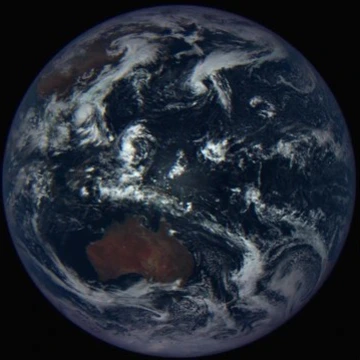
About nine hours after its closest approach, OSIRIS-APEX took this image of Australia and the Pacific Ocean from about 142,000 miles away on Sept. 24. This color composite combines six images from the MapCam imager, which is part of the OSIRIS-REx Camera Suite, or OCAMS, operated by the University of Arizona. - NASA/Goddard/University of Arizona
During its approach and as it passed Earth, OSIRIS-APEX looked home using its suite of three cameras, built at the University of Arizona Lunar and Planetary Laboratory, to capture images and data of our planet to help calibrate its instruments.
The maneuver is not only critical for getting the spacecraft to its target but also ensures it will be ready for the research operations it is tasked with once it gets to Apophis, according to the mission's principal investigator, Dani Mendoza DellaGiustina, an assistant professor at LPL.
"This is not just about cool pictures, but about collecting data and important science milestones," she said. "Most importantly, the fly-by offered a rare opportunity for us to calibrate our instruments."
The robot geologist that is OSIRIS-APEX has been through a lot since its encounter with Bennu – from punching the asteroid to enduring cycles of heating and cooling each time the spacecraft swung around the sun and back into cooler regions of space.
"It is very important for the science team to understand how its history has affected the instruments since it was built and launched," DellaGiustina said. "When it touched down on Bennu, the spacecraft got pretty dusty, and some of that dust settled on instrument lenses. One of our most important tasks is to recalibrate our instruments and make sure they're ready to take measurements at Apophis."
An unexpected boon
Since the imaging suite on the OSIRIS-REx spacecraft was designed for its primary mission – studying asteroid Bennu, one of the darkest objects in the solar system – the fine layer of dust acquired during the sample acquisition provides an unexpected boon to its upcoming observation campaign at Apophis, DellaGiustina said.
"Now we're going to an object that's about 10 times brighter," she said. "So the dust actually benefits us in some ways, in that it just sort of darkens everything a little bit.
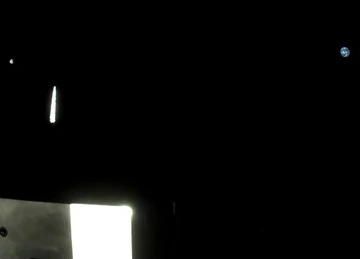
OSIRIS-APEX was about 370,000 miles from Earth when it captured this view of the moon (on the far left) and Earth (on the far right) on Sept. 24, 2025. Sunlight reflects off the spacecraft’s instruments in the foreground. - NASA/Goddard/University of Arizona/Lockheed Martin
(With the data acquired during the flyby), we can quantify that effect and figure out how exactly we're going to adjust some of our instrument settings accordingly."
During its cruise period, between sample return and its rendezvous with Apophis, the spacecraft spends a total of six years transiting the inner solar system. Most of the time, it flies through empty space, far away from any celestial bodies. However, the spacecraft makes several close passes by Earth to steer it towards Apophis.
"We have done three Earth gravity slingshots, and we have two more to go," DellaGiustina said. "Each of those maneuvers is targeted to do something slightly different."
A slingshot is a rare opportunity to use an object – in this case, Earth and the moon – to fill the frame of the spacecraft's imaging instruments. In addition to a suite of cameras, these also include spectrometers – detectors designed not to record images, but to analyze light signatures that offer clues about the chemical and physical makeup of whatever they are pointed at. While the team can use stars to perform at least some degree of the necessary calibrations, spectral instruments require an object to fill the frame.
Watch the spacecraft pass by Earth on the NASA blog.
"We only have two more opportunities to get so close to an object before we arrive at Apophis – in this case, Earth – that it actually fills the fields of view of the spot spectrometers, so this most recent one is the chance that we have to understand if and how their behavior has changed," she said.
Other changes in the spacecraft's configuration result from the actions performed as part of its previous mission. During the spacecraft's primary mission, the StowCam instrument was used to verify that the sample material from asteroid Bennu was safely stowed in the sample return capsule for the journey back to Earth. No longer obstructed by the capsule, StowCam now provides a view of the instrument panel. StowCam also collected imagery as OSIRIS-APEX approached and departed from Earth.
Valuable opportunities
Earth flybys present valuable opportunities for the OSIRIS-APEX mission team, which consists both of OSIRIS-REx veterans and new members, to get up to speed performing operational and observational tasks and brush up on skills during an otherwise uneventful cruise phase, DellaGiustina explained.
"This is their opportunity to begin training in the processes and procedures that we will use to observe our target, and while it's not Apophis in this case, we're using a lot of the same software," she said. "We also have to build certain sequences to have the instruments acquire data, and we're working through all those processes. There is a lot of stuff we haven't done in quite a while.
"The bottom-line is we have a healthy, happy spacecraft," she added. "It survived the perihelion passages and everything indicates it's in great shape. We have incredible data coming in from the spacecraft, pulling off this set of observations was a lot of work done by a pretty small number of people, and so to see everything be such a success, is really satisfying."
NASA’s Goddard Space Flight Center in Greenbelt, Maryland, provides overall mission management, systems engineering, and the safety and mission assurance for OSIRIS-APEX. The University of Arizona leads the science team and the mission's science observation planning and data processing. Lockheed Martin Space in Littleton, Colorado, built the spacecraft and provides flight operations. NASA Goddard and KinetX Aerospace are responsible for navigating the OSIRIS-APEX spacecraft. International partnerships on this mission include the spacecraft's laser altimeter instrument from CSA. OSIRIS-APEX (previously named OSIRIS-REx) is the third mission in NASA's New Frontiers Program, managed by NASA's Marshall Space Flight Center in Huntsville, Alabama, for the agency's Science Mission Directorate in Washington.
UA News - OSIRIS-APEX Spacecraft Takes Selfie with Earth During Flyby

U of A's Mars Camera Gets Close Look at Comet from Interstellar Space
HiRISE, a LPL-led Mars imaging camera aboard NASA's Mars Reconnaissance Orbiter, found itself closer than any other imaging tool to comet 3I/ATLAS as it passed through the solar system.U of A's Mars Camera Gets Close Look at Comet from Interstellar Space

By Andrew Good/NASA-JPL and Daniel Stolte/University Communications - November 19, 2025
At the beginning of October, three of NASA's Mars spacecraft had front row seats to view 3I/ATLAS – only the third interstellar object observed in our solar system. Among them, NASA's Mars Reconnaissance Orbiter, or MRO, was in a prime position to snap images of the comet as it sailed by at a distance of 19 million miles (30 million kilometers) – the closest viewing opportunity any of the agency's missions or any Earth-based observatories are expected to get.
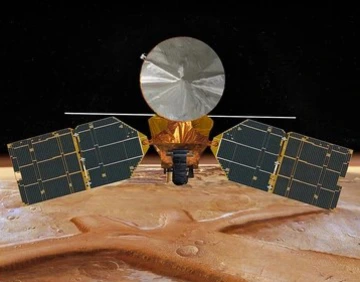
NASA's Mars Reconnaissance Orbiter, pictured here as an artist's illustration, has been orbiting and photographing Mars since 2006. - NASA/JPL/Corby Waste
On the evening of Oct. 2, the comet was observed and photographed by the High Resolution Imaging Science Experiment, or HiRISE, which is led by the University of Arizona and has been photographing the Martian surface for nearly two decades.
HiRISE is usually used to spot features as small as boulders (or even rovers) on the Martian surface. In HiRISE's images, 3I/ATLAS is seen at a scale of roughly 19 miles (30 kilometers) per pixel. The pixelated white ball is a cloud of dust and ice called the coma, which is shed as the comet approaches the sun.
"Observations of interstellar objects are still rare enough that we learn something new on every occasion," said Shane Byrne, HiRISE principal investigator and professor at the U of A Lunar and Planetary Laboratory. "We're fortunate, that 3I/ATLAS passed this close to Mars."
The HiRISE imagery is likely to reveal new details that could help scientists place an upper limit on the size of the comet's nucleus, its central core made up of ice and dust. It could also reveal the properties of particles within the atmosphere surrounding the comet, called its coma. Ongoing analysis of the images may even reveal fragments of the nucleus or jets of gas, which are sometimes released as comets break up over time. Throughout October, 3I/ATLAS was too close to the sun from Earth's position to be visible from most telescopes, giving MRO a unique view, according to HiRISE co-investigator James Wray, professor of earth and atmospheric sciences at the Georgia Institute of Technology.
Follow 3I/ATLAS' journey at NASA.gov.
"Thanks to NASA's fleet of capable spacecraft spanning the inner solar system, we can continue to observe this dynamic object, and from unique angles," he said. "All three interstellar objects to date have shown striking differences from each other and from typical solar system comets, so every new observation we make is precious."
The HiRISE camera normally points at the Martian surface, where it has revealed such otherworldly terrain as spider-like shapes formed by gaseous eruptions, frosted sand dunes, and blast-ringed impact craters. The camera's image quality makes it a vital asset for NASA to scout out suitable landing sites for robotic Mars rovers. HiRISE also is critical to preparing for the first astronauts on the Red Planet: The camera has identified safe landing sites and accessible water-ice deposits that will help humans survive in the harsh Martian environment.

Designed in a collaboration between the University of Arizona and Ball Aerospace, the HiRISE camera aboard NASA's Mars Reconnaissance Orbiter has produced the most detailed pictures of Mars ever taken from orbit, revealing surface details as small as half a meter (1.5 feet) across. - NASA/Public Domain
"To capture a glimpse of a visitor from another star system is extraordinary in itself. To do so from a University of Arizona-led instrument orbiting Mars makes it even more remarkable," said Tomás Díaz de la Rubia, senior vice president for research and partnerships at the University of Arizona. "This moment speaks to the ingenuity of our scientists and the enduring impact of this university's leadership in space exploration. HiRISE exemplifies how tools of discovery serve science and the public good."
In addition to its years-long, routine duty of imaging the planet's surface at a high enough resolution to spot details as small as a desk, HiRISE has made headlines for spotting rovers and landers as they studied the planet, including the Curiosity and Perseverance rovers.
Another of NASA's spacecraft orbiting Mars – MAVEN, short for Mars Atmosphere and Volatiles EvolutioN – viewed the comet using its ultraviolet camera, and while that imagery is still being processed, it should provide data for scientists to determine the composition and distribution of gases released by the comet into its coma and tail. On Mars' surface, the Perseverance rover observed the comet on Oct. 4, when it appeared as a faint smudge to the rover's Mastcam-Z camera system; the exposure had to be exceptionally long to resolve such a faint object.
"One of MRO's biggest contributions to NASA's work on Mars has been watching for passing phenomena on the surface, including dust devils the size of skyscrapers and avalanches careening down cliffs," said Leslie Tamppari of NASA's Jet Propulsion Laboratory in Southern California, which leads MRO's mission. "This is one of those rare occasions where we get to study a passing space object, as well."
The mission observed its first comet, called Siding Spring, in 2014. Appearing as a glowing ball in the night sky, it was the first high-resolution image ever taken of an object from the Oort Cloud, a vast, diffuse cloud of icy debris left over from the formation of the solar system.
Comet 3I/ATLAS will be at its minimum distance from Earth around Dec. 19, remaining about 10 times farther away than it got to Mars.
The U of A operates the HiRISE instrument, which was built by BAE Systems in Boulder, Colorado. NASA's Jet Propulsion Laboratory, a division of Caltech in Pasadena, California, manages the Mars Reconnaissance Orbiter Project for NASA's Science Mission Directorate in Washington as part of NASA's Mars Exploration Program portfolio.
UA News - U of A's Mars Camera Gets Close Look at Comet from Interstellar Space