

25 Days of 'O-REx'
There are T minus 25 days until the LPL-led NASA OSIRIS-REx mission attempts to collect its first-ever asteroid sample. Here are facts for each day of the countdown.
25 Days of 'O-REx'

By Mikayla Mace, University of Arizona - September 25, 2020
The University of Arizona-led OSIRIS-REx mission is poised to accomplish a first for NASA in planetary science: collect a sample from a near-Earth asteroid and bring it back home. The composition of the asteroid Bennu could shed more light on the origins and evolution of the 4.5 billion-year-old solar system.
On Oct. 20, the spacecraft will begin a flight trajectory to descend to the asteroid’s surface. Then, it will extend a sample collection arm that will briefly touch the surface, fire a small puff of compressed nitrogen to kick up debris and capture it before storing it in the body of the spacecraft for safekeeping on the two-year journey home.
Sept. 26 marks 25 days until the Touch-And-Go, or TAG, sample collection event, after which the spacecraft will stow the sample for its return to Earth on Sept. 24. 2023.
To celebrate the historic moment, UANews is counting down the 25 Days of "O-REx" with 25 facts.
25. This mission is a first for NASA. Several NASA spacecraft have studied asteroids from a distance, but none have touched an asteroid and returned with material. The mission was designed to return at least 60 grams (slightly over 2 ounces) of pristine asteroid material to Earth for analysis.
24. This image shows sample site Nightingale Crater, OSIRIS-REx’s primary sample collection site on asteroid Bennu. The image is overlaid with a graphic of the OSIRIS-REx spacecraft to illustrate the scale of the site.NASA/Goddard/University of Arizona
While scientists had predicted the asteroid's shape with uncanny accuracy, the surface of Bennu was unexpectedly rocky. The mission team spent over 18 months extensively surveying the surface for a boulder-free area before identifying Nightingale as the primary sample collection site and Osprey as the backup sample site.
23. The primary sample site, Nightingale, is located in a crater in Bennu's northern hemisphere and was determined to be the safest spot for the Touch-And-Go sample collection maneuver. For scale, the spacecraft's brief touchdown will be like parking a shuttle van in an area about as wide as three parking spaces. The site is one-tenth as large as the original mission plan envisioned.
22. On the journey back to Earth, the spacecraft will eject its sample return capsule containing the bits of Bennu for landing in the Utah desert on Sept. 24, 2023. The entire trip from launch to landing will have spanned seven years and 4.4 billion miles of space travel.
21. The asteroid is a time capsule from the early solar system. Made from the crumbs of what was left over after the formation of the solar system, it is rich with organic compounds that may have seeded life on Earth.
20. Bennu is about the same size as Pusch Ridge in the Santa Catalina Mountains, measuring about 500 meters, or about one-third of a mile, in diameter.
19. The asteroid Bennu is a near-Earth asteroid – meaning it is not part of the main asteroid belt – and is situated between 241,000 and 209 million miles away, depending on its orbit relative to Earth's. Right now, the asteroid and spacecraft are about 200 million miles from Earth.
18. Bennu is in an unstable orbit, meaning it likely won't last more than 10 million years before it collides with a planet or falls into the sun.
17. Evidence of water was discovered locked within the clays that make up the asteroid. While Bennu itself is too small to have ever hosted liquid water, liquid water was likely present at some time on Bennu's parent body, a much larger asteroid.
16. Bennu's temperatures range from 240 degrees Fahrenheit during the day to 100 below zero at night.
15. The mission marked a milestone recognized by the Guinness World Records. The spacecraft made the closest orbit of a planetary body and made the asteroid the smallest planetary object ever orbited by a spacecraft.
14. Bennu is shedding. It regularly ejects particles from its surface, highlighting just how dynamic the miniature world can be.
13. This global map of asteroid Bennu’s surface was created by stitching and correcting 2,155 PolyCam images. At 2 inches (5 cm) per pixel, this is the highest resolution at which a planetary body has been globally mapped.NASA/Goddard/University of Arizona.
The OSIRIS-REx mission's science team, headquartered at UArizona, created the most detailed image of any body in the solar system with its global mosaic of the asteroid Bennu. The mosaic was created by stitching together 2,155 images at a scale of 2 inches per pixel. The map was used to choose the primary and secondary sample sites.
12. When the spacecraft touches down for sampling, it will do so on autopilot due to the 18.5-minute time delay between Earth and the spacecraft.
11. The UArizona-built PolyCam is so named because it is a master of all trades and the world's best zoom lens – it can be a microscope and a telescope, and anything in between. It captured OSIRIS-REx's first image of the asteroid, helped with mapping large boulders and rocks and is expected to microscopically scrutinize tiny rocks and pebbles on the surface to ensure that they are small enough for sample collection.
10. UArizona also built the two other on-board cameras – MapCam, which was used to map the surface of the asteroid, and SamCam, which will record the entire sample collection event and verify that a sample was collected.
9. During its descent to site Nightingale, OSIRIS-REx could encounter several hazardous scenarios that would prevent it from collecting a sample of asteroid Bennu on its first attempt.NASA/Goddard/CI Lab
The spacecraft can navigate the asteroid using what's called natural feature tracking. By comparing the surface features found within the high-resolution image catalog with the surface, the spacecraft can autonomously guide itself to the surface for sample collection.
8. O-REx will perform a pirouette in space to weigh how much material was collected during the Touch-and-Go sample collection event.
7. While flying through space, the OSIRIS-REx spacecraft navigates using the stars, similar to ocean-going explorers.
6. Bits of the asteroid Vesta were recently found on Bennu.
5. A total of 150 UArizona undergraduate and graduate students have worked on OSIRIS-REx. More than 30 alumni have been hired to join the mission as staff after graduating.
4. The mission's economic impact on Arizona is around $230.5 million. Of that, approximately $173 million comes to Tucson.
3. UArizona professor Dante Lauretta is the principal investigator of the OSIRIS-REx mission, a $1 billion project led by the University of Arizona. The mission's science operations command center is at the UArizona Lunar and Planetary Laboratory.
2. OSIRIS-REx builds on the university's long legacy of successful planetary exploration. The university has been part of almost every major NASA planetary mission since they began. The most recent NASA missions include HiRISE (Alfred McEwen, principal investigator), Dawn Mission (Mark Sykes, co-investigator, and Shane Byrne, guest investigator); Juno Mission (William Hubbard, co-investigator); and the New Horizons Mission to Pluto (Veronica Bray, science team member). UArizona was the first public university to be awarded a principal investigator-led mission when it was chosen to lead the Phoenix Mars mission.
1. The mission is officially named the Origins, Spectral Interpretation, Resource Identification, Security-Regolith Explorer. Osiris is the Egyptian god of the underworld and "rex" means king in Latin. The mission objectives to return asteroid samples and analyze them in lab around the world loosely matches the mythological story of Osiris, whose body was cut into pieces and sprinkled all over Egypt, marking the spread of agriculture.

OSIRIS-REx Begins its Countdown to TAG
On Oct. 20, the LPL-led OSIRIS-REx mission will make its first sample collection attempt. Because of the communication delay, the spacecraft must pilot itself to the surface while avoiding hazardous boulders before backing away safely with the sample.
OSIRIS-REx Begins its Countdown to TAG

By Brittany Enos, OSIRIS-REx - September 24, 2020
A historic moment is on the horizon for the University of Arizona-led NASA OSIRIS-REx mission. In just a few weeks, the robotic OSIRIS-REx spacecraft will descend to asteroid Bennu's boulder-strewn surface, touch down for a few seconds and collect a sample of the asteroid's rocks and dust – marking the first time NASA has grabbed pieces of an asteroid, which will be returned to Earth for study.
"This is all about understanding our origins and addressing some of the most fundamental questions that we ask ourselves as human beings: Where did we come from and are we alone in the universe?" Dante Lauretta, OSIRIS-REx principal investigator at the UArizona Lunar and Planetary Laboratory, said during a media event Thursday.
The university leads the science team and the mission's science observation planning and data processing.
The science team chose the dark, low-reflectance asteroid Bennu early in the mission design because it is likely full of the organic material and hydrated minerals that could have led to water on Earth.
"That information was based on a technique called spectroscopy. One aspect of the OSIRIS-REx science program is to understand these dark, low-reflectance asteroids and try to infer composition from that information," Lauretta said. "There are over 1 million asteroids in the solar system, so we're not going to send spacecraft to every one of those. …We're going to use the spectra and OSIRIS-REx samples to better understand the spectra of these objects."
Touch-And-Go
On Oct. 20, the mission will perform the first attempt of its Touch-And-Go, or TAG, sample collection event. This series of maneuvers will bring the spacecraft down to a site named Nightingale, a rocky area 52 feet in diameter in Bennu's northern hemisphere, where the spacecraft's robotic sampling arm will attempt to collect a sample. Nightingale was selected as the mission's primary sample site because it holds the greatest amount of unobstructed fine-grained material, but the region is surrounded by building-sized boulders. During the sampling event, the spacecraft, which is the size of a large van, will attempt to touch down in an area that is only the size of a few parking spaces and just a few steps away from some of these large boulders.
During the 4 1/2-hour sample collection event, the spacecraft will perform three separate maneuvers to reach the asteroid's surface. The descent sequence begins with OSIRIS-REx firing its thrusters for an orbit departure maneuver to leave its safe-home orbit approximately 2,500 feet from Bennu's surface. After traveling four hours on this downward trajectory, the spacecraft performs the "checkpoint" maneuver at an approximate altitude of 410 feet. This thruster burn adjusts OSIRIS-REx's position and speed to descend steeply toward the surface. About 11 minutes later, the spacecraft performs the "matchpoint" burn at an approximate altitude of 177 feet, slowing its descent and targeting a path to match the asteroid's rotation at the time of contact. The spacecraft then descends to the surface, touches down for less than 16 seconds and fires one of its three pressurized nitrogen bottles. The gas agitates and lifts Bennu's surface material, which is then caught in the spacecraft's collector head. After this brief touch, OSIRIS-REx fires its thrusters to back away from Bennu's surface and navigates to a safe distance from the asteroid.
After the orbit departure maneuver, the spacecraft undertakes a sequence of reconfigurations to prepare for sampling. First, OSIRIS-REx extends its robotic sampling arm – the Touch-And-Go Sample Acquisition Mechanism, or TAGSAM – from its folded storage position out to the sample collection position. The spacecraft's two solar panels then move into a "Y-wing" configuration over the spacecraft's body, which positions them safely up and away from the asteroid's surface during touchdown. This configuration also places the spacecraft's center of gravity directly over the TAGSAM collector head, which is the only part of the spacecraft that will contact Bennu's surface during the sample collection event.
Because the spacecraft and Bennu are approximately 207 million miles from Earth during TAG, it will take about 18 1/2 minutes for signals to travel between them. This time lag prevents the live commanding of flight activities from the ground during the TAG event, so the spacecraft is designed to perform the entire sample collection sequence autonomously. Prior to the event's start, the OSIRIS-REx team will uplink all of the commands to the spacecraft and then send a "go" command to begin.
To autonomously navigate to Nightingale, OSIRIS-REx uses the natural feature tracking navigation system. The spacecraft begins collecting navigation images about 90 minutes after orbit departure. It then compares these real-time images to an onboard image catalog, using identified surface features to make sure that it's on the right course toward the site. As the spacecraft approaches the surface, OSIRIS-REx updates the checkpoint and matchpoint maneuvers based on the navigation system's estimate of the spacecraft's position and velocity. OSIRIS-REx continues to use the system estimates as it descends to the surface after the matchpoint maneuver to monitor its position and descent rate. The spacecraft will autonomously abort should its trajectory vary outside of predefined limits.
To ensure that the spacecraft touches down on a safe area that avoids the region's many boulders, the navigation system is equipped with a hazard map of site Nightingale, which delineates areas within the sample site that could potentially harm the spacecraft. If the spacecraft's navigation system detects that it is on course to touch one of these hazardous zones, the spacecraft will autonomously wave off its approach once it reaches an altitude of 16 feet. This keeps the spacecraft safe and allows for a subsequent sample collection attempt at a future date.
As the spacecraft performs each event in the sample collection sequence, it will send telemetry updates back to the OSIRIS-REx team, albeit at an extremely slow data rate. The team will monitor the telemetry during the excursion and will be able to confirm that the spacecraft has successfully touched down on Bennu's surface soon after TAG occurs. The images and other science data collected during the event will be downlinked after the spacecraft has backed away from the asteroid and can point its larger antenna back to Earth to transmit at higher communication rates.
OSIRIS-REx is charged with collecting at least 2 ounces of Bennu's rocky material to deliver back to Earth – the largest sample return from space since the Apollo program – and the mission developed two methods to verify that this sample collection occurred. On Oct. 22, OSIRIS-REx's SamCam camera will capture images of the TAGSAM head to see whether it contains Bennu's surface material. The spacecraft will also perform a spin maneuver on Oct. 24 to determine the mass of collected material. If these measures show successful collection, the decision will be made to place the sample in the sample return capsule for return to Earth. If sufficient sample has not been collected from Nightingale, the spacecraft has onboard nitrogen charges for two more attempts. A TAG attempt at the backup site, Osprey, would be made no earlier than January 2021.
"On the day of TAG, Oct. 20, we will have slow data rate coming in. The spacecraft will be talking to us at 40 bits per second, so we're not getting a lot of information about how much sample we collected," Lauretta said. "Over the next week or so, we will do series of activities to understand how the TAG event worked and do as much as we can to verify that we collect our minimum of 60 grams – 2 ounces – of sample or more."
The team will start by looking at images snapped of the sample head itself and recordings of the sample collection process.
"We'll be able to tell if we were tilted, if the gas blew out to the side or if material was significantly mobilized. We'll also have good indication of the exact location in Nightingale where we made contact, and we can compare it to the samplability map to indicate if we landed in an area with abundant sample material or in one of the more rocky locations with larger fragments," Lauretta said. "I'm confident that we'll have abundant material based on the nature of the Nightingale site and the extensive testing we did with our TAGSAM."
The mission team has spent the last several months preparing for the sample collection event while maximizing remote work as part of its COVID-19 response. On the day of TAG, a limited number of team members will monitor the spacecraft from Lockheed Martin Space's Mission Support Area, taking appropriate safety precautions. Other members of the team will be at other locations on-site to cover the event, while also observing safety protocols.
The spacecraft is scheduled to depart Bennu in 2021 and deliver the collected sample to Earth on Sept. 24, 2023.
NASA's Goddard Space Flight Center in Greenbelt, Maryland, provides overall mission management, systems engineering, and the safety and mission assurance for OSIRIS-REx. Lockheed Martin Space in Denver built the spacecraft and provides flight operations. Goddard and KinetX Aerospace are responsible for navigating the OSIRIS-REx spacecraft. OSIRIS-REx is the third mission in NASA's New Frontiers program, which is managed by NASA's Marshall Space Flight Center in Huntsville, Alabama, for the agency's Science Mission Directorate in Washington.

NASA's OSIRIS-REx to Asteroid Bennu: 'You've Got a Little Vesta on You...'
Bits of the asteroid Vesta found on Bennu highlight the variety of asteroids in the solar system.
NASA's OSIRIS-REx to Asteroid Bennu: 'You've Got a Little Vesta on You...'

By NASA Goddard Space Flight Center and University Communications - September 21, 2020
In an interplanetary faux pas, it appears some pieces of asteroid Vesta ended up on asteroid Bennu, according to observations from the University of Arizona-led OSIRIS-REx mission. The new result sheds light on the intricate orbital dance of asteroids and on the violent origin of Bennu, which is a "rubble pile" asteroid that coalesced from the fragments of a massive collision.
"We found six boulders ranging in size from 5 to 14 feet (about 1.5 to 4.3 meters) scattered across Bennu's southern hemisphere and near the equator," said Daniella DellaGiustina, the NASA mission's image processing lead scientist and senior staff scientist at the university's Lunar and Planetary Laboratory. "These boulders are much brighter than the rest of Bennu and match material from Vesta."
"Our leading hypothesis is that Bennu inherited this material from its parent asteroid after a vestoid (a fragment from Vesta) struck the parent," said Hannah Kaplan of NASA's Goddard Space Flight Center in Greenbelt, Maryland. "Then, when the parent asteroid was catastrophically disrupted, a portion of its debris accumulated under its own gravity into Bennu, including some of the pyroxene from Vesta."
DellaGiustina and Kaplan are primary authors of a paper on this research, published in Nature Astronomy.
The unusual boulders on Bennu first caught the team's eye in images from the OSIRIS-REx Camera Suite, or OCAMS. They appeared extremely bright, with some almost 10 times brighter than their surroundings. They analyzed the light from the boulders using the OSIRIS-REx Visible and Infrared Spectrometer, or OVIRS, instrument to get clues to their composition. A spectrometer separates light into its component colors. Since elements and compounds have distinct, signature patterns of bright and dark across a range of colors, they can be identified using a spectrometer. The signature from the boulders was characteristic of the mineral pyroxene, similar to what is seen on Vesta and the vestoids – smaller asteroids that are fragments blasted from Vesta when it sustained significant asteroid impacts.
Of course, it's possible that the boulders actually formed on Bennu's parent asteroid, but the team thinks this is unlikely based on how pyroxene typically forms. The mineral typically forms when rocky material melts at high temperature. However, most of Bennu is composed of rocks containing water-bearing minerals, so it – and its parent – couldn't have experienced very high temperatures. Next, the team considered localized heating, perhaps from an impact. An impact needed to melt enough material to create large pyroxene boulders would be so significant that it would have destroyed Bennu's parent-body. So, the team ruled out these scenarios, and instead considered other pyroxene-rich asteroids that might have implanted this material to Bennu or its parent.
Observations reveal it's not unusual for an asteroid to have material from another asteroid splashed across its surface. Examples include dark material on crater walls seen by the Dawn spacecraft at Vesta, a black boulder seen by the Hayabusa spacecraft on Itokawa and, very recently, material from S-type asteroids observed by Hayabusa2 at Ryugu. This indicates many asteroids are participating in a complex orbital dance that sometimes results in cosmic mashups.
As asteroids move through the solar system, their orbits can be altered in many ways, including the pull of gravity from planets and other objects, meteoroid impacts and even the slight pressure from sunlight. The new result helps pin down the complex journey Bennu and other asteroids have traced through the solar system.
Several studies indicate that Bennu, based on its orbit, was delivered from the inner region of the main asteroid belt via a well-known gravitational pathway that can take objects from the inner main belt to near-Earth orbits. There are two inner main belt asteroid families – Polana and Eulalia – that look like Bennu: dark and rich in carbon, making them likely candidates for Bennu's parent. Likewise, the formation of the vestoids is tied to the formation of the Veneneia and Rheasilvia impact basins on Vesta, at roughly about two billion years ago and approximately one billion years ago, respectively.
"Future studies of asteroid families, as well as the origin of Bennu, must reconcile the presence of Vesta-like material, as well as the apparent lack of other asteroid types. We look forward to the returned sample, which hopefully contains pieces of these intriguing rock types," said Dante Lauretta, OSIRIS-REx principal investigator and UArizona professor of planetary science and cosmochemistry. "This constraint is even more compelling given the finding of S-type material on asteroid Ryugu. This difference shows the value in studying multiple asteroids across the solar system."
The OSIRIS-REx spacecraft will make its first attempt to collect a sample from Bennu in October and will return it to Earth in 2023 for detailed analysis. The mission team closely examined four potential sample sites on Bennu to determine their safety and science value before making a final selection in December 2019. DellaGiustina and Kaplan's team thinks they might find smaller pieces of Vesta in images from these close-up studies.
The research was funded by the NASA New Frontiers Program. The primary authors acknowledge significant collaboration with the French space agency CNES and Japan Society for the Promotion of Science Core-to-core Program on this paper. NASA's Goddard Space Flight Center in Greenbelt, Maryland, provides overall mission management, systems engineering, and the safety and mission assurance for OSIRIS-REx. Lauretta is the principal investigator, and the University of Arizona also leads the science team and the mission's science observation planning and data processing. The late Michael Drake of UArizona pioneered the study of vestoid meteorites and was the first principal investigator for OSIRIS-REx. Lockheed Martin Space in Denver built the spacecraft and is providing flight operations. Goddard and KinetX Aerospace are responsible for navigating the OSIRIS-REx spacecraft. OSIRIS-REx is the third mission in NASA's New Frontiers Program, which is managed by NASA's Marshall Space Flight Center in Huntsville, Alabama, for the agency's Science Mission Directorate in Washington, D.C.

Jupiter's Moons Could be Warming Each Other
The gravitational push and pull by Jupiter's moons could account for more warming than the gas giant Jupiter alone.
Jupiter's Moons Could be Warming Each Other

By Mikayla Mace, University Communications - September 10, 2020
Jupiter's moons are hot.
Well, hotter than they should be, for being so far from the sun. In a process called tidal heating, gravitational tugs from Jupiter's moons and the planet itself stretch and squish the moons enough to warm them. As a result, some of the icy moons contain interiors warm enough to host oceans of liquid water, and in the case of the rocky moon Io, tidal heating melts rock into magma.
Researchers previously believed that the gas giant Jupiter was responsible for most of the tidal heating associated with the liquid interiors of the moons, but a new study published in Geophysical Research Letters found that moon-moon interactions may be more responsible for the heating than Jupiter alone.
"It's surprising because the moons are so much smaller than Jupiter. You wouldn't expect them to be able to create such a large tidal response," said the paper's lead author Hamish Hay, a postdoctoral fellow at the Jet Propulsion Laboratory in Pasadena, California, who did the research when he was a graduate student in the University of Arizona Lunar and Planetary Laboratory.
Understanding how the moons influence each other is important because it can shed light on the evolution of the moon system as a whole. Jupiter has nearly 80 moons, the four largest of which are Io, Europa, Ganymede and Callisto.
"Maintaining subsurface oceans against freezing over geological times requires a fine balance between internal heating and heat loss, and yet we have several pieces of evidence that Europa, Ganymede, Callisto and other moons should be ocean worlds," said co-author Antony Trinh, a postdoctoral research fellow in the Lunar and Planetary Lab. "Io, the Galilean moon closest to Jupiter, shows widespread volcanic activity, another consequence of tidal heating, but at a higher intensity likely experienced by other terrestrial planets, like Earth, in their early history. Ultimately, we want to understand the source of all this heat, both for its influence on the evolution and habitability of the many worlds across the solar system and beyond."
Tidal Resonance
The trick to tidal heating is a phenomenon called tidal resonance.
"Resonance creates loads more heating," Hay said. "Basically, if you push any object or system and let go, it will wobble at its own natural frequency. If you keep on pushing the system at the right frequency, those oscillations get bigger and bigger, just like when you're pushing a swing. If you push the swing at the right time, it goes higher, but get the timing wrong and the swing's motion is dampened."
Each moon's natural frequency depends on the depth of its ocean.
"These tidal resonances were known before this work, but only known for tides due to Jupiter, which can only create this resonance effect if the ocean is really thin (less than 300 meters or under 1,000 feet), which is unlikely," Hay said. "When tidal forces act on a global ocean, it creates a tidal wave on the surface that ends up propagating around the equator with a certain frequency, or period."
According to the researchers' model, Jupiter's influence alone can't create tides with the right frequency to resonate with the moons because the moons' oceans are thought to be too thick. It's only when the researchers added in the gravitational influence of the other moons that they started to see tidal forces approaching the natural frequencies of the moons.
When the tides generated by other objects in Jupiter's moon system match each moon's own resonant frequency, the moon begins to experience more heating than that due to tides raised by Jupiter alone, and in the most extreme cases, this could result in the melting of ice or rock internally.
For moons to experience tidal resonance, their oceans must be tens to hundreds of kilometers – at most a few hundred miles – thick, which is in range of scientists' current estimates. However, there are some caveats to the researchers' findings.
Their model assumes that tidal resonances never get too extreme, Hay said. He and his team want to return to this variable in the model and see what happens when they lift that constraint.
Hay also is hoping that future studies will be able to infer the true depth of the oceans within these moons.
This study was funded by NASA's Habitable Worlds program.

Where Rocks Come Alive: OSIRIS-REx Observes an Asteroid in Action
While studying asteroid Bennu up close, NASA's OSIRIS-REx spacecraft witnessed periodic outbursts of material being kicked up from the surface. A dedicated observation campaign revealed details of the activity and the processes likely causing it.
Where Rocks Come Alive: OSIRIS-REx Observes an Asteroid in Action

By Daniel Stolte, University Communications - September 9, 2020
It's 5 o'clock somewhere. And while here on Earth, "happy hour" is commonly associated with winding down and the optional cold beverage, that's when things get going on Bennu, the destination asteroid of the University of Arizona-led OSIRIS-REx NASA mission.
In a special collection of research papers published today in the Journal of Geophysical Research: Planets, the OSIRIS-REx science team reports detailed observations that reveal Bennu is shedding material on a regular basis, most often during Bennu's local two-hour afternoon and evening timeframe.
The OSIRIS-REx spacecraft has provided planetary scientists with the opportunity to observe such activity at close range for the first time ever, and Bennu's active surface underscores an emerging picture in which asteroids are quite dynamic worlds. The fleeing particles are the beginning of many revelations – from its gravitational field to its interior composition, Bennu's charisma continues to unfold for the team.
The publications provide the first in-depth look at the nature of Bennu's particle ejection events, detail the methods used to study these phenomena, and discuss the likely mechanisms that cause the asteroid to release pieces of itself into space.
The OSIRIS-REx spacecraft will grab a sample from the surface of Bennu in October and return it to Earth on Sept. 24, 2023. The first observation of particles popping off the asteroid's surface was made in January 2019, mere days after the spacecraft arrived at Bennu. This event may have gone completely unnoticed were it not for the keen eye of the mission's lead astronomer Carl Hergenrother, a scientist in the UArizona Lunar and Planetary Laboratory and one of the lead authors of the collection and its introductory paper.
Much like ocean-going explorers in centuries past, the OSIRIS-REx space probe relies on stars to fix its position in space and remain on course during its years-long voyage. A specialized navigation camera onboard the spacecraft takes repeat images of background stars. By cross-referencing the constellations the spacecraft "sees" with programmed star charts, and course corrections can be made as necessary.
Hergenrother was poring over these images that the spacecraft had beamed back to Earth when something caught his attention. The images showed the asteroid silhouetted against a black sky, dotted with many stars – except there seemed to be too many.
"I was looking at the star patterns in these images and thought, 'huh, I don't remember that star cluster,'" Hergenrother said. "I only noticed it because there were 200 dots of light where there should be about 10 stars. Other than that, it looked to be just a dense part of the sky."
A closer inspection and an application of image-processing techniques solved the mystery: The "star cluster" was, in fact, a cloud of tiny particles that had been ejected from the asteroid's surface. Follow-up observations made by the spacecraft revealed the telltale streaks typical of objects moving across the frame, setting them apart from the background stars that appear stationary due to their enormous distances.
"We thought that Bennu's boulder-covered surface was the wildcard discovery at the asteroid, but these particle events definitely surprised us," said Dante Lauretta, OSIRIS-REx principal investigator and professor in the UArizona Lunar and Planetary Laboratory. "We've spent the last year investigating Bennu's active surface, and it's provided us with a remarkable opportunity to expand our knowledge of how active asteroids behave."
Since arriving at the asteroid, the team has observed and tracked more than 300 particle ejection events on Bennu. According to the authors, some particles escape into space, others briefly orbit the asteroid, and most fall back onto its surface after being launched.
The spacecraft is equipped with a sophisticated set of electronic eyes – the Touch-and-Go Camera Suite, or TAGCAMS. Although its primary purpose is to assist in spacecraft navigation, TAGCAMS has now been placed into active duty spotting any particles in the vicinity of the asteroid.
Using software algorithms developed at UArizona's Catalina Sky Survey, which specializes in discovering and tracking near-Earth asteroids by detecting their motion against background stars, the OSIRIS-REx team found the largest particles erupting from Bennu to be about 6 centimeters (2 inches) in diameter. Due to their small size and low velocities – like a shower of tiny pebbles in super slow motion – the mission team does not deem the particles a threat to the spacecraft.
"Space is so empty that even when the asteroid is throwing off hundreds of particles, as we have seen in some events, the chances of one of those hitting the spacecraft is extremely small, and even if that were to happen, the vast majority of them are not fast or large enough to cause damage," Hergenrother said.
During a number of observation campaigns between January and September 2019 dedicated to detecting and tracking mass ejected from the asteroid, a total of 668 particles were studied, with the vast majority measuring between 0.5 and 1 centimeters (0.2-0.4 inches) and moving at about 20 centimeters (8 inches) per second, about as fast – or slow – as a beetle scurrying across the ground. In one instance, a speedy outlier was clocked at about 3 meters (9.8 feet) per second.
On average, the authors observed one to two particles kicked up per day, with much of the material falling back onto the asteroid. Add to that the small particle sizes, and the mass loss becomes minimal, Hergenrother explained.
"To give you an idea, all of those 200 particles we observed during the first event after arrival would fit on a 4-inch by 4-inch tile," he said. "The fact that we can even see them is a testament to the capabilities of our cameras."
The authors investigated various mechanisms that could cause the phenomena, including released water vapor, impacts by small space rocks known as meteoroids and rocks cracking from thermal stress. The two latter mechanisms were found to be the most likely driving forces, confirming predictions about Bennu's environment based on ground observations preceding the space mission.
As Bennu completes one rotation about every four hours, boulders on its surface are exposed to a constant thermo-cycling as they heat during the day and cool during the night. Over time, the rocks crack and break down, and eventually particles may be thrown from the surface. The fact that particle ejections were observed with greater frequency during late afternoon, when the rocks heat up, suggests thermal cracking is a major driver. The timing of the events is also consistent with the timing of meteoroid impacts, indicating that these small impacts could be throwing material from the surface. Either, or both, of these processes could be driving the particle ejections, and because of the asteroid's microgravity environment, it doesn't take much energy to launch an object from Bennu's surface.
"The particles were an unexpected gift for gravity science at Bennu since they allowed us to see tiny variations in the asteroid's gravity field that we would not have known about otherwise," said Steve Chesley, lead author of one of the studies published in the collection and senior research scientist at NASA's Jet Propulsion Laboratory in Southern California. "The trajectories show that the interior of Bennu is not uniform. Instead, there are pockets of higher and lower density material inside the asteroid."
Of the particles the team observed, some had suborbital trajectories, keeping them aloft for a few hours before they settled back down, while others fly off the asteroid to go into their own orbits around the sun.
In one instance, the team tracked one particle as it circled the asteroid for almost a week. The spacecraft's cameras even witnessed a ricochet, according to Hergenrother.
"One particle came down, hit a boulder and went back into orbit," he said. "If Bennu has this kind of activity, then there is a good chance all asteroids do, and that is really exciting."
As Bennu unveils more of itself, the OSIRIS-REx team continues to discover that this small world is glowingly complex. These findings could serve as a cornerstone for future planetary missions that seek to better characterize and understand how these small bodies behave and evolve.

Drs. Ali Bramson and Michael Sori will be Assistant Professors at Purdue University!
Dr. Michael Sori and Dr. Ali Bramson are Postdocs in the Lunar and Planetary Laboratory at UArizona. Both accepted positions as Assistant Professors in the Department of Earth, Atmospheric, and Planetary Sciences at Purdue University.
Drs. Ali Bramson and Michael Sori will be Assistant Professors at Purdue University!

Written by Lauren Rowe - August 17, 2020
Dr. Michael Sori (Ph.D. in Planetary Sciences, Massachusetts Institute of Technology) and Dr. Ali Bramson (Ph.D. in Planetary Sciences, University of Arizona) are Postdoctoral Scholars in the Lunar and Planetary Laboratory (LPL) at the University of Arizona. Both have recently accepted positions as Assistant Professors in the Department of Earth, Atmospheric, and Planetary Sciences (EAPS) at Purdue University. Currently, under the training of Dr. Hamilton and Dr. Byrne, Dr. Sori contributes to the study of Mars and the Moon while also being involved in several NASA missions. Working with Dr. Carter, Dr. Bramson researches lava flows on the Moon with instruments onboard NASA’s Lunar Reconnaissance Orbiter spacecraft.
In Fall 2020 in the EAPS Department at Purdue University, Dr. Sori and Dr. Bramson will be teaching undergraduate and graduate courses in planetary geology while expanding their current research. Dr. Sori explained that his experience at the University of Arizona, including working with students in lab groups and supporting their thesis projects, has prepared him for the next step as an Assistant Professor.
Likewise, Dr. Bramson shared that through the LPL at the University of Arizona she got involved in active NASA spacecraft missions, which were crucial for her scientific interests, and led to great professional and academic opportunities. Dr. Bramson is particularly excited about the interdisciplinary EAPS Department where she will collaborate with scientists who use similar techniques, but also engage in other problems different from her training.
Outside of her research Bramson plays competitive ultimate frisbee. She recognizes the importance of having hobbies as a reminder of the benefits of teamwork and for overall mental health. Sori likes to travel and recently visited his 50th state. Together they have been on mission to prepare meals from all the countries of the world; so far they have made meals from 94 countries! They enjoy hiking with their dog at the Catalina State Park and Mount Lemmon and being part of the Tucson community. We congratulate and wish them the best as they start their positions as Assistant Professors at Purdue University.

To Understand the Machinery of Life, a UArizona Scientist Breaks it on Purpose
By tinkering with some of life's oldest components, a group of astrobiologists led by UArizona's Betül Kaçar hope to find clues about how life emerged. In a recent paper, they report an unexpected discovery, hinting at an effect that prevents organisms from ever reaching evolutionary perfection.
To Understand the Machinery of Life, a UArizona Scientist Breaks it on Purpose

By Daniel Stolte, University Communications - August 13, 2020
"I'm fascinated with life, and that's why I want to break it."
This is how Betül Kaçar, an assistant professor at the University of Arizona with appointments in the Department of Molecular and Cellular Biology, Department of Astronomy and the Lunar and Planetary Laboratory, describes her research. What may sound callous is a legitimate scientific approach in astrobiology. Known as ancestral sequencing, the idea is to "resurrect" genetic sequences from the dawn of life, put them to work in the cellular pathways of modern microbes – think Jurassic Park but with extinct genes in place of dinosaurs, and study how the organism copes.
In a recent paper published in the Proceedings of the National Academy of Sciences, Kaçar's research team reports an unexpected discovery: Evolution, it seems, is not very good at multitasking.
Kaçar uses ancestral sequencing to find out what makes life tick and how organisms are shaped by evolutionary selection pressure. The insights gained may, in turn, offer clues as to what it takes for organic precursor molecules to give rise to life – be it on Earth or faraway worlds. In her lab, Kaçar specializes in designing molecules that act like tiny invisible wrenches, wreaking havoc with the delicate cellular machinery that allows organisms to eat, move and multiply – in short, to live.
Kaçar has focused her attention on the translation machinery, a labyrinthine molecular clockwork that translates the information encoded in the bacteria's DNA into proteins. All organisms – from microbes to algae to trees to humans – possess this piece of machinery in their cells.
The translational machinery is a vital component in the cells of all organisms. Having undergone very little change over billions of years of evolution, it has been referred to as "an evolutionary accident frozen in time." At its core is the ribosome (blue), which translates genetic information stored in RNA strands into proteins, the building blocks of life.National Science Foundation
"We approximate everything about the past based on what we have today," Kaçar said. "All life needs a coding system – something that takes information and turns it into molecules that can perform tasks – and the translational machinery does just that. It creates life's alphabet. That's why we think of it as a fossil that has remained largely unchanged, at least at its core. If we ever find life elsewhere, you bet that the first thing we'll look at is its information processing systems, and the translational machinery is just that."
So critical is the translational machinery to life on Earth that even over the course of more than 3.5 billion years of evolution, its parts have undergone little substantial change. Scientists have referred to it as "an evolutionary accident frozen in time."
"I guess I tend to mess with things I'm not supposed to," Kaçar said. "Locked in time? Let's unlock it. Breaking it would lead the cell to destruction? Let's break it."
The researchers took six different strains of Escherichia coli bacteria and genetically engineered the cells with mutated components of their translational machinery. They targeted the step that feeds the unit with genetic information by swapping the shuttle protein with evolutionary cousins taken from other microbes, including a reconstructed ancestor from about 700 million years ago.
"We get into the heart of the heart of what we think is one of the earliest machineries of life," Kaçar said. "We purposely break it a little, and a lot, to see how the cells deal with this problem. In doing this, we think we create an urgent problem for the cell, and it will fix that."
Next, the team mimicked evolution by having the manipulated bacterial strains compete with each other – like a microbial version of "The Hunger Games." A thousand generations later, some strains fared better than others, as was expected. But when Kaçar's team analyzed exactly how the bacteria responded to perturbations in their translational components, they discovered something unexpected: Initially, natural selection improved the compromised translational machinery, but its focus shifted away to other cellular modules before the machinery's performance was fully restored.
To find out why, Kaçar enlisted Sandeep Venkataram, a population genetics expert at the University of California, San Diego.
Venkataram likens the process to a game of whack-a-mole, with each mole representing a cellular module. Whenever a module experiences a mutation, it pops up. The hammer smashing it back down is the action of natural selection. Mutations are randomly spread across all modules, so that all moles pop up randomly.
"We expected that the hammer of natural selection also comes down randomly, but that is not what we found," he said. "Rather, it does not act randomly but has a strong bias, favoring those mutations that provide the largest fitness advantage while it smashes down other less beneficial mutations, even though they also provide a benefit to the organism."
In other words, evolution is not a multitasker when it comes to fixing problems.
"It seems that evolution is myopic," Venkataram said. "It focuses on the most immediate problem, puts a Band-Aid on and then it moves on to the next problem, without thoroughly finishing the problem it was working on before."
"It turns out the cells do fix their problems but not in the way we might fix them," Kaçar added. "In a way, it's a bit like organizing a delivery truck as it drives down a bumpy road. You can stack and organize only so many boxes at a time before they inevitably get jumbled around. You never really get the chance to make any large, orderly arrangement."
Why natural selection acts in this way remains to be studied, but what the research showed is that, overall, the process results in what the authors call "evolutionary stalling" – while evolution is busy fixing one problem, it does at the expense of all other issues that need fixing. They conclude that at least in rapidly evolving populations, such as bacteria, adaptation in some modules would stall despite the availability of beneficial mutations. This results in a situation in which organisms can never reach a fully optimized state.
"The system has to be capable of being less than optimal so that evolution has something to act on in the face of disturbance – in other words, there needs to be room for improvement," Kaçar said.
Kaçar believes this feature of evolution may be a signature of any self-organizing system, and she suspects that this principle has counterparts at all levels of biological hierarchy, going back to life's beginnings, possibly even to prebiotic times when life had not yet materialized.
With continued funding from the John Templeton Foundation and NASA, the research group is now working on using ancestral sequencing to go back even further in time, Kaçar said.
"We want to strip things down even more and create systems that start out as what we would consider pre-life and then transition into what we consider life."

Successful Second Rehearsal Puts OSIRIS-REx on Path to Asteroid Sample Collection
During its final practice run in preparation for sample collection at asteroid Bennu, the OSIRIS-REx spacecraft approached the surface closer than ever before.
Successful Second Rehearsal Puts OSIRIS-REx on Path to Asteroid Sample Collection

By Brittany Enos, Lunar and Planetary Laboratory - August 12, 2020
NASA's first asteroid-sampling spacecraft completed its second successful sample collection rehearsal on Aug. 11 and is now ready for the main event – touching down on asteroid Bennu's surface in October.
During its final practice run of the sampling sequence, the spacecraft of the University of Arizona-led OSIRIS-REx mission reached an approximate altitude of 131 feet, or 40 meters, over sample site Nightingale before executing a back-away burn. Nightingale, OSIRIS-REx's primary sample collection site, is located in a crater in Bennu's northern hemisphere.
The approximately four-hour matchpoint rehearsal took the spacecraft through the first three of the sampling sequence’s four maneuvers: the orbit departure burn, the checkpoint burn and the matchpoint burn. Checkpoint is the point where the spacecraft autonomously checks its position and velocity before adjusting its trajectory down toward the event's third maneuver. Matchpoint is the moment when the spacecraft matches Bennu's rotation in order to fly in tandem with the asteroid surface, directly above the sample site, before touching down on the targeted spot.
Four hours after departing its 0.6-mile safe-home orbit, OSIRIS-REx performed the checkpoint maneuver at an approximate altitude of 410 feet above Bennu's surface. From there, the spacecraft continued to descend for another eight minutes to perform the matchpoint burn. After descending on this new trajectory for another three minutes, the spacecraft reached an altitude of approximately 131 feet – the closest the spacecraft has ever been to Bennu – and then performed a back-away burn to complete the rehearsal.
During the rehearsal, the spacecraft successfully deployed its sampling arm, the Touch-And-Go Sample Acquisition Mechanism, from its folded, parked position out to the sample collection configuration. Additionally, some of the spacecraft's instruments collected science and navigation images and made spectrometry observations of the sample site, as will occur during the sample collection event. These images and data were downlinked to Earth after the event’s conclusion.
Because the spacecraft and Bennu are currently about 179 million miles from Earth, it takes approximately 16 minutes for the spacecraft to receive the radio signals used to command it. This time lag prevented live commanding of flight activities from the ground during the rehearsal. As a result, the spacecraft performed the entire rehearsal sequence autonomously. Prior to the rehearsal's start, the OSIRIS-REx team uplinked all of the event's commands to the spacecraft and then provided the "go" command to begin the event. The actual sample collection event in October will be conducted the same way.
This second rehearsal provided the mission team with practice navigating the spacecraft through the first three maneuvers of the sampling event and was an opportunity to verify that the spacecraft's imaging, navigation and ranging systems operated as expected during the first part of the descent sequence.
The rehearsal also confirmed that OSIRIS-REx's Natural Feature Tracking guidance system accurately estimated the spacecraft's trajectory after the matchpoint burn, which is the final maneuver before the sample collection head contacts Bennu's surface. This rehearsal was also the first time that the spacecraft's on-board hazard map was employed. The hazard map delineates areas that could potentially harm the spacecraft. If the spacecraft detects that it is on course to touch a hazardous area, it will autonomously back away once it reaches an altitude of 16 feet. While OSIRIS-REx did not fly that low during the rehearsal, it did employ the hazard map to assess whether its predicted touchdown trajectory would have avoided surface hazards, and found that the spacecraft's path during the rehearsal would have allowed for a safe touchdown on sample site Nightingale.
During the last minutes of the spacecraft's descent, OSIRIS-REx also collected new, high-resolution navigation images for the Natural Feature Tracking guidance system. These detailed images of Bennu's landmarks will be used for the sampling event and will allow the spacecraft to accurately target a very small area.
"Many important systems were exercised during this rehearsal – from communications, spacecraft thrusters, and most importantly, the onboard Natural Feature Tracking guidance system and hazard map," said OSIRIS-REx principal investigator Dante Lauretta of the University of Arizona's Lunar and Planetary Laboratory. "Now that we've completed this milestone, we are confident in finalizing the procedures for the TAG event. This rehearsal confirmed that the team and all of the spacecraft's systems are ready to collect a sample in October."
The mission team has spent the last several months preparing for matchpoint rehearsal while maximizing remote work as part of the COVID-19 response. On the day of rehearsal, a limited number of personnel monitored the spacecraft’s telemetry from Lockheed Martin Space's facility, NASA's Goddard Space Flight Center and the University of Arizona, taking appropriate safety precautions while the rest of the team performed their roles remotely.
The spacecraft will travel all the way to the asteroid's surface during its first sample collection attempt, scheduled for Oct. 20. During this event, OSIRIS-REx's sampling mechanism will touch Bennu's surface for several seconds, fire a charge of pressurized nitrogen to disturb the surface and collect a sample before the spacecraft backs away. The spacecraft is scheduled to return the sample to Earth on Sept. 24, 2023.
NASA's Goddard Space Flight Center in Greenbelt, Maryland, provides overall mission management, systems engineering, and the safety and mission assurance for OSIRIS-REx. Lauretta is the principal investigator, and UArizona also leads the science team and the mission's science observation planning and data processing. Lockheed Martin Space in Denver built the spacecraft and provides flight operations. Goddard and KinetX Aerospace are responsible for navigating the OSIRIS-REx spacecraft. OSIRIS-REx is the third mission in NASA's New Frontiers Program, which is managed by NASA's Marshall Space Flight Center in Huntsville, Alabama, for the agency’s Science Mission Directorate in Washington, D.C.

Mapping the Solar System: From the Moon to Bennu
The University of Arizona has played a role in imaging and mapping most major objects in the solar system. Now, it adds the asteroid Bennu to the list. The Bennu Global Mosaic, as the complete map of the asteroid is called, is the highest resolution map of any celestial body.
Mapping the Solar System: From the Moon to Bennu

By Mikayla Mace, University Communications - July 15, 2020
As NASA's OSIRIS-REx spacecraft prepares to briefly touch down and collect a sample from the asteroid Bennu in October, the mission's science team, led by the University of Arizona, has worked meticulously to create the highest resolution global map of any planetary body, including Earth. The endeavor is the latest in the university's long history of celestial imaging and mapping – one that began with the first lunar landings.
The team stitched together 2,155 images – containing pixels that translate to two square inches on the surface – to create the Bennu Global Mosaic.
"This is the finest spatial scale we've ever mapped of a planetary object," said Daniella DellaGiustina, OSIRIS-REx image processing lead scientist. "It's also unprecedented in the way we used it. Typically, when NASA chooses a landing site for an upcoming mission, they have an orbiter doing reconnaissance of the surface long before a separate mission contacts the surface. But we went to Bennu without that luxury. This paradigm of doing every step in close succession is unique and made things demanding."
The spacecraft collected the images at distances ranging from 2.2 to 2.9 miles above the asteroid's surface between March 21 and April 11, 2019. The mosaic was completed in February.
The detailed view of Bennu was used by the mission team during its selection of the primary and backup sample collection sites, dubbed Nightingale and Osprey, respectively.
The full-sized version of the mosaic has been downloaded over 52,810 times since it was released in February.
Making a Mosaic
There are a couple of important criteria that a useful map of Bennu's surface needed to meet.
"It needed to contain minimal distortion and good lighting to get sense for texture and relief across surface," DellaGiustina said.
Carina Bennett was up for the task. She has a background in photography, film and art, having earned a Bachelor of Arts in media arts and creative writing from UArizona and a Master of Arts in film and video production from the University of Iowa. She worked as a videographer in University Communications at UArizona nearly 10 years ago while simultaneously enrolled in computer science courses. Her computer science degree and the connections she forged while working for the university brought her to her first job on the OSIRIS-REx mission. She is now a senior engineer on the mission's image processing team.
To create the Bennu Global Mosaic, the team first had to capture images of the surface using the PolyCam instrument.
"PolyCam, one of the UArizona-developed cameras onboard the spacecraft, captured 7,000 images, and I narrowed those down to just over 2,100," Bennett said. "I looked for images that had the best geometry, meaning the best angle between the spacecraft and the part of the asteroid we were imaging and the best angle between the sun and that area."
The spacecraft snapped photos from three predetermined orbital angles – in the northern hemisphere, at the equator and in the southern hemisphere – that made sure there were clear views of the entire asteroid surface and optimized the shadows of Bennu's features. While maps typically want to eliminate shadows, they were needed in this case to make the surface features pop.
"We wanted a little shadow, but not too much and not weird angles. It was all just very meticulously planned," Bennett said.
Then, using a 3D model of the asteroid that was created using a program that inferred the shape based on multiple photo angles, Bennett and her team overlaid the images.
"We took a few images and manually matched them to sites scattered across the 3D shape model," she said. "If they're not lined up perfectly, they seem to wiggle when we toggled between the two. We carefully nudged the photos into place until we got a perfect match. Then, to lay the rest of the images, we used computer algorithms, which automatically matched surface features."
This is where Bennett's photography and graphic design background came in.
"One thing I can't do is use Photoshop. If we were to do that, it would compromise the scientific integrity. People get scientific information from brightness of the pixels, for example, so we don't want to smudge away the science," Bennett said. "Instead, I had to carefully choose where to divide the images. I cut through things like shadows or along crater rims instead of down the middle of a rock that was imaged from two different viewing angles. By carefully tracing the topography and matching images together like puzzle pieces, I was able to make the map a lot more seamless."
The final global mosaic can serve as a base map to give context to future scientific data.
"When scientists collect spectral (light) data reflected and emitted from Bennu to determine its composition, it just looks like squiggly lines and latitude and longitude coordinates," Bennett said. "So being able to then look at the corresponding location and features on the map is extremely helpful in interpreting that data."
Individual images also aren't as useful as a high-definition map, DellaGiustina said.
"This can provide data to unlock what kind of global patterns exist on Bennu and provide context to other datasets," she said.
The global mosaic was also used for a citizen science project where anyone with an internet connection could map and measure Bennu's boulders, which will contribute to a global boulder census.
Future mosaics, which will focus on smaller portions of the asteroid and be higher resolution, will be used for navigation of the primary and secondary sample sites.
Launching a Legacy
"The University of Arizona has extensive history of imaging other objects in the solar system," DellaGiustina said. "All that heritage was brought to bear when we designed the cameras for the OSIRIS-REx mission."
When President John F. Kennedy announced in 1961 that Americans would walk on the moon by the end of the 1960s, a small group of UArizona researchers was among the few already studying the moon professionally.
The team members imaged and mapped the lunar surface, which allowed them to understand the moon's geology and allowed NASA to choose landing sites for future robotic and Apollo missions. Gerard Kuiper, the father of modern-day planetary science, led the team and established the Lunar and Planetary Laboratory at UArizona, where he served as department head.
Since then, UArizona has played prominent roles in NASA missions that mapped objects across the solar system. The Pioneer missions of the 70s mapped Jupiter and Saturn, the Voyager probes a few years later took the only close-up images of Neptune and Uranus, and the Cassini spacecraft snapped photos of Saturn while the Huygens probe captured images of the moon Titan.
The university also leads the High-Resolution Imaging Science Experiment, or HiRISE, which captures stunning photos of the Martian surface from onboard NASA's Mars Reconnaissance Orbiter.
The cameras onboard the UArizona-led OSIRIS-REx mission were developed at the university. The PolyCam instrument used to capture the images for the mosaic has an adjustable focus, capable of imaging Bennu from millions of miles away to less than a mile from its surface.
"Because of our long history of developing spaceflight payloads and cameras, we've also gotten good and developing software to process all of those images," DellaGiustina said. "For Bennu, in particular, we worked on establishing – in collaboration with Astrogeology Science Center, USGS (U.S. Geological Survey) in Flagstaff – a suite of image processing software able to handle irregularly shaped objects and translate them into maps. Maps usually project spherical objects, but Bennu was a unique challenge because it's diamond shaped."
The team effort included the work of about a dozen people who helped tie images to each other and to the model of the asteroid, and around 10 people who helped plan the image data collection and send commands to the cameras onboard OSIRIS-REx.
"We still have a lot of work to do," Bennett said. "We're planning on sampling in October of this year, so much of our work now is making sure we're prepared."
NASA's OSIRIS-REx Discovers Sunlight Can Crack Rocks on Asteroid Bennu
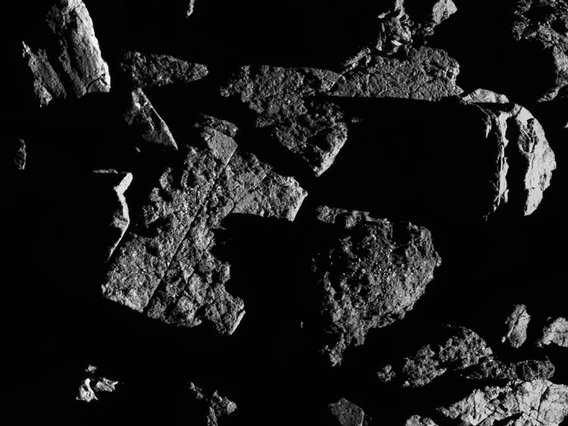
The spacecraft of the LPL-led OSIRIS-REx mission has documented the first direct evidence of erosion driven by harsh temperatures between daytime and nighttime. Evidence of thermal fracturing on the asteroid can help scientists learn about the geologic history not only on Bennu, but on other planetary surfaces as well.
NASA's OSIRIS-REx Discovers Sunlight Can Crack Rocks on Asteroid Bennu

By University Communications - June 9, 2020
Asteroids don't just sit there doing nothing as they orbit the sun. They get bombarded by meteoroids, blasted by space radiation and now, for the first time, scientists are seeing evidence that even a little sunshine can wear them down.
Rocks on asteroid Bennu appear to be cracking as sunlight heats them up during the day and they cool down at night, according to images from NASA's OSIRIS-REx spacecraft.
"This is the first time evidence for this process, called thermal fracturing, has been definitively observed on an object without an atmosphere," said University of Arizona alumna Jamie Molaro of the Planetary Science Institute and lead author of a paper in Nature Communications. "It is one piece of a puzzle that tells us what the surface used to be like, and what it will be like millions of years from now."
"Like any weathering process, thermal fracturing causes the evolution of boulders and planetary surfaces over time – from changing the shape and size of individual boulders, to producing pebbles or fine-grained regolith, to breaking down crater walls," said OSIRIS-REx principal investigator Dante Lauretta of the University of Arizona. "How quickly this occurs relative to other weathering processes tells us how and how quickly the surface has changed."
Rocks expand when sunlight heats them during the day and contract as they cool down at night, causing stress that forms cracks that grow slowly over time. Scientists have thought for a while that thermal fracturing could be an important weathering process on airless objects like asteroids because many experience extreme temperature differences between day and night, compounding the stress. For example, daytime highs on Bennu can reach almost 127 degrees Celsius, or about 260 degrees Fahrenheit, and nighttime lows plummet to about minus 73 degrees Celsius, or nearly minus 100 degrees Fahrenheit. However, many of the telltale features of thermal fracturing are small, and before OSIRIS-REx got close to Bennu, the high-resolution imagery required to confirm thermal fracturing on asteroids didn't exist.
The mission team found features consistent with thermal fracturing using the spacecraft's OSIRIS-REx Camera Suite, which can see features on Bennu smaller than one centimeter, or almost 0.4 inches. It found evidence of exfoliation, where thermal fracturing likely caused small, thin layers – between 1 and 10 centimeters – to flake off of boulder surfaces. The spacecraft also produced images of cracks running through boulders in a north-south direction, along the line of stress that would be produced by thermal fracturing on Bennu.
Other weathering processes can produce similar features, but the team's analysis ruled them out. For example, rain and chemical activity can produce exfoliation, but Bennu has no atmosphere to produce rain. Rocks squeezed by tectonic activity can also exfoliate, but Bennu is too small for such activity. Meteoroid impacts do occur on Bennu and can certainly crack rocks, but they would not cause the even erosion of layers from boulder surfaces that were seen. Also, there's no sign of impact craters where the exfoliation is occurring.
Additional studies of Bennu could help determine how rapidly thermal fracturing is wearing down the asteroid, and how it compares to other weathering processes.
"We don't have good constraints yet on breakdown rates from thermal fracturing, but we can get them now that we can actually observe it for the first time in situ," said OSIRIS-REx project scientist Jason Dworkin of NASA's Goddard Space Flight Center in Greenbelt, Maryland. "Laboratory measurements on the properties of the samples returned by the spacecraft in 2023 will help us learn more about how this process works."
Another area of research is how thermal fracturing affects our ability to estimate the age of surfaces. In general, the more weathered a surface is, the older it is. For example, a region with a lot of craters is likely to be older than an area with few craters, assuming impacts happen at a relatively constant rate across an object. However, additional weathering from thermal fracturing could complicate an age estimate, because thermal fracturing is going to happen at a different rate on different bodies, depending on things like their distance from the sun, the length of their day and the composition, structure and strength of their rocks. On bodies where thermal fracturing is efficient, it may cause crater walls to break down and erode faster. This would make the surface look older according to the cratering record, when in fact it is actually younger. Or the opposite could occur. More research on thermal fracturing on different bodies is needed to start to get a handle on this, Molaro said.
The research was funded by NASA's OSIRIS-REx Participating Scientist program as well as the OSIRIS-REx asteroid sample return mission. NASA's Goddard Space Flight Center in Greenbelt, Maryland, provides overall mission management, systems engineering, and the safety and mission assurance for OSIRIS-REx. The University of Arizona leads the science team and the mission's science observation planning and data processing. Lockheed Martin Space in Denver built the spacecraft and is providing flight operations. Goddard and KinetX Aerospace are responsible for navigating the OSIRIS-REx spacecraft. OSIRIS-REx is the third mission in NASA's New Frontiers Program, which is managed by NASA's Marshall Space Flight Center in Huntsville, Alabama, for the agency's Science Mission Directorate in Washington.