

Asian Pacific Islander Desi American Heritage Month Faculty Spotlight: Dr. Renu Malhotra
The College of Science is celebrating Asian Pacific Islander Desi American (APIDA) Heritage Month with Dr. Renu Malhotra, a Regents Professor and Louise Foucar Marshall Science Research Professor in the Planetary Sciences department.
Asian Pacific Islander Desi American Heritage Month Faculty Spotlight: Dr. Renu Malhotra

By Adam Gonzales, College of Science - April 18, 2023
The College of Science is celebrating Asian Pacific Islander Desi American (APIDA) Heritage Month with Dr. Renu Malhotra, a Regents Professor and Louise Foucar Marshall Science Research Professor in the Planetary Sciences department.
The College of Science spoke with Dr. Malhotra, a native of India to discuss her journey to the United States and the University of Arizona, her upbringing, and her favorite part about being a scientist.
Dr. Renu Malhotra
Regents Professor, Louise Foucar Marshall Science Research Professor
Planetary Sciences
College of Science: Tell us a little about yourself, your background and your journey to the University of Arizona.
Malhotra: I grew up in India and came to the US "as soon as I could", as the saying goes. My childhood was somewhat of a nomadic experience, living in quite diverse cultures and circumstances in north and south India. I was lucky to attend a good high school and a selective college, both in India. I took the academic path in the US, with graduate research leading to a PhD in Physics at Cornell University, followed by a post-doc at Caltech and a scientific staff position at the Lunar and Planetary Institute in Texas, before I joined the University of Arizona faculty in 2000.
COS: When looking back on your childhood and spending time with family, are there any favorite traditions or memories that stick out to you?
Malhotra: My parents were of modest means, luxuries were unknown, hard work and pitching-in was expected. I recall a couple of really rough years when there were severe food shortages and rationing, and I would accompany my mother to queue up for basic food items like flour, cooking oil and sugar. Being the oldest, I was responsible for helping my younger siblings get to school on time and helping them with homework, tasks not easily accomplished. I have vivid memories of one visit to the circus and one to a fair, and once to my father's workplace where I got to experience a mechanical aircraft simulator. Religious holidays were frequent and much fun and involved rituals at home that my siblings and I remember very fondly, but that I later found out were partly made-up by my parents, both of whom, as children, had been uprooted from their ancestral homes during the India-Pakistan partition in the late-1940s. I kind-of carry on the tradition of make-up rituals with my own children.
COS: Who are some of the people who have made the greatest impact on your life?
Malhotra: I would have to say my parents. My father for encouraging curiosity, my mother for her calmness and kindness and acceptance. One English teacher in high school who encouraged my unorthodox writing explorations and striving for perfection. One science teacher in middle school who punished me for non-compliance and questioning authority. Ayn Rand and Thomas Paine whose writings clarified for me the relationship between the human faculties of reason and emotion, and the morality and power of individual freedom and individual agency. Several mentors in graduate and post-doc years who believed in me - more than I myself did - and helped me grow and succeed professionally. My husband and my children who continue to remind me to cherish each day.
COS: What was it that drew you to your area of research and expertise?
Malhotra: Going into graduate studies, I had the simple idea that I wanted "to understand how nature works". By chance, I got an opportunity to do a summer project in nonlinear dynamics in the early days of chaos theory, which sparked my interest in that subject. And then, also by chance, I connected with a planetary scientist who became my PhD advisor and who channeled my mathematical proclivity towards nonlinear dynamics of planetary systems. I made a couple of notable contributions early on, and those small successes quickly felt like this research area "fit me", and "I was made for it".
COS: What is your favorite part of being a scientist?
Malhotra: My favorite part is making novel hypotheses to understand what's hidden beyond what's visible. Also identifying ways to test and falsify hypotheses and figuring out effective ways to reveal, visualize and communicate patterns in data. I also really enjoy writing, and re-writing, and editing again and again, which is a major part of being a scientist.

Icy Moonquakes: Surface Shaking Could Trigger Landslides
Quakes could be the source of the mysteriously smooth terrain on the moons circling Jupiter and Saturn, according to a new study led by a University of Arizona graduate student.Icy Moonquakes: Surface Shaking Could Trigger Landslides

By University Communications and NASA Jet Propulsion Laboratory - April 14, 2023
Many of the ice-encrusted moons orbiting the giant planets in the far reaches of our solar system are known to be geologically active. Jupiter and Saturn have such strong gravity that they stretch and pull the bodies orbiting them, causing moonquakes that can crack the moons' crusts and surfaces. New research shows for the first time how these quakes may trigger landslides that lead to remarkably smooth terrain.
The study was led by Mackenzie Mills, a doctoral student at the University of Arizona Lunar and Planetary Lab who conducted the work during a series of summer internships at NASA's Jet Propulsion Laboratory in Southern California. Published in the journal Icarus, the paper outlines the link between quakes and landslides, shedding new light on how icy moon surfaces and textures evolve.
On the surfaces of icy moons such as Europa, Ganymede and Enceladus, it's common to see steep ridges surrounded by relatively flat, smooth areas. Scientists have theorized that these spots result from liquid that flows out of icy volcanoes. But how that process works when the surface temperatures are so cold and inhospitable to fluids has remained a mystery.
A simple explanation outlined in the study doesn't involve liquid on the surface. Scientists measured the dimensions of the steep ridges, which are believed to be tectonic fault scarps (like those on Earth) – steep slopes caused when the surface breaks along a fault line and one side drops. By applying the measurements to seismic models, they estimated the power of past moonquakes and found they could be strong enough to lift debris that then falls downhill, where it spreads out, smoothing the landscape.
"We found the surface shaking from such moonquakes would be enough to cause surface material to rush downhill in landslides. We've estimated the size of moonquakes and how big the landslides could be," Mills said. "This helps us understand how landslides might be shaping moon surfaces over time."
Upcoming investigations
NASA's upcoming Europa Clipper mission, bound for Jupiter's moon Europa in 2024, will give the research a significant boost, providing imagery and other science data. UArizona Regents Professor of Planetary Sciences Alfred McEwen serves as deputy principal investigator for the Europa Imaging System. EIS consists of two cameras that will produce high-resolution color and stereoscopic images of Europa. The instrument will monitor geologic activity, measure surface elevations and provide context for other instruments.
After reaching Jupiter in 2030, the spacecraft will orbit the gas giant and conduct about 50 flybys of Europa. The mission has a sophisticated payload of nine science instruments to determine if Europa, which scientists believe contains a deep internal ocean beneath an outer ice shell, has conditions that could be suitable for life.
NASA's Galileo spacecraft captured this image of the surface of Jupiter's moon Ganymede. The ancient, heavily cratered dark terrain is faulted by a series of scarps, forming a series of "stair-steps" like a tilted stack of books. On Earth, similar types of features form when tectonic faulting breaks the crust and the intervening blocks are pulled apart and rotate.NASA/JPL/Brown University
Europa Clipper's main science goal is to determine whether there are places below the surface of Jupiter's icy moon, Europa, that could support life. The mission's main science objectives are to understand the nature of the ice shell and the ocean beneath it, along with their composition and geology. The mission's detailed exploration of Europa will help scientists better understand the astrobiological potential for habitable worlds beyond our planet.
The team was surprised by how powerful moonquakes could be and that they could move debris downslope relatively easily, according to co-author Robert Pappalardo, project scientist of Europa Clipper at NASA's Jet Propulsion Laboratory, which manages the mission.
Especially surprising were the modeling results for tectonic activity and quakes on Saturn's moon Enceladus, a body that has less than 3% of the surface area of Europa and about 1/650 that of Earth.
"Because of that moon's small gravity, quakes on tiny Enceladus could be large enough to fling icy debris right off the surface and into space like a wet dog shaking itself off," Pappalardo said.
When it comes to Europa, the high-resolution images gathered by Europa Clipper will help scientists determine the power of past moonquakes. Researchers will be able to apply the recent findings to understand whether quakes have moved ice and other surface materials and by how much. Images from the European Space Agency's Jupiter Icy Moons Explorer, or JUICE, mission, which launched on April 14, will offer similar information about Europa's neighboring Jovian moon, Ganymede.
"Future data from these spacecraft will help us better understand how icy moon surfaces evolved geologically, and also whether geologic processes are still actively shaping their surfaces," Mills said.
Managed by Caltech in Pasadena, California, the Jet Propulsion Laboratory leads the development of the Europa Clipper mission in partnership with the Johns Hopkins Applied Physics Laboratory in Laurel, Maryland, for NASA's Science Mission Directorate in Washington, D.C. The Applied Physics Laboratory designed the main spacecraft body in collaboration with JPL and NASA's Goddard Space Flight Center in Greenbelt, Maryland. The Planetary Missions Program Office at NASA's Marshall Space Flight Center in Huntsville, Alabama, executes program management of the Europa Clipper mission.
 This view of Jupiter's moon Europa was captured in the 1990s by NASA's Galileo spacecraft. The smooth slopes and nearby rubble may have been produced by landslides.
NASA/JPL-Caltech
 NASA's Galileo spacecraft captured this image of the surface of Jupiter's moon Ganymede. The ancient, heavily cratered dark terrain is faulted by a series of scarps, forming a series of "stair-steps" like a tilted stack of books. On Earth, similar types of features form when tectonic faulting breaks the crust and the intervening blocks are pulled apart and rotate.
NASA/JPL/Brown University
LPL Students Observe and Track “Near-Miss” Asteroid
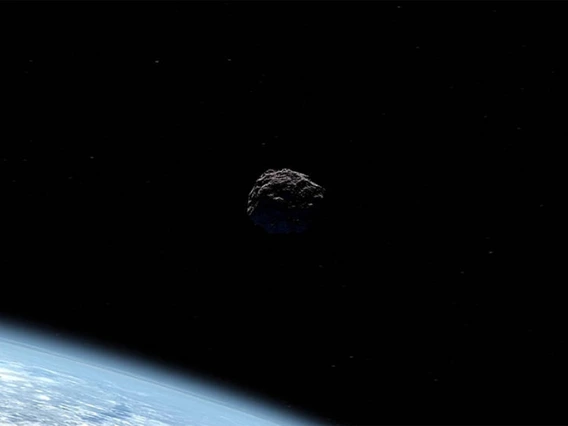
As a sizable asteroid makes a close pass by Earth, a team of University of Arizona students is ready to observe the action to practice and test procedures that could be useful in mitigating an impending asteroid impact in the future.
LPL Students Observe and Track “Near-Miss” Asteroid

By Daniel Stolte, University Communications - March 24, 2023
Some 50,000 years ago, a herd of mammoths trotted across the grassy plains in Northern Arizona, unaware of the impending doom hurtling towards them at 30,000 mph. As a jumbo jet-sized space rock slammed into Earth, it left behind an iconic scar that has become one of Arizona's most recognizable natural features: Meteor Crater, about 37 miles east of Flagstaff.
On Saturday at 12:51 p.m. Arizona time, an asteroid estimated to be about the same size will whiz past the Earth at less than half the distance between Earth and the moon. In astronomical terms, that's a near miss. A team of University of Arizona students is ready to observe the action and gather as much data as possible as part of the Rapid Response Characterization Campaign, organized by the International Asteroid Warning Network.
Vishnu Reddy, a professor in the UArizona Lunar and Planetary Laboratory, who is leading the global campaign, said the idea is to practice and test procedures that could be useful in mitigating an impending asteroid impact in the future. Reddy was quick to point out that the asteroid zipping past Earth this week has no chance of colliding with the planet.
The discovery of near-Earth asteroid 2023 DZ2 was announced March 16 by the Minor Planet Center, the single worldwide clearinghouse for asteroids and comets, which is managed by the International Astronomical Union. One day later, the campaign was launched, with the goal of using the close encounter as a "fire drill" of sorts, to spin up a worldwide network of observers that could prove vital in the future, should an object be discovered that is headed for impact instead of just zipping by.
"The idea is to use this opportunity as a rehearsal of sorts," Reddy said. "We are using this asteroid as a stand-in for a scenario in which a space rock is detected that actually is headed toward the Earth. If that were to happen, we can apply lessons learned from exercises like this one – for example, what are the most important steps the international community would have to take to avert or minimize the risk of an impact and its possible aftermath?"
DZ2 was first observed on Feb. 27. Initial orbital calculations suggested that the asteroid had a high probability of hitting Earth in 2026. As subsequent observations allowed observers to calculate its orbit around the sun with more precision, it became clear that an impact is unlikely in the foreseeable future. And while a close shave is much preferred to an impact, the UArizona team is excited to have access to front-row seats to the cosmic encounter during the observing campaign.
As recently as last week, impact probability for 2026 was estimated at 1 in 430. A few days later, it stood at 1 in 71,000, according to Adam Battle and David Cantillo, two doctoral students at the Lunar and Planetary Laboratory who are leading the characterization of DZ2. Reddy's team also includes Benjamin Sharkey, a postdoctoral research associate in the College of Engineering, and Juan Sanchez, a staff scientist at the Planetary Science Institute.
Cantillo said he was pulling into a Safeway parking lot when he received a call from Reddy.
"He said, 'David, there is this new object, and it might pose a risk of impact in a few years. We really want to get some data on it, and closest approach is next week,'" Cantillo said. "And I just thought, wow!"
Although DZ2 does not pose a threat to Earth, it serves as a reminder that there is a sizeable population of asteroids out there that could. This is true particularly for the size range DZ2 falls into, which makes it not quite big enough to cause mass extinctions and small enough to slip through the cracks of routine asteroid detection programs such as NASA's Spacewatch program and the UArizona-led Catalina Sky Survey. DZ2 is believed to most likely be an asteroid that was part of the asteroid belt between Mars and Jupiter before orbital mechanics and gravitational tugs nudged it off course and toward an orbit around the sun that takes it past Earth on a regular basis.
Because of projects like Spacewatch, Catalina Sky Survey and other dedicated survey projects, most asteroids that could pose a significant threat to Earth larger than 1 kilometer (0.62 miles) have been discovered and cataloged and their orbits are being monitored.
"None of these asteroids typically pose a threat," Cantillo said. "Our goal is to learn more about their composition and specifically look at the smaller size range of near-Earth asteroids, because they're much harder to detect. DZ2 happened to check all of those boxes with our ongoing work, while also having this extra timely component of a close approach this week."
During the asteroid's closest approach on Saturday, Cantillo and his colleagues expect it to increase in brightness, although it likely won't be visible to the unaided eye.
"We hope to collect a lot of valuable data on the object," said Cantillo, who will observe remotely from Tucson with NASA's Infrared Telescope Facility on Mauna Kea in Hawaii. "Specifically, we're studying how the asteroid reflects light across different wavelengths, and that in turn will reveal certain features that are diagnostic of surface minerals."
"Once we have a better idea of the composition of the asteroid, it will tell us something about its density, which is helpful for understanding how much energy it would impart during an impact," said Battle, explaining that there are a wide variety of asteroids out there, each with their own implications for planetary safety.
Battle is using the RAPTORS telescope, designed and built by UArizona undergraduate students under Reddy's mentorship, to do spectroscopy – analyzing DZ2's reflection of sunlight in the visible light spectrum. Those observations include studying its light curve – the way its brightness changes over time.
"If you're looking at a spherical object, you won't see any or very little changes in brightness because the area reflecting the light is more or less the same while the asteroid rotates," Battle said. "But let's say you have something that's shaped like a potato and tumbling end-over-end – it'll appear brighter when the long edge is facing us than when its narrow end is facing us. So, as that asteroid tumbles through space, you would see a periodic brightening and dimming."
The speed at which an asteroid spins can be a giveaway about what it's made of, Battle said.
"Rubble pile asteroids can only spin so fast, or they would fly apart," he said. "If it rotates very fast, on the other hand, that tells us it's likely monolithic, just one big boulder. Having just one huge rock hurtling toward us carries a lot more significance than if we're facing a ball of debris, even if the two are of similar size."
For now, Battle and Cantillo are hoping for good weather and clear skies.
"It's been a really fun process to be a part of," Cantillo said. "Having the chance to work with NASA and other collaborators and being part of that team that gets a close-up and personal look at it has been very rewarding."

LPL Alum Maria Steinrueck wins 51 Pegasi b Fellowship
The 51 Pegasi b Fellowship provides postdoctoral scientists with the opportunity to conduct theoretical, observational, and experimental research in planetary astronomy.LPL Alum Maria Steinrueck wins 51 Pegasi b Fellowship

 LPL alum Dr. Maria Steinrueck (2021) is the recipient of a 51 Pegasi b Fellowship from the Heising-Simons Foundation. The 51 Pegasi b Fellowship provides postdoctoral scientists with the opportunity to conduct theoretical, observational, and experimental research in planetary astronomy. Dr. Steinrueck’s research seeks to enable more accurate observational interpretations and predictions across a range of exoplanet types through three-dimensional climate modeling. “We knew that photochemical hazes exist on exoplanets, but nobody had examined what they do in three dimensions. We had only one-dimensional models, which cannot describe the weather of a planet fully.”
While majoring in physics with a focus on particle physics as an undergraduate student, Maria Steinrueck encountered a team studying exoplanet atmospheres and recalled her own excitement, years earlier, when exoplanet winds were first measured. It was enough to change her course as a scholar and professional. “I was drawn to climate models where you can actually simulate the winds and temperature distribution on an exoplanet and see what that looks like in three dimensions, through day and night differences in temperature and other conditions. 3D models are necessary to more fully understand what’s happening on planets we cannot see directly.”
Today, Maria examines how clouds and hazes impact a planet’s atmospheric circulation, temperatures, and transmission and emission spectra. Photochemical hazes, born of UV reactions with molecules such as methane, can significantly distort or mute the chemical signatures observed and used to characterize a planet. In a first for her field, Maria developed a three-dimensional climate model that predicts the location of photochemical hazes in the atmospheres of Hot Jupiters, the largest and most extensively described exoplanets to date.
During her fellowship, Maria will model 3D atmospheric circulation for a wide variety of exoplanets, determining how haze particles mix and move across different planetary conditions. Included in this exploration will be cooler, smaller planets closer in size to Neptune and Earth, which are increasingly observable through next-generation telescopes. “With the new space telescope (JWST) we will get more data and details about smaller exoplanets. From the first measurements published, we can already see there is uneven cloud and haze coverage, with a lot of 3D effects that must be factored in to interpret observations of these planets correctly.” Maria’s modeling will improve the accuracy of interpreting these observations, for a clearer picture of distant planets more like our own.
Maria received a Ph.D. in planetary sciences from the University of Arizona in Fall 2021. Prior to starting her 51 Pegasi b Fellowship, Maria will continue to work as the Atmospheric Physics of Exoplanets Prize Postdoctoral Fellow at the Max Planck Institute for Astronomy in Heidelberg, Germany.
6 Months to Go Until Historic Asteroid Sample Delivery
March 24 marks 6 months until the University of Arizona-led OSIRIS-REx mission is scheduled to return material from the dawn of the solar system to Earth for study.6 Months to Go Until Historic Asteroid Sample Delivery

Rani Gran/NASA Goddard Space Flight Center and Daniel Stolte/University Communications - March 24, 2023
The University of Arizona's OSIRIS-REx team is eagerly awaiting the arrival of pristine material from asteroid Bennu, marking the first time NASA is bringing a sample from an extraterrestrial body to Earth since the Apollo moon landings. Once in Tucson, material leftover from the formation of the solar system will be studied at the Kuiper Materials Imaging and Characterization Facility at the university's Lunar and Planetary Laboratory, a state-of-the-art facility designed with one goal: extract as much information from samples as possible.
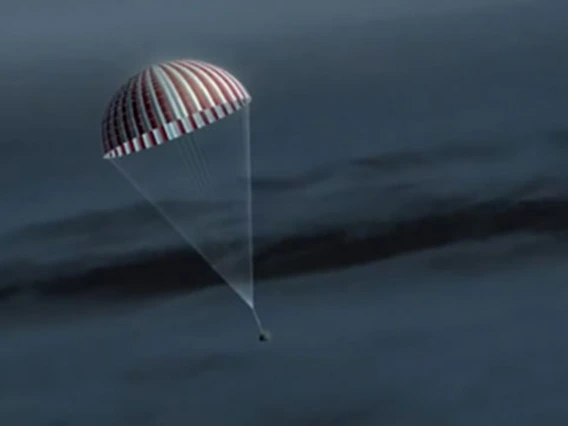
NASA's OSIRIS-REx spacecraft is currently cruising back to Earth with a sample it collected from Bennu's rocky surface in 2020 . When its sample capsule parachutes down into the Utah desert on Sept. 24, OSIRIS-REx will become the United States' first-ever mission to return an asteroid sample to Earth.
After seven years in space, including a nail-biting touchdown on Bennu to gather dust and rocks, this intrepid mission is about to face one of its biggest challenges yet: Deliver the asteroid sample to Earth while protecting it from heat, vibrations and earthly contaminants.
"Once the sample capsule touches down, our team will be racing against the clock to recover it and get it to the safety of a temporary clean room," said Mike Moreau, deputy project manager at NASA's Goddard Space Flight Center in Greenbelt, Maryland.
Members of NASA’s OSIRIS-REx curation team work with a glove box at the agency's Johnson Space Center in Houston. The curation team will be among the first to see and handle the sample OSIRIS-REx is returning from asteroid Bennu. They are also responsible for storing and distributing the sample to science team members around the world. Most of the sample will be stored for future generations.NASA Johnson/Bill Stafford
Over the next six months, the OSIRIS-REx team will practice and refine the procedures required to recover the sample in Utah and transport it to a new lab built for the material at NASA's Johnson Space Center in Houston. There, scientists will unpack the sample, distribute up to a quarter of it to the OSIRIS-REx science team around the world for analysis, and curate the rest for other scientists to study, now and in future generations.
Flight dynamics engineers from NASA Goddard and KinetX Aerospace are reviewing the trajectory that will bring the spacecraft close to Earth. At Lockheed Martin in Denver, team members are keeping tabs on the spacecraft and preparing a group to recover the sample capsule. This summer, crews in Colorado and Utah will practice all of the steps to recover the capsule safely, while protecting it from contamination. At Johnson Space Center, the curation team is rehearsing a procedure to unpack and process the sample inside glove boxes. Meanwhile, members of the sample science team are preparing the investigations they will perform with the sample material once received.
"The OSIRIS-REx team has already performed amazing feats characterizing and sampling asteroid Bennu," said OSIRIS-REx principal investigator Dante Lauretta, a UArizona professor of planetary sciences. "These accomplishments are the direct result of the extensive training and rehearsals that we performed every step of the way. We are bringing that level of discipline and dedication to this final phase of the flight operations."
Asteroids are the ancient materials left over from the original era of planet formation and may contain molecular precursors to life. Scientists have learned a great deal from studying asteroid fragments that have naturally reached the ground as meteorites. But to understand whether asteroids played a role in delivering these compounds to Earth's surface over 4 billion years ago, scientists need a pristine sample from space, free from terrestrial contaminants.
In addition, the most fragile rocks observed on Bennu probably would not have survived passage through Earth's atmosphere as meteorites.
"There are two things pervasive on Earth: water and biology," said Jason Dworkin, OSIRIS-REx project scientist at NASA Goddard. "Both can severely alter meteorites when they land on the ground and muddle the story told by the sample's chemistry and mineralogy. A pristine sample could provide insights into the development of solar system."
On Sept. 24, as the OSIRIS-REx spacecraft flies by Earth, it will release its sample return capsule, thereby ending its primary mission. The capsule, which is estimated to hold about a cup of Bennu’s material – 8.8 ounces, plus or minus 3.6 ounces, to be precise – will land within a 37-mile by 9-mile ellipse within Department of Defense property that is part of the Utah Test and Training Range and Dugway Proving Grounds.
OSIRIS-REx team members from NASA Goddard, KinetX, Lockheed Martin and NASA's Langley Research Center in Hampton, Virginia, are using computer models to test navigation plans in various weather, solar activity, and space debris scenarios to ensure that when the capsule enters Earth's atmosphere at 10:41 a.m. (ET), it will touch down inside the targeted area 13 minutes later.
Recovery crews are responsible for securing the sample return capsule’s landing site and helicoptering it to a portable clean room located at the range. Additionally, crews will collect soil and air samples all around the landing capsule. These samples will help identify if any minute contaminants contacted the asteroid sample.
Once the capsule is inside the building with the portable clean room, members of the team will remove the heat shield, back shell and other components to prepare the sample canister for transport to Houston.
The return to Earth of samples from asteroid Bennu will be the culmination of a more than 12-year effort by NASA and its mission partners but marks the beginning of a new phase of discovery as scientists from around the world will turn their attention to the analysis of this unique and precious material dating from the early formation of the solar system.
 Members of NASA’s OSIRIS-REx curation team work with a glove box at the agency's Johnson Space Center in Houston. The curation team will be among the first to see and handle the sample OSIRIS-REx is returning from asteroid Bennu. They are also responsible for storing and distributing the sample to science team members around the world. Most of the sample will be stored for future generations.
NASA Johnson/Bill Stafford
3D Radar Scan Provides Clues About Threats to Iconic Alaskan Glacier
Mapping a large coastal glacier in Alaska revealed that its bulk sits below sea level and is undercut by channels, making it vulnerable to accelerated melting in an already deteriorating coastal habitat.3D Radar Scan Provides Clues About Threats to Iconic Alaskan Glacier

By Daniel Stolte, University Communications - March 15, 2023
A detailed "body scan" of Malaspina Glacier, one of Alaska's most iconic glaciers, revealed that its bulk lies below sea level and is undercut by channels that may allow ocean water to gain access, should its coastal barrier erode. This makes the glacier more vulnerable to seawater intrusion than previously thought and may cause it to retreat faster than predicted.
The findings, published by University of Arizona researchers in the Journal of Geophysical Research, underscore the fragility of a very large glacial system that could lead to the loss of a significant volume of ice and National Park Service land and would contribute a measurable volume to global sea level rise.
"The loss of this glacier would likely be the largest loss of ice from an Alaskan glacier within this century," said lead study author Brandon Tober, a doctoral student in the UArizona Department of Geosciences.
The area in front of Malaspina Glacier, a permafrost zone with pure ice beneath the surface, is "wasting away" in the face of rising global temperatures, Tober said. Permafrost refers to ground that remains frozen for two or more years.
"As this coastal barrier erodes and gives way to large lagoons, primarily through the collapse of ice cliffs, ocean water may eventually gain access to the glacier," Tober said. "Once it gets to the front of the glacier, it may melt the ice even faster and initiate the glacier's retreat."
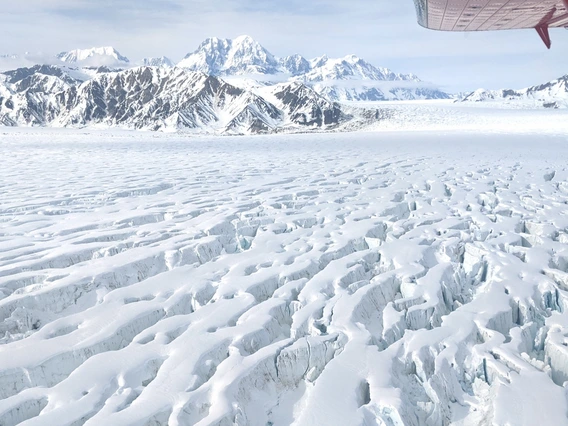
Forming an expansive ice sheet located right on the shore of southeast Alaska, Malaspina is the world's largest piedmont glacier, a type of glacier that flows from steep mountains onto a broad plain, essentially forming a "pancake of ice" that spills out onto a broad coastal plain from the St. Elias Mountains. A thin land barrier separates the glacier from the relatively warm waters of the Gulf of Alaska. Historical satellite imagery shows these water bodies expanding over time, forming a lagoon system directly in front of the glacier over the past few decades.
Traditionally, researchers rely on mathematical models to gauge the thickness of glaciers, Tober said, but they vary widely in their ability to accurately predict the thickness of glaciers. These models often rely on measurements of how fast the glacier moves across the surface to make predictions about the glacier's depth, similar to the way a river's water flow rates are used to gain insights about its depth and the shape of its bed.
"We know that glaciers in Alaska are melting and thinning rapidly in many places, but we don't accurately know how thick they are, and therefore we can't accurately predict future mass loss," Tober said. "If we don’t know the thickness and bed topography, we can't accurately model their future evolution."
To gain a better idea of Malaspina's future, the researchers needed to get a detailed "body scan" of its shape and thickness. To do this, Tober's research group used the Arizona Radio Echo Sounder, or ARES, an instrument designed and built by a team led by Jack Holt, a professor at the UArizona Lunar and Planetary Laboratory and Department of Geosciences, and one of the paper's co-authors. Holt's research group specializes in using geophysical research methods, primarily radar, to study features on Earth and Mars.
ARES was mounted in an airplane as part of Operation IceBridge, a NASA-funded mission tasked with measuring annual changes in the thickness of glaciers, sea ice and ice sheets in Greenland, Alaska and Antarctica from airplanes between 2009 and 2021.
While the plane crisscrossed the vast, icy expanse, its ice-penetrating radar "X-rayed" the glacier, resulting in a full "3D body scan" of the glacier and underlying bedrock. The measurements revealed that Malaspina glacier sits largely below sea level and is cut by several channels at its bed that extend at least 21 miles from where the glacier meets the shore up toward its source in the Saint Elias Mountains.
The combination of the glacier's location with respect to the sea level and the continued loss of its coastal barrier may provide pathways for ocean waters to access large areas of the glacier's bed along these channels, the researchers write in their paper. Assuming this leads to large-scale shedding of ice masses and the glacier's retreat, the researchers conclude that Malaspina has the potential to contribute 560 cubic kilometers, or 134 cubic miles, of ice to the ocean. In other words, Malaspina alone could raise global sea level by 1.4 millimeters, or just under 1/16 of an inch.
"This might not sound like much, but to put this in perspective, all Alaskan glaciers combined contribute about 0.2 millimeters per year to global sea level rise – a rate that tops all other glaciated regions on Earth apart from the Greenland and Antarctic ice sheets," Tober said.
The study makes Malaspina the most extensively radar-mapped glacier in Alaska, according to Tober's team. While glaciers in other parts of the world have been mapped to similar levels of detail, their Alaskan counterparts have eluded accurate measurements because they consist of what is known as temperate or "warm" ice.
"The glacier's crevasses often have water in them, and that makes it difficult to get radar energy down to the bed of the glacier and back up to the instrument," Tober said.
Overcoming that challenge was part of the motivation to build ARES.
The radar scans revealed that glaciological models overestimate Malaspina's volume by more than 30%. Still, the glacier, which was measured to be just over half a mile thick at its center, boasts 10 times the total volume of all the glaciers in the Swiss Alps.
"We can speculate that the channels, the big troughs beneath the glacier, are routing meltwater that comes out at the coast," Tober said.
The observed expanse of lagoons across Malaspina's foreland over the past few decades is largely what alerted a team of researchers including Holt to the fact that the coastal barrier in front of Malaspina Glacier is wasting away, raising questions about the glacier's stability. The team, which consists of researchers from the UArizona, the University of Alaska Fairbanks, the University of Montana and the National Park Service, was awarded a grant by the National Science Foundation to further investigate the potential demise of the world's largest piedmont glacier.
Sydney Mooneyham, a co-author on this paper who graduated from the UArizona School of Geography, Development and Environment, mapped the expanse of the lagoons across Malaspina's foreland over the course of about 50 years' worth of images taken by Landsat, a series of Earth-observing satellites launched to study and monitor Earth's landmasses.
Another motivation to focus on Malaspina Glacier, Tober said, came from the fact that it is located in the largest national park in the U.S., the Wrangell Saint Elias National Park and Preserve. At 13.2 million acres, it is larger than Yellowstone National Park, Yosemite National Park and the country of Switzerland combined, according to the National Park Service.
"The potential loss of Malaspina and opening of a new bay along Alaska's coastline may be the largest landscape transformation within the U.S. that we could witness during this century," Tober said, "and it may lead to the loss of up to 500 square miles of park land."
EXTRA INFO
Watch a time-lapse video taken during a flight along Malaspina Glacier, from the shore all the way into the St. Elias Mountains. (Credit: Brandon Tober/University of Arizona Department of Geosciences)
 Vegetation growing atop massive ground ice – a crevassed forest – is seen in this aerial photo of the land strip that separates Malaspina Glacier from the Pacific Ocean. This coastal barrier "wastes away," the researchers say, as ice cliffs collapse and form a growing expanse of lagoons.
Brandon Tober/University of Arizona
 Donning flight suits, Jack Holt (left) and Brandon Tober await a helicopter ride back to base camp after completing a geophysical survey on Malaspina Glacier.
Jack Holt/University of Arizona
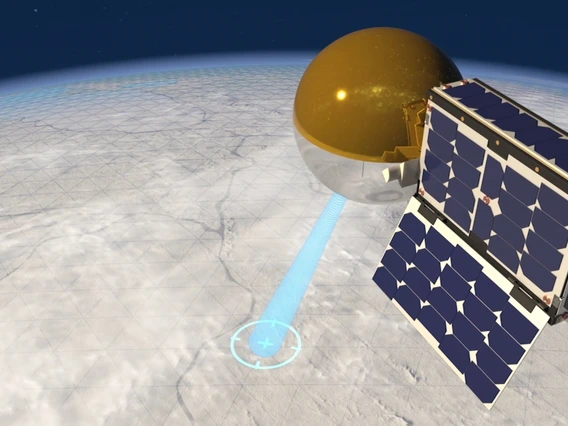
Student-built Satellite Uses 'Beach Ball' for an Antenna
CatSat is a small satellite carrying a new communications concept – an inflatable antenna – into space. The project provides a rare opportunity for students at the University of Arizona to get hands-on experience with spaceflight technology.
Student-built Satellite Uses 'Beach Ball' for an Antenna

By Kylianne Chadwick, NASA Space Grant Science Writing Intern, University Communications - March 6, 2023
Scientists and engineers at the University of Arizona have built instruments for three NASA telescopes, led two deep space missions and made it possible to see farther back in space and time than ever before. Adding to this list of space exploration accomplishments is a different type of project – one led entirely by students.
Near the university's main campus, students gather inside a cleanroom wearing lab coats, gloves and hairnets. On their lab bench sits a complex maze of wires and metal, the dimensions of a family-size cereal box. Each component has been optimized to survive a rocket launch and orbit the Earth.
After years of designing, building and testing, a team of UArizona students has readied CatSat, a small satellite known as a CubeSat, for launch into space. The spacecraft was designed to demonstrate new space technology and overcome a major challenge in space exploration: high-speed, low-cost communication across vast distances. Reminiscent of a beach ball, the satellite's antenna is expected to transfer information from space to Earth at high data rates.
If everything goes according to plan, the satellite won't just demonstrate new space technology; it will also probe the ionosphere – a layer of charged particles at the boundary between the Earth's atmosphere and space – so that the team can better understand the ionosphere's ever-changing structure. This structure impacts the propagation of high-frequency radio signals.
CatSat is a so-called 6U CubeSat, meaning it consists of six conjoined cubes, each measuring 4 inches along their edges. Unlike other CubeSats, it has an inflatable antenna, developed by Freefall Aerospace, a Tucson-based startup company and spinoff that was brought to be with the help of the university's commercialization arm, Tech Launch Arizona. Stored inside of CatSat is a high-performance, software-defined radio named AstroSDR, which was designed, built and donated by Rincon Research Corporation. After launch, the inflatable antenna, AstroSDR and other components will work together to send down high-resolution images of Earth almost instantaneously.
"Following a successful launch, this inflatable antenna will be the first of its kind in space," said Hilliard Paige, a systems engineering student and the project's lead systems engineer. "If it works, it will be a pathfinder for future missions."
The project began in 2019 when Chris Walker, a UArizona professor of astronomy, along with a team of faculty members from other departments, submitted a proposal to NASA as part of the NASA CubeSat Launch Initiative. NASA saw potential and agreed to provide a launch vehicle for CatSat.
"The technology demonstrated by CatSat opens the door to the possibility of future lunar, planetary and deep-space missions using CubeSats," said Walker, who also is the co-founder of FreeFall Aerospace. "CatSat puts the University of Arizona at the forefront of these efforts."
Inflatable antennas could give an edge to small spacecraft
All spacecraft require antennas to transmit and receive signals, allowing for communication with Earth. Yet, the capabilities of CubeSat antennas have historically been restricted, as CubeSats can only carry very small antennas. Signals from these small antennas can take days to finally reach Earth.
CatSat's inflatable antenna, invented by Walker at UArizona and further developed by Freefall Aerospace, combats this problem thanks to its lightweight material that tightly folds within the spacecraft. After launch, CatSat will stabilize its orientation so that it can eventually deploy the stowed antenna membrane and inflate it with helium and argon gas.
This inflated membrane is not unlike a large, floating foil birthday balloon. It has a clear lower hemisphere and an aluminum-coated upper hemisphere designed to reflect signals back down to Earth. The antenna's large surface allows for downlink speeds many times faster than comparable CubeSats.
Freefall Aerospace and the CatSat student team hope that inflatable antennas could level the playing field, allowing smaller and cheaper spacecraft to explore places beyond Earth.
"This technology could drive down the cost of high-quality scientific measurements in space by enabling the use of lightweight, low-cost antennas with very high data rates," said Aman Chandra, a doctoral student in mechanical engineering who is responsible for much of CatSat's mechanical design, including the inflatable antenna system.
Scientific exploration of the ionosphere
On the opposite end of CatSat's inflatable antenna is a "whip" antenna, about 2 feet long and shaped like a protruding stick. It was designed to receive low-power, automated, high-frequency beacons from thousands of Earthbound amateur radio enthusiasts. Radio signals in the high-frequency range can bounce off or refract from the ionosphere and travel to far-reaching locations by "bending around the Earth." Amateur, or ham, radio takes advantage of this charged layer of the atmosphere to broadcast information all around the globe.
"The ionosphere's density changes between night and day as radiation from the sun affects the density of its charged particles," Chandra said. "By listening to the strength of radio signals in the high-frequency range, we can estimate how the density of the ionosphere changes over time.”
The ionosphere's mysterious, fluctuating density can sometimes alter the precision of GPS signals. Minuscule alterations can be both inconvenient and catastrophic depending on the application. Because of this, the students believe it is essential to understand how the ionosphere behaves at all times.
CatSat will listen from above the ionosphere to high-frequency radio signals using the whip antenna and Rincon Research radio. The CatSat team will then compare these signals to what Earthbound radio operators hear. In this way, the team plans to identify trends in ionospheric properties in order to better understand how they change from day to night.
The student experience
Shae Henley is an undergraduate who began working on CatSat during her first year at the university, where she majors in aerospace engineering. Since then, some daily tasks have included hands-on assembly of the spacecraft, as well as repairing and testing balloons for the inflatable antenna.
"I love working in the cleanroom with CatSat and I'm very lucky to have this experience as only a junior in college," Henley said. "Working on CatSat has helped me become more comfortable in a work environment where I can apply what I'm learning in school."
However, the work wasn't always easy. While working on space hardware, the students encountered difficulties that sometimes forced them to change their plans and designs.
"Many pieces on the CatSat weren't our first choice," said Del Spangler, a graduate student in electrical and computer engineering and the project's lead electrical engineer. "While some of the hardware isn't necessarily meant for space, we've still been able to make it work."
"From a CubeSat to a billion-dollar space mission, there's always going to be challenges," said Dathon Golish, a scientist in the UArizona Lunar and Planetary Laboratory who previously led CatSat activities.
Other major setbacks included a damaged piece of equipment and a faulty battery that delayed development by six months.
"At moments, working on the CatSat has been frustrating, as engineering often is," Spangler said. "But overcoming all of the difficult problems we've faced has been a really good feeling."
Waiting for a ride
Once CatSat is assigned a launch date, expected later this year, a Firefly Alpha rocket will lift it into an orbit 340 miles above Earth, the approximate distance from Phoenix to Los Angeles. The satellite will remain in a sun-synchronous orbit, a path that will almost always keep it in direct sunlight and out of Earth's shadow. Once it has launched from Vandenburg Space Force Base in California, the responsibilities of the student team are far from over.
"I'm in the process of getting my ham radio license so that I'll be able to communicate with CatSat in orbit," Henley said. "From our CatSat UHF (ultra-high-frequency) ground stations, we'll collect ionospheric data and check up on how the satellite is doing."
One of the ground stations that will be listening to CatSat's signals is a 6-meter dish antenna located at UArizona's Biosphere 2. If the antenna functions correctly, it will provide images of Earth in close to real time, proving its effectiveness for quick data transfer.
"Students working on a CubeSat mission have the opportunity to see the whole life cycle of a space mission from start to finish," Golish said. "Regardless of end results, CatSat is already an accomplishment because it's given these students experience that's very difficult to come by otherwise."

Economic Impact of UArizona Space Sciences Rivals that of Super Bowl
A new report spotlights the significant impact of University of Arizona space sciences activities, which generate $560.5 million every year for the local economy.
Economic Impact of UArizona Space Sciences Rivals that of Super Bowl

By Logan Burtch-Buus, University Communications - February 8, 2023
Space may be the final frontier, but it is also the subject of some of the University of Arizona's most financially impactful research. The university's astronomy and space sciences operations generate as much money for the local economy every year as a Super Bowl, according to an economic impact report delivered by Rounds Consulting Group.
The report had several key findings. First, the total yearly economic output of the university's space sciences operations is estimated at roughly $560.5 million. In addition, space sciences activities generate roughly $21.1 million in state, county and municipal taxes every year.
For comparison, Visit Phoenix estimates Sunday's Super Bowl will generate $600 million in economic impact for the Phoenix and Arizona economies. The 2022 Super Bowl generated up to $477 million in economic stimulus, $22 million in tax revenues and nearly 4,700 jobs for the Los Angeles and California economies.
In addition to generating millions of dollars a year, space science operations at UArizona constitute a significant return on investment – to the tune of 5-to-1. This figure is derived from the $20 million on average received by space science departments in state funding every year, and the more than $100 million per year in grants, philanthropic donations and contracts secured by the same departments over the past four years. University space sciences operations directly employ more than 900 students, scientists, faculty, education professionals and operations personnel.
Job creation due to space sciences goes beyond the university, however. Roughly 3,300 total full-time equivalent employees are supported by exploring the cosmos. That figure includes jobs in businesses supported by the economic growth of the university's space science pursuits.
According to Rounds' report, money generated by the university's space science activities has played "a vital role throughout Arizona's economy, advancing the growth of the astronomy and space science industries."
UArizona administrators say the report shines a light on the magnitude of the university’s space sciences legacy.
"As Arizona's designated land-grant institution, our mission is firmly rooted in service to community, to the state and beyond," said Elizabeth "Betsy" Cantwell, UArizona senior vice president for research and innovation. "This impact analysis has allowed us to take an in-depth and holistic look at the economic benefits we create through research and innovation in one of our strongest areas."
College of Science Dean Carmala Garzione said the research conducted on campus benefits not only the scientific community but the community at large.
"As a state university, it's important that we understand the value of the education we're providing," Garzione said. "Not just to jobs that our students may be taking after they leave, but also to our local economy and our community. We support high paying jobs in science and engineering that reinforce our industry base in Southern Arizona and bring a higher quality of life to the community. I understand the value of science intrinsically, but knowing it extends to high economic impact reinforces my belief that we are pursuing the right type of science: science supporting society in our local region."
Hundreds of millions of dollars in yearly economic impact does not happen overnight or by accident, and is the result of decades of investment by UArizona leadership in space sciences, beginning in earnest in the 1960s. This foresight uniquely positioned the university to successfully secure the contracts and grants that bring high levels of funding from not only the federal government, but institutions and governments from around the world. These external funds are the reason the National Science Foundation's Higher Education Research and Development survey, which annually ranks more than 900 colleges and universities based on a variety of metrics, has listed the university No. 1 in astronomy and astrophysics expenditures each year since 1987.
A century of space science
Primarily based out of the Department of Astronomy and Steward Observatory and the Department of Planetary Sciences and the Lunar and Planetary Laboratory, space sciences have been an integral part of the university for more than 100 years.
Much has changed since Steward Observatory was officially created in 1916 and dedicated its first research telescope in 1923. Space sciences research now takes place across a variety of departments: Researchers in geosciences and hydrology and atmospheric sciences use spacecraft data to study Earth; physicists research cosmology and detail how gravity works; College of Medicine – Phoenix researchers investigate space medicine; engineers in the Department of Aerospace and Mechanical Engineering study the behavior of objects in space; and researchers in the Wyant College of Optical Sciences build sensors for telescopes and spacecraft missions.
"We're part of a whole intellectual enterprise, and much of our success is because of collaborations between all of these departments and all of the greater university expertise that we tap into and collaborate with all the time," said Mark Marley, director of the Lunar and Planetary Lab and head of the Department of Planetary Sciences. "It's not just planetary science and astronomy. It's the whole university and the expertise of all the other scientists at UArizona."
The university leads the way on NASA's OSIRIS-REx mission, which collected a sample from near-Earth asteroid Bennu in 2020 and will return the sample to Earth this year, and previously led the Phoenix Mars Lander mission to study the Martian surface – making UArizona the only academic institution to direct more than one NASA deep space mission, and the first university to organize a mission to Mars. The Lunar and Planetary Laboratory also manages the High Resolution Imaging Science Experiment, which provides high-quality images of the Martian surface.
While the university's planetary scientists primarily focus on bodies within the solar system, the Department of Astronomy and Steward Observatory has its sights set on the mysteries of deep space.
UArizona operates more than a dozen telescopes across the state, and helped build and operate observatories in Chile, Antarctica and in outer space. Steward Obervatory's Richard F. Caris Mirror Lab is fabricating the primary mirror segments for the Giant Magellan Telescope in Chile, and UArizona is one of the founding partners in this future observatory. Also included under the Steward Observatory umbrella are the Arizona Radio Observatory, the Mount Graham International Observatory, the Mt. Lemmon SkyCenter and the Sky School program.
Steward Observatory researchers were chosen by NASA to develop instruments for both the Hubble and Spitzer space telescopes, making UArizona the only institution to have led more than one instrument for NASA's Great Observatories. The university was also selected to lead two of the three instruments for NASA's James Webb Space Telescope.
UArizona Regents Professors and astronomers Marcia and George Rieke play integral roles in the James Webb Space Telescope, with Marcia serving as principal investigator for the telescope's and Near-Infrared Camera and George as science team lead for the Mid-Infrared Instrument. Both the Lunar and Planetary Lab and Steward Observatory use data from instruments like James Webb to understand the chemistry of planets around other stars.
Buell T. Jannuzi, head of the Department of Astronomy and director of Steward Observatory, said astronomers are trying to answer some of humanity's greatest questions: Where did we come from? Where will the universe end? How do galaxies form?
"Science fiction writers are dreaming up questions the same way astronomers are. The only difference is that science fiction writers will put their questions into a movie, while astronomers are going to go and look and see if they can answer their questions," Jannuzi said. "For more than a century, the students, staff and faculty of the Department of Astronomy and Steward Observatory have explored the universe together and shared what we learned with the world – and we are excited to continue our efforts into our second century."
It started with dark skies
UArizona is at the forefront of the space sciences, but what contributed to decades of success?
Tim Swindle, director of the University of Arizona Space Institute – a unit that supports the university's space science research efforts and works to apply the vast experience of UArizona in the space sciences to new areas – said the university has been a longstanding world leader in space sciences for a variety of reasons.
He said decades of successful research started with Arizona's clear skies, high mountains and dry climate, which created an ideal environment for astronomy collaborations. Once the lunar missions took shape in the 1960s, the university became a hot spot in the United States for research involving spacecraft since some of the discipline's preeminent minds already lived in the Old Pueblo. The university has since produced countless leaders in the field.
"Tucson is a place where almost everybody knows somebody who does space sciences, and many of those people work at the University of Arizona, but not all of them," Swindle said. "Between the university, commercial, federal and nonprofit ventures, there is a lot of space science activity in Tucson."
While the university's space sciences programs have been a financial boon for Tucson and the rest of the state, they have also generated a long list of notable accomplishments for UArizona graduates. Brian Schmidt, who graduated from the university in 1989 with a double major in astronomy and physics, won the Nobel Prize in Physics in 2011. Other alumni have served as directors of prestigious observatories; department heads and deans at universities; and leaders of large government scientific agencies.
"We have spread our wings so that a lot of people around the world who are involved in space science have some connection with the University of Arizona," Swindle said. "In fact, by now, some of our toughest competitors are our alumni. We are an educational institution, and we want to train the next generation of scientists."
Understanding humanity
The economic and scientific impacts of the university's space sciences can be proven empirically, but why are humans so fascinated by the cosmos?
According to the experts it all comes down to natural human curiosity. Space scientists are just acting on an insatiable desire to achieve some foundational understanding of humanity's place in the greater context of the universe – and translate that understanding into tangible benefits for society at large.
"We are always curious about who or what is out there," Swindle said. "We want to know what else there is, and we're a curious species. Space is an obvious place to stretch that curiosity. Humans are always fascinated by a frontier, and space represents a frontier. It represents possibilities. And while it's fascinating to imagine the possibilities, we want to try to figure out which ones are real."

Solar System 'Detectives' Search for Clues in 'Crumbs' Left Over from Early Solar System
NASA awarded nearly $3 million to the University of Arizona Kuiper Materials Imaging and Characterization Facility to support OSIRIS-REx sample science and much more.
Solar System 'Detectives' Search for Clues in 'Crumbs' Left Over from Early Solar System

By Mikayla Mace and Daniel Stolte, University Communications - January 25, 2023
A magnifying glass just won't cut it for the high-tech "detectives" at the University of Arizona Kuiper Materials Imaging and Characterization Facility. The scientists, who can be found in the basement of the university's Kuiper Space Sciences Building, are working to decode the stories archived in rocks and dust left over from the earliest days of the solar system.
The facility has been a resource for public and private science programs, both on and off campus, since 2016. Now, thanks to a four-year, nearly $3 million grant from NASA to support facility operations, scientists will be able to dig deeper into scientific questions than ever before.
"The history of the solar system is encoded in asteroids – the planetary crumbs left over from its birth over 4.5 billion years ago," said facility director Thomas Zega, a UArizona planetary sciences professor. "The university and NASA are both investing a lot of money and resources in bringing back a sample from Bennu, a carbonaceous asteroid, and this is the first asteroid sample return mission in NASA's history, so it's important that we're properly equipped as a science team to analyze the sample when it comes back."
Facility co-investigators include assistant professors of planetary sciences Jessica Barnes and Pierre Haenecour, as well as Regents Professor of Planetary Sciences Dante Lauretta, principal investigator of NASA's OSIRIS-REx mission, which will return a sample from asteroid Bennu to Earth later this year.
In addition to asteroid samples, scientists use the facility to analyze meteorites and debris from asteroids and other planetary bodies that fall to Earth. The facility has cutting-edge instrumentation and is open to users on campus as well as from other universities or the private sector. The new grant will allow researchers who already receive funding through NASA to use the fee-based facility at a reduced rate.
Other NASA programs that use the facility include the Interdisciplinary Consortia for Astrobiology Research, Laboratory Analysis of Returned Samples and Emerging Worlds. The facility will also serve research efforts on planetary materials returned by other space agencies' sample return missions, such as Japan's Hayabusa 2, which is OSIRIS-REx's "sister mission."
"There's even more sample science to look forward to in the future," Zega said.
For example, NASA's Artemis missions will return lunar samples. And UArizona researchers are pursuing funding for the Comet Astrobiology Exploration Sample Return, or CAESAR mission, which would return a sample from a comet.
"The U.S. has been a world leader in sample science, and we want to maintain that, especially here at the University of Arizona," said University of Arizona President Robert C. Robbins. "Extracting the maximum amount of scientific information from modest samples is no easy feat and requires high-tech instrumentation like we have on our campus. I am honored by NASA's continued faith in our expertise, and I look forward to what we will learn."
Scale is everything
The university-led OSIRIS-REx mission was designed to return 60 grams – a little over 2 ounces – of surface material from asteroid Bennu. The mission team estimates that it's collected quite a bit more than that, and the mission's science team members, who are spread all over the world, will be allotted 25% of the total mass collected. A fraction of the sample will be released to investigators who are not part of the OSIRIS-Rex science team, and the remainder will be curated for future generations of researchers.
"We want to be sure we can look at the samples at multiple scales, from something you can see in the palm of your hand, all the way down to the atomic level," Zega said. "To do this, we need extremely sophisticated instrumentation."
The Kuiper Materials Imaging and Characterization Facility includes a focused-ion-beam scanning electron microscope, transmission electron microscope, an electron microprobe laboratory and scanning electron microscopes. A NanoSIMS instrument for measuring chemical elements in a sample is scheduled to arrive in June.
"There are different types of analysis we have to do on samples, and most chemists who study planetary materials specialize in one or several measurement techniques," Zega said. "We all have different specialties, and together our expertise complements one another and rounds out the analytical portfolio that we wanted to build at the university."
The tools: From microscopes to atomic probes
The first in a line of sample probing tools is the light microscope, familiar to many and used for centuries. It helps scientists visualize samples several hundred nanometers to micrometers in size, about the scale of bacteria and cells.
"Visible light microscopes are not able to 'sniff out' the chemical makeup of a sample, but they provide us with images, which might reveal textures and some information on its microstructure," Zega said.
"It also might reveal areas in your sample that you may want to target further," he said. "It might give you a sense of spatial relationship, which might tell you a little bit of the story to start piecing together some history of the sample. But it's not until more sophisticated methods that you start getting more of the picture."
The scanning electron microscope, or SEM, and electron microprobe are used for analyzing samples at a slightly smaller scale. An electron microprobe, also known as an electron probe microanalyzer, is similar to a scanning electron microscope, but offers the added capability of revealing clues about the sample's chemical composition.
"The microprobe allows us to image and map out the chemical heterogeneity in a sample in two dimensions at the micrometer scale, less than half the length of an average-sized bacterial cell," Zega said. "The SEM can do the same thing, although not quite the same level of precision. Both can image and give us compositional information at the microscale, and both are critical in analysis of the sample from Bennu, for example, because that level of information will tell us where in the sample we might want to probe further using NanoSIMS or TEM."
The NanoSIMS instrument measures the chemical elements in a sample, which is important for understanding the origins of the material. Unlike the SEM or microprobe, the NanoSIMS can reveal the isotopic composition of a sample. Isotopes are different varieties of chemical elements.
"The isotopic composition of a planetary material can tell us something about its origins and history that the elemental information alone may not," Zega said. "The NanoSIMS also lets us measure trace elements, which are present in extremely small amounts, at the scale of tens of a nanometer."
The transmission electron microscope operates at the smallest scales, allowing scientists in Zega's lab to see individual atoms.
In 2021, Zega's team used the tool, combined with quantum mechanics, chemical thermodynamics and astrophysical modeling, to reconstruct the origin journey of a dust grain through the nascent solar system.
"Because humans were not around 4.6 billion years ago to witness all of this chemistry happening, we have to examine the leftovers and reverse engineer their origins," Zega said. "That is what these sophisticated analytical tools enable us to do."
Decades in the making
"Our meteoric record is incomplete," Zega said. "Those of us who study meteorites are at the mercy of what falls from the sky; we don't know exactly where they come from, so we try and piece it together."
In the early 2010s, Mike Drake, who served as OSIRIS-REx principal investigator until his passing in 2011, and Lauretta, the mission's current principal investigator, realized that the university needed to build up capabilities in sample science if it was going to take on the mission, according to Zega.
"These guys were visionaries; they knew that we needed a sample return mission, and that was a major catalyst for building out the facility," Zega said. "Since then, we have made an effort to hire the right faculty to lead the lab. This is the culmination of 20 years of that effort."

NSF: UArizona Again Ranks Among Top 20 Public Research Universities, No. 1 in Astronomy and Astrophysics
UArizona saw an increase of more than $9 million over its fiscal year 2020 total and retained its No. 1 ranking in astronomy and astrophysics expenditures.
NSF: UArizona Again Ranks Among Top 20 Public Research Universities, No. 1 in Astronomy and Astrophysics

By Nick Prevenas, University Communications - December 19, 2022
The University of Arizona is ranked once again among the nation's top public research universities, with $770 million in total research activity in fiscal year 2021, according to data released Thursday by the National Science Foundation.
The university also retained its No. 1 ranking in astronomy and astrophysics expenditures at more than $113 million – more than $40 million ahead of the No. 2-ranked university.
The NSF's Higher Education Research and Development survey annually ranks more than 900 colleges and universities and is considered the primary source of information on research and development expenditures at U.S. colleges and universities.
UArizona saw an increase of more than $9 million over its fiscal year 2020 total. The university's research and development expenditures rank No. 20 among public institutions and No. 36 overall. This ranking places UArizona in the top 4% of all U.S. universities ranked in this list, both public and private. UArizona has held the No. 1 ranking in astronomy and astrophysics expenditures each year since 1987.
"The University of Arizona is one of the world's premier academic research institutions, evidenced by our steady increase in research and development expenditures," said University of Arizona President Robert C. Robbins. "From exploring the deepest corners of our galaxy to our leadership in vitally important efforts surrounding hypersonic technology and the quantum internet, University of Arizona researchers are at the forefront of the world's most exciting scientific discoveries."
The HERD survey also ranked UArizona No. 4 among schools with high Hispanic enrollment. In 2018, the university earned the designation of Hispanic-Serving Institution from the U.S. Department of Education for its success in the enrollment of Hispanic students.
UArizona ranked No. 5 in NASA-funded activity and No. 6 in the physical sciences.
"Powered by the forward thinking approach and determined spirit of our faculty and researchers, the University of Arizona research enterprise saw continued growth in the 2021 fiscal year," said Elizabeth "Betsy" Cantwell, senior vice president for research and innovation. "Vacuuming rubble from the surface of an asteroid in mere seconds, establishing a one-of-a-kind Institute for Global Grand Challenges with partners in France, and designing extended reality experiences to simulate real-life discrimination within our Center for Digital Humanities are among our many successes this year – demonstrative not only of the breadth and depth of our research, but also of its significant impact on society."
The University of Arizona Health Sciences had $305 million in research activity in fiscal year 2021, according to the NSF. This marks the third consecutive year of increases for UArizona Health Sciences, which has five colleges and 16 centers and programs in Tucson, Phoenix and Gilbert, Arizona.
"Our year-over-year increases in research activity are a testament to the University of Arizona Health Sciences' commitment to investigate and solve critical health care problems," said Dr. Michael D. Dake, senior vice president for the University of Arizona Health Sciences. "Our research strengths in areas such as immunology and immunotherapies, cancer, neurodegenerative diseases, chronic pain and addiction, and precision health care and treatments have the potential to improve health and well-being not only for Arizonans, but also for people around the world by building healthier communities for all."
UArizona also ranked No. 60 globally and No. 37 in the U.S. in the first edition of Research.com's ranking of the world's top universities.
UArizona's best rankings in the NSF's Higher Education Research and Development survey came in the following categories:
- No. 1: Astronomy and astrophysics
- No. 4: High Hispanic enrollment
- No. 5: NASA-funded activity
- No. 6: Physical sciences
- No. 20: All public universities
- No. 36: All universities
The University of Arizona also earned top-50 placements in the following categories:
- No. 21: Biological and biomedical sciences
- No. 27: Geosciences, atmospheric sciences and ocean sciences
- No. 29: Department of Agriculture expenditures
- No. 29: Agricultural sciences, natural resources and conservation
- No. 35: National Science Foundation expenditures
- No. 35: Science and engineering fields
- No. 39: Life sciences
- No. 41: Social sciences
- No. 42: Chemistry
- No. 45: Computer and information sciences
- No. 50: Department of Health and Human Services expenditures
Research highlights
Some examples of UArizona research that made headlines and had significant impact in fiscal year 2021, between July 1, 2020 and June 30, 2021, include:
OSIRIS-REx spacecraft is headed home with asteroid sample
After nearly five years in space, the OSIRIS-REx spacecraft began its journey back to Earth with an abundance of rocks and dust from near-Earth asteroid Bennu.
UArizona hypersonic experts contributing to $100M consortium
Home to multiple high-speed wind tunnels and facilities for high-temperature materials and manufacturing, UArizona is among the leading institutions working to accelerate research and technology for hypersonic flight.
UArizona partners with French National Centre for Scientific Research to establish France-Arizona Institute for Global Grand Challenges
The University of Arizona and the French National Centre for Scientific Research signed a research collaboration agreement to establish a new international research center focused on the environment, space science, data science and global climate change.
Sixth mirror casting brings Giant Magellan Telescope closer to completion
Underneath the stands of the Arizona Wildcats Football Stadium, engineers from the UArizona Richard F. Caris Mirror Lab manufacture the world's largest and most lightweight telescope mirrors. This year, they began casting the sixth of seven segments that together will make up the primary mirror of the Giant Magellan Telescope.
University of Arizona awarded $26M to architect the quantum internet
The University of Arizona is leading a new National Science Foundation Engineering Research Center, called the Center for Quantum Networks, with core partners Harvard, MIT and Yale.
Study shows SARS-CoV-2 antibodies provide lasting immunity
UArizona Heath Sciences researchers developed one of the most accurate COVID-19 antibody tests available and now have shown antibodies persist for months after infection, providing long-term immunity.
In partnership with UArizona, new nonprofit to launch satellite program to track greenhouse gas emissions
Carbon Mapper, a nonprofit organization partnering with UArizona, announced a groundbreaking program to help improve understanding of and accelerate reductions in global methane and carbon dioxide emissions.
UArizona to lead mission to discover potentially dangerous asteroids
A new mission to find, track and characterize asteroids and comets that may pose a threat to Earth moved one step closer to launch. The Near-Earth Object Surveyor mission – led by Amy Mainzer, a professor in the UArizona Lunar and Planetary Laboratory – was approved by NASA to begin its preliminary design phase.
Engineers propose solar-powered lunar ark as 'global insurance policy'
University of Arizona researcher Jekan Thanga is taking scientific inspiration from an unlikely source: the biblical tale of Noah's Ark. Rather than two of every animal, however, his solar-powered ark on the moon would store cryogenically frozen seed, spore, sperm and egg samples from 6.7 million Earth species.
Anti-racism project uses virtual reality to let people 'walk in someone else's shoes'
Bryan Carter, director of the UArizona Center for Digital Humanities, launched a project that uses virtual and augmented reality to re-create common experiences of racism and discrimination. The goal is to help people better understand those experiences by allowing them to "step into the shoes of others."
Einstein's description of gravity just got much harder to beat
Einstein's general theory of relativity – the idea that gravity is matter warping spacetime – has withstood over 100 years of scrutiny and testing, including the newest test by astrophysicists from the Event Horizon Telescope collaboration. According to their findings, Einstein's theory just got 500 times harder to beat.
How cold was the Ice Age?
Researchers now know A UArizona-led team nailed down the temperature of the last ice age – the Last Glacial Maximum of 20,000 years ago – to about 46 degrees Fahrenheit.