

Associate Professor Ilaria Pascucci Named 2022 AAS Fellow
Dr. Ilaria Pascucci
Associate Professor Ilaria Pascucci Named 2022 AAS Fellow

Dr. Ilaria Pascucci has been named a Fellow of the American Astronomical Society for her scientific contributions to the understanding of how planet-forming disks evolve and disperse.

Scouting Ancient Supermassive Black Holes
A team of researchers led by University of Arizona astronomers will use NASA's James Webb Space Telescope to examine three active supermassive black holes, their host galaxies and their neighborhoods to better detail these distant objects and the conditions of the early universe.
Scouting Ancient Supermassive Black Holes

By University Communicationss and Space Telecope Science Institute - December 8, 2021
Very distant, active supermassive black holes are the brightest beacons in the universe. Known as quasars, these behemoths are surrounded by equally distant galaxies. Gas and dust orbit these supermassive black holes and continuously rub together to create heat and light, which can be detected by telescopes.
Astronomers theorize that it can take billions of years for supermassive black holes and their accompanying galaxies to form. How is it possible that these quasars became so gigantic, with billions of solar masses, in the first 700 million years of the universe? Once you can see past their glare, what do their accompanying galaxies look like? And what do their "neighborhoods" look like?
These are questions an international team of astronomers will pursue with observations taken by NASA's James Webb Space Telescope, which is slated for launch on Dec. 22. Xiaohui Fan, a Regents' Professor of Astronomy at the University of Arizona's Steward Observatory, is the principal investigator of the observing program. Jinyi Yang, the Peter A. Strittmatter Postdoctoral Fellow at Steward, and Eduardo Bañados, a staff astronomer at the Max Planck Institute for Astronomy in Heidelberg, Germany, are co-principal investigators.
The team will focus specifically on the three most distant quasars currently known. All three were discovered since 2018 by groups including UArizona astronomers, and each is located more than 13 billion light-years away.
"These distant quasars are really valuable objects," Fan said. "We structured this program to learn everything we could think of, so our team and the greater astronomical community can fully explore these quasars."
The James Webb Space Telescope, also known simply as Webb, will offer new views of the distant quasars in high-resolution infrared light. With that data, Fan's team hopes to refine calculations of the quasars' masses, detail the stars in their host galaxies and survey the galaxies in their neighborhoods. The research may influence how we view the early universe.
Webb's sensitivity to infrared light – including mid-infrared wavelengths that can only be captured from space – will allow the team to observe these quasars, whose light has traveled for 13 billion years and had its wavelengths stretched from ultraviolet and visible light to infrared light.
Zooming in – and Out
To observe the quasars, Fan, Yang and Bañados will use almost every available instrument on Webb, including a camera developed under the leadership of a UArizona astronomer. First, they will refine the measurements of the mass of each supermassive black hole.
"The existence of these black holes challenges theoretical models," Yang said. "We want to obtain more accurate measurements of their masses to improve our understanding of how they formed and grew so quickly."
To increase the precision of existing measurements from other observatories, the researchers will turn to spectra – data that detail an object's physical properties, including mass and chemical composition – delivered by Webb's Near-Infrared Spectrograph, or NIRSpec. This will allow the team to calculate black hole masses more accurately. The team will also obtain spectra with Webb's Mid-Infrared Instrument, or MIRI.
Next, the researchers will focus on revealing the galaxies behind the quasars' bright light. They will take deep, detailed images of each quasar with Webb's Near-Infrared Camera, or NIRCam, and then use computer models to remove the quasars' light from the images. The final, processed images will provide the first views of the light from the stars in the host galaxies.
The NIRCam instrument was developed by a group led by Marcia Rieke, a Regents' Professor of Astronomy at Steward Observatory. George Rieke, also a Regents Professor of Astronomy, is science team lead for the Mid-Infrared Instrument.
Fan's team also will trace how gas is moving in the quasars' host galaxies and determine if the active supermassive black holes are sending out hot winds that heat the galaxies' gas. Although no one can watch a complete feedback loop in real time, as it takes millions of years, the scientists can sample what's present with NIRSpec and begin to observe the connections between the quasars and their host galaxies.
The researchers will also "zoom out" to see galaxies near the quasars. Webb's expansive, high-resolution observations will help the team characterize the galaxies that are in the neighborhood by using Webb's Near-Infrared Imager and Slitless Spectrograph, or NIRISS, and NIRCam.
Finally, the researchers will sample the large-scale environments around the quasars – looking at the characteristics of the gas and dust to help answer the question: What was the universe like 700 or 800 million years after the Big Bang?
"This was a period known as the Era of Reionization, when the gas between galaxies was largely opaque," Yang explained. "Only after the first billion years of the universe did the gas become fully transparent, allowing light to travel more easily. In other words, the universe became visible for the first time."
"These targets represent an important age of the universe – essentially the peak of this transition," Bañados said. "Webb will provide new constraints about what this period was like."
Fan, Yang, and Bañados will release data and tools from their observing program to the astronomical community to accelerate overall research on quasars in the early universe.
"Webb will help us make the next quantum leap in understanding these objects," Fan said.
The following quasars are the three targets of the research program:
- J0313-1806, which dates back to 670 million years after the Big Bang and is 1.6 billion times more massive than the sun
- J1007+2115, or Pōniuāʻena, which dates back to 700 million years after the Big Bang and holds 1.5 billion solar masses
- J1342+0928, which dates back to 690 million years after the Big Bang and is 800 million times the mass of the sun
The James Webb Space Telescope will be the world's premier space science observatory. Webb is an international program led by NASA with the European Space Agency and the Canadian Space Agency.

NASA's James Webb Space Telescope Successfully Begins its Journey to Space
UArizona led the design and development of the Near-Infrared Camera onboard the James Webb Space Telescope. Once Webb has successfully unfolded and parked in its outpost past the moon, the UArizona instrument will align the telescope's 18 mirror segments and serve as the Webb's primary imager for at least the next 5 1/2 years.
NASA's James Webb Space Telescope Successfully Begins its Journey to Space

University Communications - December 25, 2021
On Dec. 25 at 5:20 a.m. (MST), the Ariane 5 rocket roared into the sky from its launchpad in Kourou, French Guiana, with the James Webb Space Telescope safely stowed inside. The successful launch marked the beginning of the telescope's monthlong journey to its new home, which is four times farther away from Earth than the moon. If all goes smoothly, a new era in space observation will begin.
Webb is NASA's top science priority and involved decades of work by thousands of scientists, engineers, and managers in the U.S., Canada and Europe. University of Arizona astronomers played key roles in designing and developing the telescope's infrared eyes, which will allow it to peer deeper into the cosmos than ever before and collect light from the earliest stars and galaxies, nebulous stellar nurseries, planetary atmospheres, and more.
Webb's Near-Infrared Camera, or NIRCam, is one of the most sensitive infrared cameras ever built and will serve as the telescope's primary imager. UArizona Regents Professor of Astronomy Marcia Rieke, principal investigator for NIRCam, led the development of the instrument that Lockheed Martin's Advanced Technology Center built, designed and tested.
George Rieke, Marcia's husband and also a Regents Professor of Astronomy at UArizona's Steward Observatory, is the science team lead for the Mid-Infrared Instrument, or MIRI, built by a consortium of European scientists and engineers and NASA's Jet Propulsion Laboratory. The instrument was added to Webb to expand the telescope's reach even farther into the infrared spectrum.
Infrared astronomy was once a niche endeavor fraught with extreme technical challenges. The Riekes helped the field of flourish into a powerful discipline that has allowed scientists to see the universe in ways that were deemed impossible 50 years ago.
"Never did I imagine that I would be searching for distant galaxies as I started out in infrared astronomy by observing bright red stars," Marcia said.
"Infrared astronomy started here in the 1960s, and it has been an exciting ride all the way to the revolutionary capabilities of the Webb Telescope," George said.
Two other instruments, supplied by the European and Canadian space agencies, round out Webb's scientific package.
"It's incredibly exciting to have a successful launch," said Buell Jannuzi, astronomy department head and director of Steward Observatory. "I am so happy for everyone who made this possible and am looking forward to the science that will come from everyone's hard work in the months ahead."
First Things First
Webb must travel for a month to reach its target location. During the trip, many precise unfoldings and adjustments will have to be perfectly executed to ensure proper functioning of the telescope. There will be no fixing it once it has arrived at its destination.
A telescope's image clarity is determined by the size of its mirror compared to the wavelength of light it's collecting. Infrared light has longer wavelengths than visible light, so a larger mirror is needed to produce quality images. Webb's primary mirror is over two stories tall and the sunshields that protect it from the heat of the sun, Earth and moon are as long as a tennis court.
Thrusting such a large and expensive piece of equipment into space can be full of challenges, even on a rocket as large as the Ariane 5. NASA's trick? Fold the telescope so it fits into the nose of the rocket and unfurl it in space.
Within 24 hours of Ariane 5's launch, Webb will pass the moon. About three days post-launch, its sunshields will begin to unfurl. Other mechanisms will shift and separate before the sunshields reach their full length. The temperature of the membrane closest to the sun will be nearly as hot as the boiling point of water, but the layers of sunshield membranes, each as thin as a human hair, will cool the telescope to nearly 400 degrees below zero – cold enough to liquify air.
About 11 days after launch, the telescope will have cooled enough for the secondary mirror to spring into place, followed two days later by the wings of the primary mirror. The primary mirror is made up of 18 hexagonal segments, which allow for the mirror to be nearly circular but also foldable. Unfolded, the primary mirror measures more than 21 feet across.
Twenty-nine days after launch, controllers on Earth can fire thrusters to accurately park Webb in its final orbit. Unlike the Hubble Space Telescope, which orbits Earth, Webb will orbit the sun. Webb's orbit lets it fly in formation with Earth, making it possible for the telescope to radio data back to the researchers on the ground.
Once sufficiently cooled, NIRCam can begin its first order of business – precisely aligning the mirror segments so they work as a unit. NIRCam will sense incoming infrared light as a wavefront – an ideally perfect sphere of light particles emitted from a luminescent object. When those particles encounter another object – in this case, the telescope's optics – they become distorted. NIRCam measures those distortions on a nanometer scale, and that data is used to advise how Webb's mirrors must adjust. This process continues until the telescope's mirrors are properly aligned and is critical to ensuring Webb provides crystal clear images.
About 180 days after launch, scientific observations can begin. NASA has allotted observing time to scientists around the world, with 13% of the total observing time awarded to two UArizona instrument teams and other UArizona astronomers. This gives the university more viewing time than any other astronomy center in the world.
NIRCam and MIRI's Goals
NIRCam was conceived to carry out Webb's original purpose: to discover what astronomers refer to as "first light" galaxies at the moment of their formation in the very early universe.
"We can currently see galaxies back to 500 to 600 million years post-Big Bang, nearly 13 billion years ago," Marcia said. "I've always wanted to find the most distant galaxies and trace how galaxies changed from that epoch all the way down to the current times. My other goal is to look at the atmospheres of exoplanets and understand their composition."
NIRCam team members including assistant research professors Christina Williams and Kevin Hainline, research professor Eiichi Egami and associate research professor Christopher Willmer are working to find the first galaxies while assistant research professors Thomas Beatty, Jarron Leisenring and Everett Schlawin will be looking at the results on exoplanet atmospheres.
While Webb will only look a bit farther than we already can see with Hubble, it will look much closer to the Big Bang, George said.
"If you're counting from the Big Bang, it's going to get twice as close, rather than 5% further back than we have looked," he said, "and that is a very important distinction."
George – along with postdoctoral research associates Jianwei Lyu and Michael Florian and assistant research professors Stacey Alberts and Irene Shivaei – is looking forward to understanding the origin of quasars and active galactic nuclei.
"Some of them may be so hidden in dust that they just can't be found with current observatories," he said. "But they cannot hide from Webb and its super-sensitive Mid-Infrared Instrument."
The following University of Arizona Steward Observatory faculty and staff also played a role in getting Webb off the ground and into space: program manager Debbie Wilson; electronic technical services specialist Ken Don; systems engineer Doug Kelly; assistant research professors Andras Gaspar and Schuyler Wolff; research professor Kate Su; astronomy and astrophysics graduate students Ryan Endsley, Raphael Hviding and Charity Woodrum; associate staff scientist Jane Morrison; staff scientist Karl Misselt; and research engineering electronic technician manager Dave Beaty.

Meet the Husband-and-Wife Team that Helped Get Infrared Astronomy off the Ground
Astronomers Marcia and George Rieke helped the field of infrared astronomy flourish into a powerful discipline. They are key players in NASA's James Webb Space Telescope.
Meet the Husband-and-Wife Team that Helped Get Infrared Astronomy off the Ground

By Daniel Stolte, University Communications - December 16, 2021
NASA is preparing to launch its most ambitious astronomical observatory, the James Webb Space Telescope, to an outpost four times farther away from the Earth than the moon. With their respective research teams, Marcia and George Rieke, both Regents Professors in the University of Arizona's Steward Observatory, have been instrumental in developing technology that will enable the telescope to peer deeper back in time and space than any instrument before it.
The husband-and-wife research team also helped the field of infrared astronomy, once a niche endeavor fraught with extreme technical challenges, flourish into a powerful discipline that has allowed us to see the universe in ways that were deemed impossible 50 years ago.
Ahead of the launch, now planned for no earlier than Dec. 24, Lo Que Pasa spoke with the Riekes about what they hope to see with Webb, and how they became first involved with studying the cosmos – and with each other.
Now that the James Webb Telescope is stowed away in a rocket nose cone, awaiting launch, it's probably fair to say no human being will ever again lay hands on the instruments you designed and built. How do you feel?
George: When NASA built Spitzer (a previous generation space telescope), I remember being ushered into a clean room and there were the three instruments, including mine, all mounted on the cryostat (the device that keeps the telescope cool enough for operation). And I said a little prayer to myself: "Please never let me see these again." Because, obviously, I thought if I saw them again, it meant there was a big problem.
What are you most excited about?
Marcia: I'm excited to get off the ground, then I'm excited to have the solar array deploy half an hour later, and I'm excited to have midcourse correction. All those steps, I'm excited about seeing every one of them go by.
George: I'm excited for our teams of young researchers who are counting on JWST data to further their careers. They have spent years working with us to make this happen, and this is a big deal for them, especially after all these delays the project experienced, which can be demoralizing.
What are some of the science highlights that you're hoping to get with the James Webb Telescope?
George: We do not really understand the origin of quasars and active galactic nuclei, because some of them may be so hidden in dust that they just can't be found with current observatories. But they cannot hide from MIRI (the Mid-Infrared Instrument that George Rieke's group helped develop).
Marcia: I've always wanted to find the most distant galaxies and trace how galaxies changed from that epoch all the way down to the current times. My other goal is to look at the atmospheres of exoplanets and understand their composition.
George: JWST will only look a little bit further than we already have – with Hubble – BUT it will look much closer to the Big Bang. So, if you're counting from the Big Bang, it's going to get twice as close, rather than 5% further back than we have looked, and that is a very important distinction.
Marcia: On my optimistic days, I hope that we can see back to only 200 million years after the Big Bang.
Will Webb be able to look back to the time when we expect to see the very first galaxies, or were there galaxies even before that time?
Marcia: That's the $95 question.
George: No, that's the $10 billion question!
Marcia: We don't know.
George: As far back as we've been able to look, everything still looks pretty darn familiar. There are galaxies, there are stars and, yes, compared to modern galaxies, these early galaxies have slightly different shapes. They're a little smaller, but all that is kind of "so what." By getting twice as close to the Big Bang, we're really pushing back to the time when things SHOULD look different. But we don't know HOW they're different. Who knows what we'll find.
Can you tell us a little bit about how you both got started at the University of Arizona?
Marcia: My first job out of graduate school was here at the university. I was working with George as a postdoc, and I've not ever left. He was assistant professor at the time I showed up. When I was doing my thesis research, George arranged for the telescope and detector package that I used and he helped me figure out how to use it, so he was quite important for getting my thesis done.
George: I was offered a job here at the university, and I took it because I thought that it would broaden my science if I got into this new field. Just to show you how simple things were in those days compared to today: I went observing with a postdoc who worked for Frank Low (late Regents Professor Emeritus who helped establish modern infrared astronomy) at the time. After spending three nights observing with him, I went to the same telescope to start my own observations, and Frank drew a little diagram of how to find the telescope and he wished me luck. He did not come along to check things out. It was that simple. I could take the instrument, a very crude instrument detecting infrared light at 10 microns, to the telescope, mount it, get it going and get data. And when he says "simple," think of a single pixel that measures how bright a circular spot on the sky is. Now that's OK if you're measuring something that's a simple point source, like a single star. But if you want to map something so that you can make it look like a photo, you have to measure a spot, move the telescope, measure another spot, move the telescope and so on. It's very tedious way to make a photo.
Why was it initially difficult for the field of infrared astronomy to gain acceptance?
Marcia: Because astronomers are skeptical of other wavelengths.
George: I'm going to put it more succinctly: Nobody liked us.
Marcia: Part of it was that most of the people who started out doing infrared astronomy were actually not astronomers. They were physicists like us. We speak a different language. In one of the early papers that we published together, we used a strange unit of energy, the "watt." (Laughing) Astronomers weren't used to that.
George: Science works by paradigms; there's a structure of thinking. Scientists have learned to be very suspicious of anything outside their paradigm, and so, when there's a totally new initiative, like infrared astronomy, the optical astronomers were automatically suspicious that there's something wrong with this.
You obviously are a very successful husband-and-wife research team. What are the challenges? What are the perks?
Marcia: (Laughing) Well, the perks are that we get to go on trips together.
George: We have a lot to talk about on business, we have less to talk about on other things so, you know, in some sense it's a little limiting. But in another sense, it is very expansive because we can talk in depth about the things we're both working on.
Marcia: We read each other's papers and grant proposals, we tend to share a lot, we run ideas past each other and so on.
What does a typical debate between the two of you look like?
Marcia: I will say, "You forgot that this fact is XYZ," and he'll say, 'Oh, but you're misinterpreting THAT fact.' (Both laugh.)
Where are you going to be on launch day, and how are you going to celebrate?
Marcia: I hope that we'll be in the big lecture hall at Steward Observatory, and that we'll have our teams there and watch on the big screen. Since the launch is at 5:20 in the morning, I suspect we'll do the celebrating a bit later. We're going to have such a collective sigh of relief when we see that rocket go up.
George: We're having an argument about that. I think we should bring Champagne, but Marcia thinks it's too early to drink. (Both laugh.)
This interview originally appeared on the UA@Work website: https://uaatwork.arizona.edu/lqp/meet-riekes-husband-and-wife-team-help…

Astronomers Detect Signature of Magnetic Field on an Exoplanet
Researchers have identified the first signature of a magnetic field surrounding a planet outside of our solar system. Earth's magnetic field acts as a shield against energetic particles from the sun known as the solar wind. Magnetic fields could play similar roles on other planets.
Astronomers Detect Signature of Magnetic Field on an Exoplanet

By University Communications - December 20, 2021
An international team of astronomers used data from the Hubble Space Telescope to discover the signature of a magnetic field in a planet outside our solar system. The finding, described in a paper in the journal Nature Astronomy, marks the first time such a feature has been seen on an exoplanet.
A magnetic field best explains the observations of an extended region of charged carbon particles that surround the planet and stream away from it in a long tail. Magnetic fields play a crucial role in protecting planetary atmospheres, so the ability to detect the magnetic fields of exoplanets is a significant step toward better understanding what these alien worlds may look like.
The team used Hubble to observe the exoplanet HAT-P-11b, a Neptune-sized planet 123 light-years from Earth, pass directly across the face of its host star six times in what is known as a "transit." The observations were made in the ultraviolet light spectrum, which is just beyond what the human eye can see.
Hubble detected carbon ions – charged particles that interact with magnetic fields – surrounding the planet in what is known as a magnetosphere. A magnetosphere is a region around a celestial object (such as Earth) that is formed by the object's interaction with the solar wind emitted by its host star.
"This is the first time the signature of an exoplanet's magnetic field has been directly detected on a planet outside our solar system," said Gilda Ballester, an adjunct research professor at the University of Arizona Lunar and Planetary Laboratory and one of the paper's co-authors. "A strong magnetic field on a planet like Earth can protect its atmosphere and surface from direct bombardment of the energetic particles that make up the solar wind. These processes heavily affect the evolution of life on a planet like Earth because the magnetic field shelters organisms from these energetic particles."
The discovery of HAT-P-11b's magnetosphere is a significant step toward an improved understanding of the habitability of an exoplanet. Not all planets and moons in our solar system have their own magnetic fields, and the connection between magnetic fields and a planet’s habitability still needs more study, according to the researchers.
"HAT-P-11 b has proven to be a very exciting target, because Hubble's UV transit observations have revealed a magnetosphere, seen as both an extended ion component around the planet and long tail of escaping ions," Ballester said, adding that this general method could be used to detect magnetospheres on a variety of exoplanets and to assess their role in potential habitability.
Ballester, a principal investigator of one of the Hubble Space Telescope programs that observed HAT-P-11b, contributed to the selection of this specific target for UV studies. A key discovery was the observation of carbon ions not only in a region surrounding the planet, but also extending in a long tail that streamed away from the planet at average speeds of 100,000 mph. The tail reached into space for at least 1 astronomical unit, the distance between Earth and sun.
Researchers led by the paper's first author, Lotfi Ben-Jaffel at the Institute of Astrophysics in Paris, then used 3D computer simulations to model interactions between the planet's uppermost atmospheric regions and magnetic field with the incoming solar wind.
"Just like Earth's magnetic field and its immediate space environment interact with the impinging solar wind, which consists of charged particles traveling at about 900,000 mph, there are interactions between HAT-P-11b’s magnetic field and its immediate space environment with the solar wind from its host star, and those are very complex," Ballester explained.
The physics in the magnetospheres of Earth and HAT-P-11b are the same; however, the exoplanet's close proximity to its star – just one-twentieth of the distance from the Earth to the sun – causes its upper atmosphere to warm and essentially "boil off" into space, resulting in the formation of the magnetotail.
Researchers also found that the metallicity of HAT-P-11b’s atmosphere – the number of chemical elements in an object that are heavier than hydrogen and helium – is lower than expected. In our solar system, the icy gas planets, Neptune and Uranus, are rich in metals but have weak magnetic fields, while the much larger gas planets, Jupiter and Saturn, have low metallicity and strong magnetic fields. HAT-P-11b's low atmospheric metallicity challenges current models of exoplanet formation, the authors say.
"Although HAT-P-11b's mass is only 8% of that of Jupiter, we think the exoplanet more resembles a mini-Jupiter than a Neptune," Ballester said. "The atmospheric composition we see on HAT-P-11b suggests that further work needs to be done to refine current theories of how certain exoplanets form in general."
The Hubble Space Telescope is a project of international cooperation between NASA and the European Space Agency. The observations were made through the following programs: Small HST Program #14625 dedicated to HAT-P-11b (principal investigator Gilda E. Ballester) and the HST Treasury Program #14767 named PanCET: The Panchromatic Comparative Exoplanetary Treasury program (co- principal investigators David K. Sing and Mercedes López-Morales).
The paper, "Signatures of Strong Magnetization and a Metal-Poor Atmosphere for a Neptune-Size Exoplanet" is published in the Dec. 16 issue of Nature Astronomy. Co-authors in addition to Ballester and Ben-Jaffel are Antonio García Muñoz, Panayotis Lavvas, David K. Sing, Jorge Sanz-Forcada, Ofer Cohen, Tiffany Kataria, Gregory W. Henry, Lars Buchahave, Thomas Mikal-Evans, Hannah R. Wakeford, and Mercedes López-Morales.

Here's How to See Comet Leonard, According to the UArizona Researcher Who Discovered It
The brightest comet of the year, named "Leonard" after the UArizona researcher who discovered it, is paying one last visit to Earth's neighborhood this month, before leaving the solar system forever.
Here's How to See Comet Leonard, According to the UArizona Researcher Who Discovered It

By Daniel Stolte, University Communications - December 13, 2021
Now is the best time to get a glimpse of Comet C/2021 A1, better known as Comet Leonard. It's named for its discoverer, Gregory Leonard, a senior research specialist at the University of Arizona Lunar and Planetary Laboratory.
Every night with clear skies, astronomers with LPL's Catalina Sky Survey scan the sky for near-Earth asteroids – space rocks with the potential of venturing close to Earth at some point.
During one such routine observation run on Jan. 3, Leonard spotted a fuzzy patch of light tracking across the starfield background in a sequence of four images taken with the 1.5-meter telescope at the summit of Mount Lemmon. The dot's fuzzy appearance, combined with the fact that it had a tail, was a dead giveaway that he was looking at a comet, he said.
"The fact that the tail showed up in those images was remarkable, considering that the comet was about 465 million miles out at that point, about the same distance as Jupiter," he said.
Most long-period comets such as Comet Leonard hail from the Oort Cloud, a vast region surrounding our solar system at distances no spacecraft has ever come close to, not even the two Voyager probes, which have officially left the solar system and entered interstellar space.
Out there, suspended in the vast interstellar void where temperatures are close to absolute zero, are billions of orbiting comets balanced in a delicate tug-of-war of extremely weak gravitational forces between the distant sun and the rest of the Milky Way. Slight perturbations of this precarious balance of forces may nudge a chunk of ice and dust out of the Oort Cloud and send it onto a trajectory toward the sun.
"When the tug-of-war is won by the gravity of our solar system, an object may start moving inwards, accelerating as it gets closer to the sun," Leonard explained.
A Meteor Shower on Venus?
Comet Leonard made its closest approach to Earth on Dec. 12, at which point it was still more than 21 million miles away from Earth, about 88 times the distance from Earth to the moon. The comet currently can be spotted low in the evening sky, just after sunset.
On Dec. 17, the comet is expected to pass very close to Venus in what Leonard calls a cosmic close call.
"There is a small chance Venus will pass close enough to the comet's path where it may pick up some dust grains in its atmosphere, producing a meteor shower on our neighboring planet," he said.
Speaking of Venus, the "evening star," as it's sometimes called, is currently prominently visible in the southwestern sky just around sunset and might make for a useful guidepost, helping sky watchers to locate the comet, Leonard said.
"Beginning Dec. 13, this comet will appear very low above the horizon just after sunset," Leonard said. "It will skim across the west-southwestern horizon between now up until around Christmastime. The fact that it's so close to the horizon makes this comet a bit challenging to observe."
Still, Leonard encourages people to give it a try, explaining that observers may benefit from an effect called forward scattering: As it comes closer to the sun, the comet's tail and "coma" – a cloud of dust and gas – may scatter the sunlight from behind, potentially dramatically enhancing the comet's brightness.
"I feel there is going to be something to be seen even for the casual observer," Leonard said. "Find yourself a dark sky with a good view of the horizon, bring binoculars and I think you may be rewarded."
Not its First Visit to Earth's Neighborhood
Comet Leonard is no stranger to the inner solar system. About 80,000 years ago, Neanderthals may have looked up to the night sky and pointed out the strange star with its bright tail to each other. Its first encounter with the sun flung Comet Leonard back into the depths of space, only to turn around about 40,000 years later and embark on another trip toward the sun. On this visit, however, Comet Leonard is traveling without a return ticket.
"This is the last time we are going to see the comet," Leonard said. "It's speeding along at escape velocity, 44 miles per second. After its slingshot around the sun, it will be ejected from our solar system, and it may stumble into another star system millions of years from now." Two domes house the telescopes at Catalina Sky Survey's Mount Lemmon station.
Leonard said it is unusual for a comet to burst into activity as far out from the sun as this one did when it first showed up in Catalina Sky Survey's 1.5-meter reflector telescope, the workhorse discovery telescope for near-Earth asteroid and many comets. At the time, it was too far out for the sun to heat water ice – the main ingredient of most comets – into a streaming tail of vapor.
"Something other than water ice was being excited by the solar radiation and producing this tenuous atmosphere – possibly frozen carbon dioxide, carbon monoxide or ammonia ices," he said.
The comet was extremely faint, about 400,000 times dimmer than what human eyes can see, and was only picked up thanks to the combination of the telescope's large optics and exquisitely sensitive camera. The Catalina Sky Survey operates four telescopes in the Santa Catalina Mountains north of Tucson – one pair of telescopes on Mount Bigelow and another pair on the summit of Mt. Lemmon.
Cherished for their appearance, comets are of great interest because they function as messengers from the solar system's deep past. Preserving material left over from when the sun and planets were born, these "dirty snowballs," as they are sometimes called, contain clues to the processes that were at work when the solar system formed.
"As much as we have great science on comets, they're still highly unpredictable with respect to their size, shape, chemical makeup and behavior," Leonard said. "A wise and famous comet discoverer once said: 'Comets are like cats – both have tails and both do precisely what they want.'"
Near-Earth Asteroid Might be a Lost Fragment of the Moon
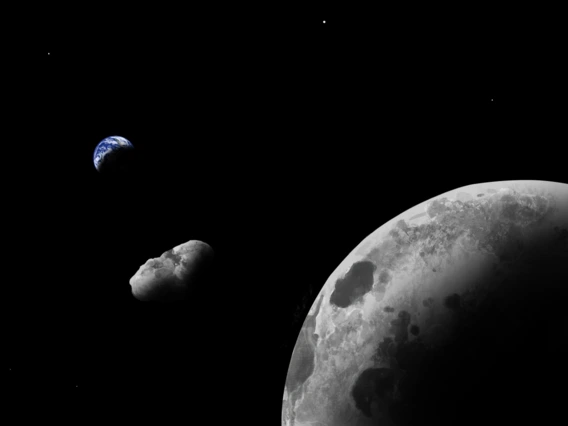
A team of UArizona-led researchers think that the near-Earth asteroid Kamo`oalewa might actually be a miniature moon.Near-Earth Asteroid Might be a Lost Fragment of the Moon

An artist's impression of Earth quasi-satellite Kamo`oalewa near the Earth-moon system. Using the Large Binocular Telescope, astronomers have shown that it might be a lost fragment of the moon.Addy Graham/University of Arizona
A team of UArizona-led researchers think that the near-Earth asteroid Kamo`oalewa might actually be a miniature moon.
A near-Earth asteroid named Kamo`oalewa could be a fragment of our moon, according to a paper published today in Communications Earth and Environment by a team of astronomers led by the University of Arizona.
Kamo`oalewa is a quasi-satellite – a subcategory of near-Earth asteroids that orbit the sun but remain relatively close to Earth. Little is known about these objects because they are faint and difficult to observe. Kamo`oalewa was discovered by the PanSTARRS telescope in Hawaii in 2016, and the name – found in a Hawaiian creation chant – alludes to an offspring that travels on its own. The asteroid is roughly the size of a Ferris wheel – between 150 and 190 feet in diameter – and gets as close as about 9 million miles from Earth.
Due to its orbit, Kamo`oalewa can only be observed from Earth for a few weeks every April. Its relatively small size means that it can only be seen with one of the largest telescopes on Earth. Using the UArizona-managed Large Binocular Telescope on Mount Graham in southern Arizona, a team of astronomers led by UArizona planetary sciences graduate student Ben Sharkey found that Kamo`oalewa's pattern of reflected light, called a spectrum, matches lunar rocks from NASA's Apollo missions, suggesting it originated from the moon.
Researchers aren't yet be sure how the asteroid may have broken loose from the moon. That's partly because there are no other known asteroids with lunar origins.
"I looked through every near-Earth asteroid spectrum we had access to, and nothing matched," said Sharkey, the paper's lead author.
A debate over Kamo`oalewa's origins between Sharkey and his adviser, UArizona associate professor of lunar and planetary sciences Vishnu Reddy, led to another three years of hunting for a plausible explanation.
"We doubted ourselves to death," said Reddy, a co-author who started the project in 2016. After missing the chance to observe the asteroid in April 2020 due to a COVID-19 shutdown of the Large Binocular Telescope, the team found the final piece of the puzzle in 2021.
"This spring, we got much needed follow-up observations and went, 'Wow it is real,'" Sharkey said. "It's easier to explain with the moon than other ideas."
Kamo`oalewa's orbit is another clue to its lunar origins. Its orbit is similar to the Earth's, but with the slightest tilt. Its orbit is also not typical of near-Earth asteroids, according to study co-author Renu Malhotra, a UArizona planetary sciences professor who led the orbit analysis portion of the study.
"It is very unlikely that a garden-variety near-Earth asteroid would spontaneously move into a quasi-satellite orbit like Kamo`oalewa's," said Malhotra, whose lab is working on a paper to further investigate the asteroid's origins. "It will not remain in this particular orbit for very long, only about 300 years in the future, and we estimate that it arrived in this orbit about 500 years ago."
Kamo`oalewa is about 4 million times fainter than the faintest star the human eye can see in a dark sky.
"These challenging observations were enabled by the immense light-gathering power of the twin 8.4-meter telescopes of the Large Binocular Telescope," said study co-author Al Conrad, a staff scientist for the telescope.
The study also included data from the Lowell Discovery Telescope in Flagstaff, Arizona. Other co-authors on the paper include Olga Kuhn, Christian Veillet, Barry Rothberg and David Thompson from the Large Binocular Telescope; Audrey Thirouin from Lowell Observatory; and Juan Sanchez from the Planetary Science Institute in Tucson. The research was funded by NASA's Near-Earth Object Observations Program.

UArizona Ranked in Top 10 for Space Science on Latest US News Best Global Universities List
The University of Arizona has once again been recognized as one of the world's top 100 research institutions by U.S. News & World Report.
UArizona Ranked in Top 10 for Space Science on Latest US News Best Global Universities List

By Nick Prevenas, University Communications - October 27, 2021
The University of Arizona has once again been recognized as one of the world's top 100 research institutions by U.S. News & World Report.
UArizona ranked No. 99 out of 1,750 higher education institutions across 90 countries in the 2022 Best Global Universities ranking, released Tuesday. The university was No. 42 among universities in the U.S. and No. 22 among public universities.
"It is gratifying to see the University of Arizona listed alongside many of the world's premier academic research institutions," said University of Arizona President Robert C. Robbins. "Our university is home to many breathtaking scientific innovations, and it is upon this foundation that our faculty members seek to make further extraordinary discoveries."
U.S. News & World Report's Best Global Universities ranks colleges and universities in 43 separate subjects – up from 38 the year before. The University of Arizona earned a spot on 32 of the subject rankings lists.
UArizona earned its top placement in the space science category, placing No. 10 overall, No. 7 in the U.S. and No. 2 among public universities – all up one spot from last year's rankings. The university earned top marks for its research reputation in space sciences, along with the number of citations and publications by UArizona researchers.
The university's overall research reputation ranked No. 46 in the U.S. and No. 93 globally.
"The resolve and innovative spirit of researchers across campus are at the heart of the university's outstanding research reputation," said Elizabeth "Betsy" Cantwell, senior vice president for research and innovation. "From our commitment to building resilience amid a swiftly changing climate, to our leadership of NASA's groundbreaking OSIRIS-REx mission returning an asteroid sample to Earth, to our pioneering work understanding individualized health needs through the NIH-funded All of Us Program, University of Arizona research creates real-world solutions in nearly every scientific discipline."
UArizona earned top-100 global placements for its programs in geosciences (No. 26), arts and humanities (tied for No. 42), environment/ecology (No. 42), plant/animal sciences (No. 53) and biotechnology and applied microbiology (No. 86).
The eighth annual Best Global Universities rankings are produced to provide insight into how research institutions compare throughout the world. The rankings focus specifically on schools' academic research and reputation overall. To produce the global rankings, which are based on data and metrics provided by analytics company Clarivate, U.S. News & World Report uses a methodology that focuses on 13 indicators to measure research performance.
Highly Porous Rocks Responsible for Bennu's Surprisingly Craggy Surface
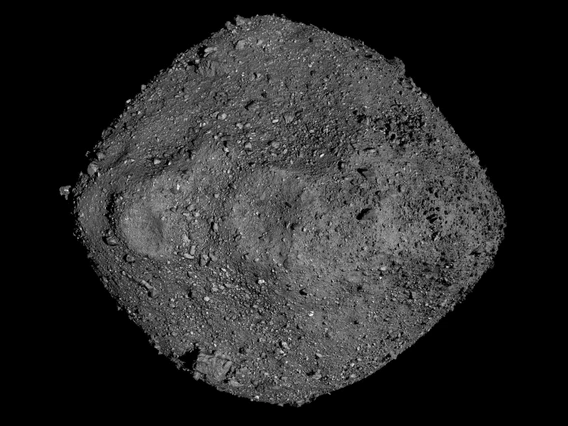
Using data from NASA OSIRIS-REx mission, a University of Arizona-led team of scientists concluded that asteroids with highly porous rocks, such as Bennu, should lack fine-grained material on their surfaces.
Highly Porous Rocks Responsible for Bennu's Surprisingly Craggy Surface

By Mikayla Mace Kelley, University Communications - October 6, 2021
Scientists thought asteroid Bennu's surface would be like a sandy beach, abundant in fine sand and pebbles, which would have been perfect for collecting samples. Past telescope observations from Earth's orbit had suggested the presence of large swaths of fine-grain material called fine regolith that's smaller than a few centimeters.
But when the spacecraft of NASA's University of Arizona-led OSIRIS-REx asteroid sample return mission arrived at Bennu in late 2018, the mission team saw a surface covered in boulders. The mysterious lack of fine regolith became even more surprising when mission scientists observed evidence of processes capable of grinding boulders into fine regolith.
New research, published in Nature and led by mission team member Saverio Cambioni, used machine learning and surface temperature data to solve the mystery. Cambioni was a graduate student at the UArizona Lunar and Planetary Laboratory when the research was conducted and is now a postdoctoral distinguished fellow in the Department of Earth, Atmospheric and Planetary Sciences at the Massachusetts Institute of Technology. He and his colleagues ultimately found that Bennu's highly porous rocks are responsible for the surface's surprising lack of fine regolith.
"The 'REx' in OSIRIS-REx stands for Regolith Explorer, so mapping and characterizing the surface of the asteroid was a main goal," said study co-author and OSIRIS-REx principal investigator Dante Lauretta, a Regents Professor of Planetary Sciences at the University of Arizona. "The spacecraft collected very high-resolution data for Bennu's entire surface, which was down to 3 millimeters per pixel at some locations. Beyond scientific interest, the lack of fine regolith became a challenge for the mission itself, because the spacecraft was designed to collect such material."
To collect a sample to return to Earth, the OSIRIS-REx spacecraft was built to navigate within an area on Bennu roughly the size of a 100-space parking lot. However, because of numerous boulders, the safe sampling site was reduced to roughly the size of five parking spaces. The spacecraft successfully made contact with Bennu to collect sample material in October 2020.
A Rocky Start and Solid Answers
"When the first images of Bennu came in, we noted some areas where the resolution was not high enough to see whether there were small rocks or fine regolith. We started using our machine learning approach to separate fine regolith from rocks using thermal emission (infrared) data," Cambioni said.
The thermal emission from fine regolith is different from that of larger rocks, because the former is controlled by the size of its particles, while the latter is controlled by rock porosity. The team first built a library of examples of thermal emissions associated with fine regolith mixed in different proportions with rocks of various porosity. Next, they used machine learning techniques to teach a computer how to "connect the dots" between the examples. Then, they used the machine learning software to analyze the thermal emission from 122 areas on the surface of Bennu observed both during the day and the night.
"Only a machine learning algorithm could efficiently explore a dataset this large," Cambioni said.
When the data analysis was completed, Cambioni and his collaborators found something surprising: The fine regolith was not randomly distributed on Bennu but instead was lower where rocks were more porous, which was on most of the surface.
The team concluded that very little fine regolith is produced by Bennu's highly porous rocks because these rocks are compressed rather than fragmented by meteoroid impacts. Like a sponge, the voids in rocks cushion the blow from incoming meteors. These findings are also in agreement with laboratory experiments from other research groups.
"Basically, a big part of the energy of the impact goes into crushing the pores restricting the fragmentation of the rocks and the production of new fine regolith," said study co-author Chrysa Avdellidou, a postdoctoral researcher at the French National Centre for Scientific Research (CNRS) – Lagrange Laboratory of the Côte d'Azur Observatory and University in France.
Additionally, cracking caused by the heating and cooling of Bennu's rocks as the asteroid rotates through day and night proceeds more slowly in porous rocks than in denser rocks, further frustrating the production of fine regolith.
"When OSIRIS-REx delivers its sample of Bennu (to Earth) in September 2023, scientists will be able to study the samples in detail," said Jason Dworkin, OSIRIS-REx project scientist at NASA Goddard Space Flight Center. "This includes testing the physical properties of the rocks to verify this study."
Other missions have evidence to confirm the team's findings. The Japanese Aerospace Exploration Agency's Hayabusa 2 mission to Ryugu, a carbonaceous asteroid like Bennu, found that Ryugu also lacks fine regolith and has highly porous rocks. Conversely, JAXA's Hayabusa mission to the asteroid Itokawa in 2005 revealed abundant fine regolith on the surface of Itokawa, an S-type asteroid with rocks of a different composition than Bennu and Ryugu. A previous study by Cambioni and his colleagues provided evidence that Itokawa's rocks are less porous than Bennu's and Ryugu's, using observations from Earth.
"For decades, astronomers disputed that small, near-Earth asteroids could have bare-rock surfaces. The most indisputable evidence that these small asteroids could have substantial fine regolith emerged when spacecraft visited S-type asteroids Eros and Itokawa in the 2000s and found fine regolith on their surfaces," said study co-author Marco Delbo, research director with CNRS, also at the Lagrange Laboratory.
The team predicts that large swaths of fine regolith should be uncommon on carbonaceous asteroids, which are the most common of all asteroid types and are thought to have high-porosity rocks like Bennu. In contrast, terrains rich in fine regolith should be common on S-type asteroids, which are the second-most common group in the solar system, and are thought to have denser, less porous rocks than carbonaceous asteroids.
"This is an important piece in the puzzle of what drives the diversity of asteroids' surfaces. Asteroids are thought to be fossils of the solar system, so understanding the evolution they have undergone in time is crucial to comprehend how the solar system formed and evolved," said Cambioni. "Now that we know this fundamental difference between carbonaceous and S-type asteroids, future teams can better prepare sample collection missions depending on the nature of the target asteroid."
The University of Arizona leads the OSIRIS-REx science team and the mission's science observation planning and data processing. NASA's Goddard Space Flight Center in Greenbelt, Maryland, provides overall mission management, systems engineering, and the safety and mission assurance for OSIRIS-REx. Lockheed Martin Space in Littleton, Colorado, built the spacecraft and provides flight operations. Goddard and KinetX Aerospace are responsible for navigating the OSIRIS-REx spacecraft. OSIRIS-REx is the third mission in NASA's New Frontiers Program, managed by NASA's Marshall Space Flight Center in Huntsville, Alabama, for the agency's Science Mission Directorate in Washington, D.C.
'Mini Psyches' Give Insights into Mysterious Metal-Rich Near-Earth Asteroids
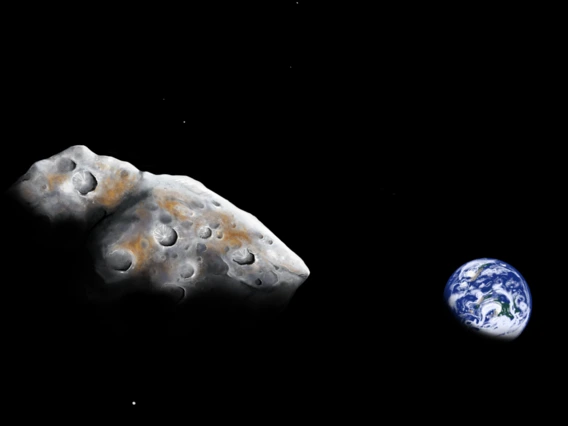
New research into metal-rich asteroids reveals information about the origins and compositions of these rare bodies that could one day be mined.
'Mini Psyches' Give Insights into Mysterious Metal-Rich Near-Earth Asteroids

University Communications - October 1, 2021
Metal-rich near-Earth asteroids, or NEAs, are rare, but their presence provides the intriguing possibility that iron, nickel and cobalt could someday be mined for use on Earth or in Space.
New research, published in the Planetary Science Journal, investigated two metal-rich asteroids in our own cosmic backyard to learn more about their origins, compositions and relationships with meteorites found on Earth.
These metal-rich NEAs were thought to be created when the cores of developing planets were catastrophically destroyed early in the solar system's history, but little more is known about them. A team of students co-led by University of Arizona planetary science associate professor Vishnu Reddy studied asteroids 1986 DA and 2016 ED85 and discovered that their spectral signatures are quite similar to asteroid 16 Psyche, the largest metal-rich body in the solar system. Psyche, located in the main asteroid belt between the orbits of Mars and Jupiter rather than near Earth, is the target of NASA's Psyche mission.
"Our analysis shows that both NEAs have surfaces with 85% metal such as iron and nickel and 15% silicate material, which is basically rock," said lead author Juan Sanchez, who is based at the Planetary Science Institute. "These asteroids are similar to some stony-iron meteorites such as mesosiderites found on Earth."
Astronomers have been speculating as to what the surface of Psyche is made of for decades. By studying metal-rich NEAs that come close to the Earth, they hope to identify specific meteorites that resemble Psyche’s surface.
"We started a compositional survey of the NEA population in 2005, when I was a graduate student, with the goal of identifying and characterizing rare NEAs such as these metal-rich asteroids," said Reddy, principal investigator of the NASA grant that funded the work. "It is rewarding that we have discovered these 'mini Psyches' so close to the Earth."
"For perspective, a 50-meter (164-foot) metallic object similar to the two asteroids we studied created the Meteor Crater in Arizona," said Adam Battle, who is a co-author of the paper along with fellow Lunar and Planetary Laboratory graduate students Benjamin Sharkey and Theodore Kareta, and David Cantillo, an undergraduate student in the Department of Geosciences.
The paper also explored the mining potential of 1986 DA and found that the amount of iron, nickel and cobalt that could be present on the asteroid would exceed the global reserves of these metals.
Additionally, when an asteroid is catastrophically destroyed, it produces what is called an asteroid family – a bunch of small asteroids that share similar compositions and orbital paths.
The team used the compositions and orbits of asteroids 1986 DA and 2016 ED85 to identify four possible asteroid families in the outer region of the main asteroid belt, which is home to the largest reservoir of small bodies in the inner part of the solar system. This also happens to be the region where most of the largest known metallic asteroids including 16 Psyche reside.
"We believe that these two 'mini Psyches' are probably fragments from a large metallic asteroid in the main belt, but not 16 Psyche itself," Cantillo said. "It's possible that some of the iron and stony-iron meteorites found on Earth could have also come from that region in the solar system too."
The paper's findings are based on observations from the NASA Infrared Telescope Facility on the island of Hawaii. The work was funded by the NASA Near-Earth Object Observations Program, which also funds the NASA Infrared Telescope Facility.