Graduate Student News

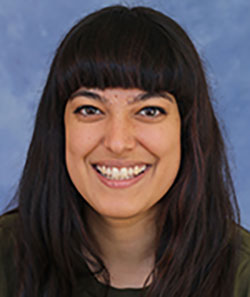
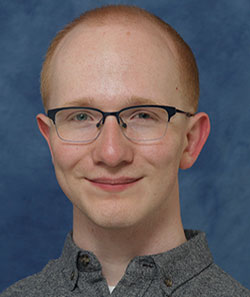
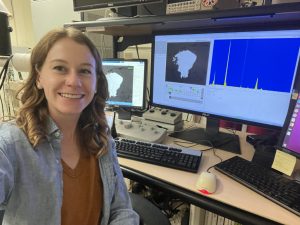
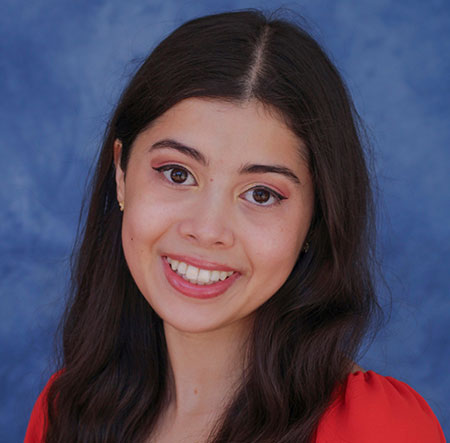
PTYS Graduate student Jada WaltersJada Walters was selected for the Department of Energy’s SCGSR Program to pursue plasma science research at the Princeton Plasma Physics Laboratory. The DOE Science Graduate Student Research Program provides world-class training and access to state-of-the art facilities and resources at DOE National Laboratories.

Jada's research focus is solar and heliophysical science; she is advised by Associate Professor Kristopher Klein. 
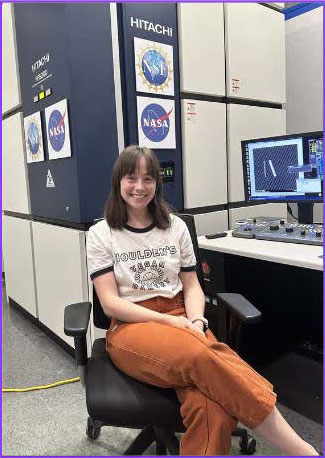
The Kuiper-Arizona Laboratory for Astromaterials Analysis awards the Hitachi Scholarship in Electron Microscopy annually to two graduate students generating cutting-edge research and publications in the area of electron microscopy. The scholarship was established by Hitachi High-Technologies as part of their partnership with the University of Arizona. 


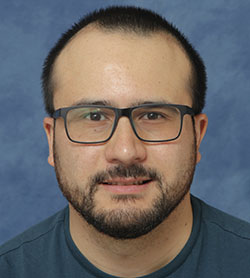
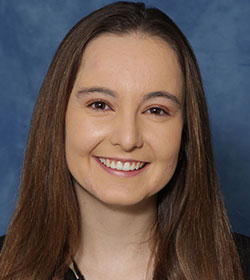
PTYS Graduate Student Maizey BennerMaizey Benner

Maizey is a third-year Ph.D. student at the Lunar and Planetary Laboratory. Her research focuses on unraveling the thermodynamic history of phosphorus- and sulfur-bearing minerals in aqueously altered carbonaceous chondrites using coordinated electron microscopy techniques. Maizey uses the Hitachi HF5000 S/TEM and S-4800 SEM to characterize the structure and chemistry of these materials from the millimeter to atomic scale. About the award, Maizey says, "Receiving the Hitachi Electron Microscopy Scholarship has given me great confidence in my work, and encouragement to pursue further training in electron microscopy. I am honored to receive such an award and look forward to completing my Ph.D. research using the Hitachi microscopes."


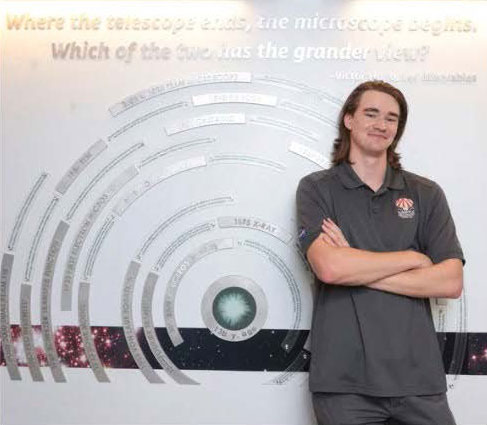
Lucas SmithPTYS Grad Student Lucas Smith

LPL graduate student Lucas Smith uses the Hitachi instruments in the Kuiper-Arizona Laboratory for Astromaterials Analysis to study presolar stardust grains in aqueously-altered meteorites. In particular, he says, "the Hitachi HF5000 TEM allows me to obtain critical information on the chemical composition, structure, and mineralogy of presolar grains in the context of their host meteorites. This information also allows me to understand the conditions under which the presolar grains formed in their parent star as well as how aqueous processing on asteroids affects presolar phases."

The Curson Education Plus Fund in Planetary Sciences and LPL was established by Shirley Curson, a generous donor and friend of LPL, for the purpose of supporting travel expenses outside the state of Arizona during summer break. The award is open to students in the Department of Planetary Sciences and Lunar and Planetary Laboratory who propose to fund study, museum visits, special exhibits, seminars, instruction, competitions, research and other endeavors that are beyond those provided by the normal campus environment and are not part of the student’s regular curriculum during the recipient’s school year.

To donate to the Curson Travel fund, visit the University of Arizona Foundation.


Roberto Aguilar

Advisor: Jack Holt
Mars Polar Conference, Whitehorse, Yukon, Canada.

Studying the formation and evolution of glaciers on Mars and their potential as water resources for future human landing missions.

Read about Roberto's travel to the Mars Polar Conference.


Namya Baijal

Advisor: Erik Asphaug
Psyche Collaboration Meetings, University of Bern.

Seeking to understand how collisions have shaped the surface of asteroid (16) Psyche.

Read about Namya's collaboration while in Bern.


Melissa Kontogiannis 
Advisor: Dante Lauretta
Goldschmidt Conference, Chicago

Analyzing samples of asteroid Bennu, recently returned by the OSIRIS-REx mission.

Read about Melissa's presentation at the Goldschmidt Conference.


Previous Curson Award Recipients

The Graduate Teaching Assistant Excellence Award is an LPL initiative which is intended to promote, recognize, and reward exemplary performance among graduate teaching assistants assigned to PTYS undergraduate courses. The award consists of funding intended to be used toward travel and expenses to professional meeting chosen by the recipient. All graduate teaching assistants assigned to PTYS courses are eligible, whether or not their home department is PTYS.


Nicole Kerrison won this year’s Graduate Teaching Assistant Excellence Award for her support of PTYS/ASTR 170A1 Alien Earths, with instructor Dr. Steve Kortenkamp, during the Fall 2023 semester. 
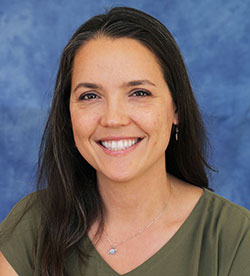
Nicole had a large number of students attend her office hours, which speaks to her willingness and ability to help students with revisions of their assignments but also to her ability to make students feel at ease with visiting a TA for help with the class. The 170A1 section was taught in the Flaundrau Science Center theater (planetarium dome), so Nicole learned how to use the digital planetarium projection software and gave several full-dome presentations to the class related to concepts, including extrasolar planets, asteroids, and moons of giant planets. Nicole became so adept with the full-dome system that she volunteered to give a public planetarium talk for the solar eclipse that occurred on April 8. 

Nicole also played a lead role in facilitating evening telescope observing sessions for the class on UArizona Mall. Thanks to her support, the course offered 18 consecutive nights of observing, with 60 students participating in each session. Nicole also helped to supervise the undergraduate TA/preceptor group involved with this class. Because Nicole herself had been an undergraduate preceptor, she was able to maintain a comfortable and professional atmosphere for the class teaching team.

Zarah graduated from LPL in December and is currently a postdoctoral research associate working with Associate Professor Tyler Robinson. She joined LPL as a grad student in 2017 from the University of Colorado, Boulder, where she had already co-authored two papers on Saturn’s rings. As an LPL graduate student working with Associate Professor Tommi Koskinen, Zarah published 6 papers, including three as first author (one being a first-author paper in Nature Astronomy). 

Zarah’s dissertation research provides the first global view of a giant planet middle and upper atmosphere, which is based on her analysis of stellar occultations obtained during the Cassini Grand Finale tour. Zarah’s observational results contradicted existing models and showed that auroral heating and global redistribution of energy is a viable solution to the giant planet “energy crisis” problem. These results had fundamental implications for the energy balance and circulation in the upper atmosphere and were published by Nature Astronomy (Brown et al. 2020). 

Zarah’s second paper (Brown et al. 2022) in Geophysical Research Letters describes the atmospheric gravity waves that she detected in the Cassini/UVIS dataset. She showed that the deposition of momentum by these waves enhances redistribution of energy from the aurora to lower latitudes, providing a mechanism to support her previous findings.

Zarah’s thesis work culminated in a third Icarus paper (Brown et al. 2024), which extends the analysis of the stellar occultations from the highest altitudes in the atmosphere to the middle atmosphere. This paper provides the first global constraints on photochemistry and dynamics in Saturn’s mesosphere where photochemical production peaks. The results have already supported a study that produced significant new constraints on the nature and flux of external material flowing in from the rings to Saturn’s atmosphere and demonstrates the full power of multi-instrument observations in probing giant planet atmospheres for the purposes of future missions. Zarah presented her proposed circulation pattern at the DPS meeting last fall, resulting in interest for testing the ideas presented. 

In addition to her academic accomplishments, Zarah had an exemplary record in service and outreach, including contributions to The Art of Planetary Science exhibition at LPL and leading the installation of the Arizona Scale Model Solar System on the UA campus as part of a NASA Arizona Space Grant Graduate Fellowship.


The Gerard P. Kuiper Memorial Award is presented to students who best exemplify, through the high quality of their research and the excellence of their scholastic achievements, the goals and standards established and maintained by Gerard P. Kuiper, founder of the Lunar and Planetary Laboratory and the Department of Planetary Sciences at the University of Arizona. To support students with the Kuiper Award, visit the University of Arizona Foundation.

Previous Kuiper Award Recipients

Sam Myers is the recipient of the 2024 LPL Leif Erland Andersson Award for Service and Outreach.

Sam Myers is a fourth-year graduate student working with LPL Research Professor Ellen Howell to study near-Earth asteroids. His research includes modeling near-infrared spectra of these objects and is proficient at collecting data during remote observing sessions using the NASA Infrared Telescope Facility at the Mauna Kea Observatory, Hawaii. 

Within the department, Sam‘s service commitments have included graduate student recruitment, organizing graduate student activities, and positions on various committees; he is currently graduate representative to the faculty. Sam has been actively engaged with community outreach, giving public science talks about asteroids to various amateur astronomy groups, schools, and retirement communities. He has also participated in efforts by the Arecibo Observatory scientists and staff to draw attention to the need for a replacement radar system to study and determine the impact hazard for near-Earth asteroids. 

Throughout his time as a student, Sam has pursued an interest in science policy and has been actively involved in influencing lawmakers and government agencies to guide science research. He has visited Arizona representatives and senators to draw their attention to science-related issues. Sam enrolled in a Science Policy and Diplomacy (SPD) course three years ago and was a leader in that class. He has continued pursuing activities related to SPD that broaden the impacts of science and its influence in society. 

As part of the SPD course, Sam participated in a U.S. State Department Diplomacy Lab project examining the potential impact of climate change on the water, energy, and agricultural systems of an identified region; the project yielded policy recommendations that could be implemented by the State Department. The team was selected to present their work at the annual Diplomacy Lab Day and eventually also developed a journal publication on linking science and diplomatic recommendations in the project. In 2023, the team was selected to develop a science and technology policy fellowship program to serve the Arizona Legislature.


The LPL Andersson Award for Service and Outreach is awarded annually to a PTYS graduate student in recognition for attention to broader impacts and involvement in activities outside of academic responsibilities that benefit the department, university, and the larger community. The award is named for Dr. Leif Andersson, a scientist who worked at LPL in the 1970s. Support the Andersson Award with a gift.

Previous Leif Andersson Award Recipients

University of Arizona College of Science Galileo Circle Scholarship

Congratulations to LPL's 2024 Galileo Circle Scholarship recipients: Namya Baijal, Maizey Benner, Galen Bergsten, Dingshan Deng, Mackenzie Mills, Samantha Moruzzi, Iunn Ong, and Lucas Smith.


Galileo Circle Scholarships are awarded to the University of Arizona's finest science students and represent the tremendous breadth of research interests in the University of Arizona College of Science. The scholarships are supported through the generous donations of Galileo Circle members. Galileo Circle Scholars receive $1,000 and the opportunity to introduce themselves and their research to the Galileo Circle patrons.


Namya Baijal
Advisor: Erik Asphaug

Seeks to understand how impacts between planetary bodies shape their surface and interiors, with a focus on asteroids.


Maizey Benner
Advisor: Tom Zega

Investigating the thermodynamic origins and evolution of phosphorus- and sulfur- bearing minerals in aqueously altered carbonaceous chondrites.


Galen Bergsten
Advisor: Ilaria Pascucci

Uses large-scale survey data to study populations of extrasolar planets, including those analogous to Earth, to learn how planets form and evolve throughout the Galaxy.


Dingshan Deng
Advisor: Ilaria Pascucci

Studies star and planetary formation, including protoplanetary disks, which are the birthplaces of the planets around the young stars.


Mackenzie Mills
Advisor: Alfred McEwen

Using spacecraft data to derive scientific conclusions from planetary surfaces, characterizing Martian geomorphology and working for an understanding of influence of Martian subsurface features on spatial distributions of surface features.


Samantha Moruzzi
Advisor: Jeffrey Andrews-Hanna

Studying Pluto’s interior through its fractures and impacts, and how Earth analogs and terrestrial methods can aid in our investigations.


Iunn Ong
Advisor: Jessica Barnes

Using microscopy techniques to analyze Bennu samples and understand the extent of aqueous and thermal alteration that takes place on asteroids.


Lucas Smith
Advisor: Pierre Haenecour

Identifying and investigating presolar stardust grains within meteorites that have experienced aqueous processing, which informs our understanding of conditions that existed during Solar System formation.

Nathalia Vega Santiago

Nathalia Vega Santiago is the recipient of a University Fellows Award, a prestigious fellowship offered only to the University of Arizona's highest-ranked incoming graduate students. The award provides an annual stipend, tuition scholarship, and health coverage, in addition to professional development and networking opportunities.

Nathalia completed a bachelor’s degree in natural sciences with a minor in mathematics from the University of Puerto Rico (Cayey) in June 2023. She began the PTYS doctoral program in August 2023. As an undergraduate, Nathalia was selected as a Diversity Scholar to attend the 2019 American Institute of Aeronautics and Astronautics SciTech event. She was the co-founder and vice president of the first astronomy association at her university. And Nathalia was nominated by her peers to serve as lead scientist for the development of a preliminary design review for a lunar orbiter as part of the NASA L’Space Mission Concept Academy. Nathalia’s undergraduate research included work at the Arecibo Observatory, where she used remote sensing data to characterize near-Earth asteroids.

As a graduate student at LPL, Nathalia is pursuing research interests in astrobiology and cosmochemistry with advisor Dante Lauretta.

Melissa Kontogiannis

Melissa Kontogiannis was awarded the UArizona Richard A. Harvill Graduate Fellowship. Melissa graduated from UArizona in May 2023 with a major in chemistry and minors in planetary sciences and environmental studies. As an undergraduate, Melissa was an Arizona NASA Space Grant undergraduate research intern; she analyzed thin sections of a CM chondritic meteorite first to assist in the development of a database for cataloging and co-registering data collected from samples returned by OSIRIS-REx and additionally to understand hydrothermal processes and sequences that result in the alteration of primitive solar system bodies, including asteroid Bennu.

Melissa had the opportunity to use 3D imaging processing software as well as cutting-edge technology such as a digital microscope and SEM and an electron microprobe, FIB, and TEM. During her graduate career at LPL, Melissa will use the techniques and insight gained as an undergraduate as she pursues new research with Regents Professor Dante Lauretta on OSIRIS-REx sample science research.

Zoe WilburFifth-year graduate student Zoë Wilbur was recognized with two awards for her research on meteorites.

Zoë won the 2021-2022 Nininger Meteorite Award, presented by the Buseck Center for Meteorite Studies at Arizona State University, for outstanding original student research paper in meteoritical science. Zoë’s paper was titled, The Effects of Highly Reduced Magmatism Revealed through Aubrites.

Zoë was also honored with the 2023 McKay Award, presented by the Meteoritical Society. The award recognizes the best student oral presentation at the annual meeting of the Meteoritical Society. The title of Zoë‘s winning presentation was, Unraveling the Volatile Story of Reduced Meteorites through Djerfisherite.