

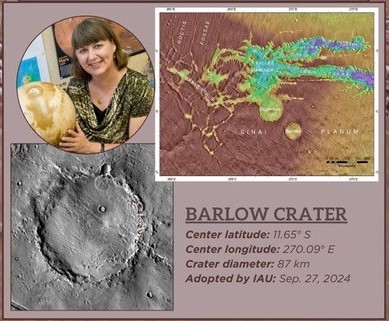
 A prominent impact crater on Mars has been named in honor of LPL alumna, Dr. Nadine Barlow (1958–2020). For her dissertation at LPL, Nadine mapped and categorized every impact crater on Mars visible in Viking Orbiter imaging above a threshold size. In her subsequent career, she made many advances in our understanding of Mars from this dataset and from later enhancements. Nadine was a professor at Northern Arizona University, a noted leader in the field of Mars crater studies, and a dedicated teacher and mentor to students and colleagues. Nadine’s contributions to education and planetary science have also been recognized with a display at the Astronomy Discovery Center at Lowell Observatory (Flagstaff).
Fall
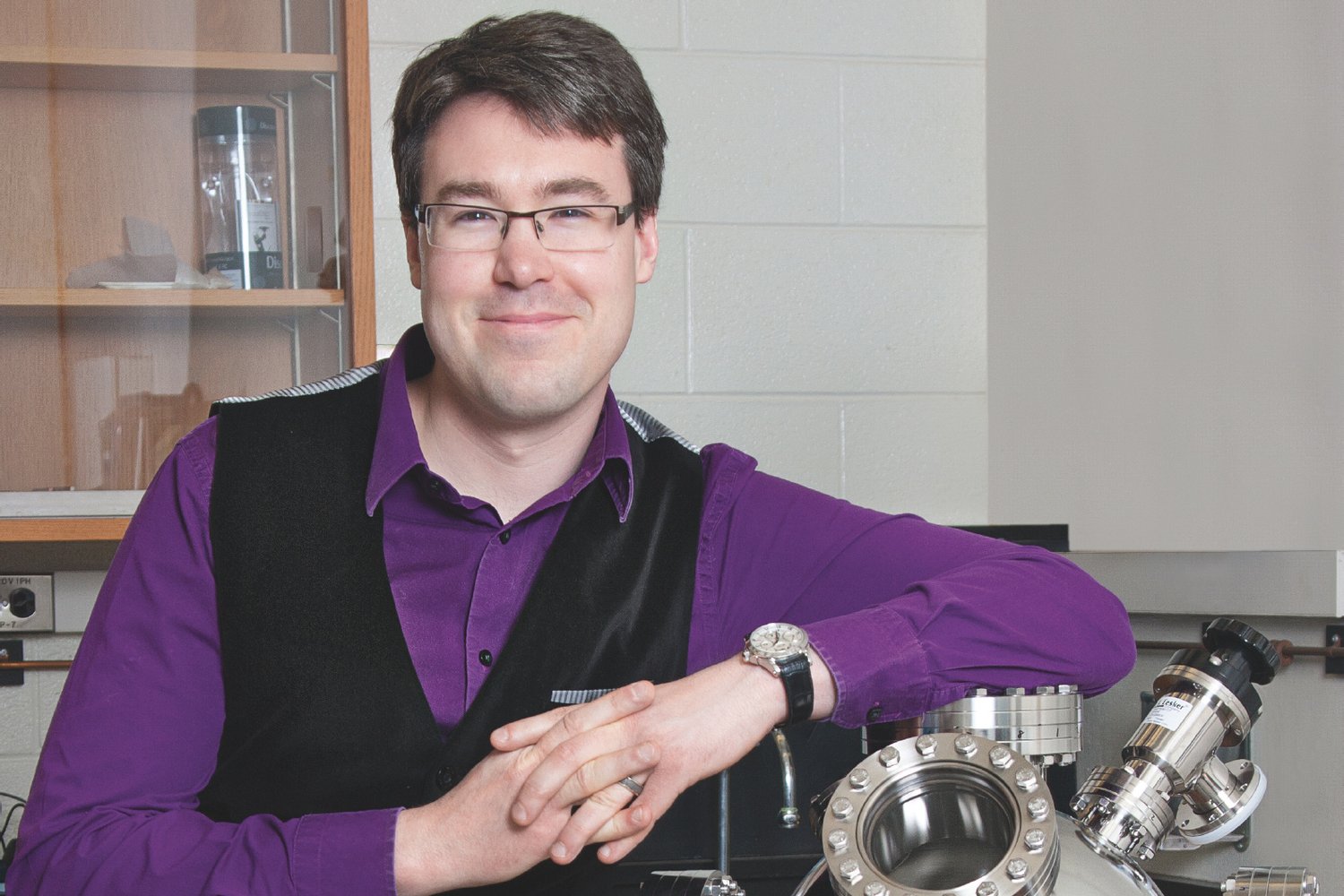
This past summer, Professor John Moores completed a two-year term as the Science Advisor to the President of the Canadian Space Agency and became director of York University’s Earth and Space Science Program, which hosts 90 graduate students. He has recently (October 2024) published with co-author, Professor Jesse Rogerson, a popular science book titled, Daydreaming in the Solar System.
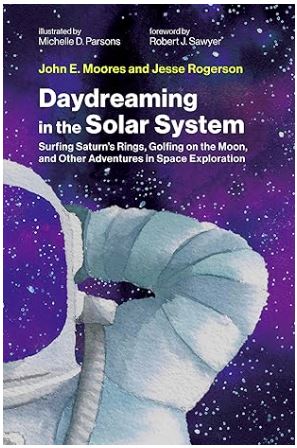
About the book, John writes, “Where Carl Sagan’s Cosmos sought to open a window onto the planets for a broad audience, we aim to pull the reader completely through the doorway. In science and story, we aim to immerse the reader in planetary environments and to communicate what it would feel like to actually be there on our neighbor worlds using the details we have learned from more than sixty two years of robotic space exploration. The book imagines an inclusive and optimistic view of the future of solar system planetary science. This vision is vividly explored with sixteen watercolor paintings and twenty six playful diagrams provided by illustrator, Michelle Parsons.
John continues, “In putting together this volume, I’ve been especially grateful for the broad knowledge base I developed as an LPL grad. I have appreciated the conversations with former classmates, other alumni and the entire extended LPL family over the past 16 years that have continued to deepen that understanding. I feel fortunate to be able to share our excitement and awe at exploring the solar system with the public.”
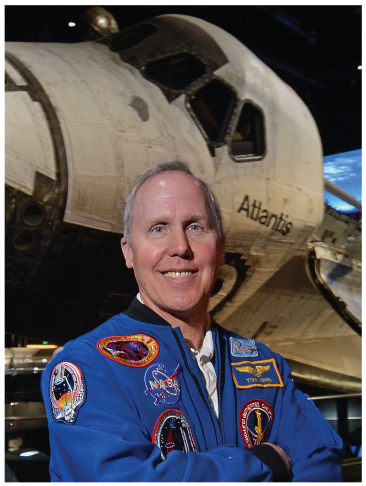 LPL alumnus Dr. Thomas Jones (1988) visited LPL and the University of Arizona in November to both receive and to bestow special awards. On November 12, Tom was presented with a special Professional Achievement Award from Arizona Alumni in recognition of his career prominence. In conjunction with the award presentation, Tom gave a lecture in support of his latest book, Space Shuttle Stories: Firsthand Astronaut Accounts from all 135 Missions. A reception and book signing followed. The following day, Tom held a roundtable with LPL graduate students and presented a lecture titled, Sky Walking: An LPL Astronaut’s Journey. At a ceremony that evening, Tom presented a 2024 Astronaut Scholar Award to U of A student Bryce Wilson.
Before becoming an astronaut Tom was a bomber pilot in the Air Force. Tom is a scientist, speaker, author, pilot, and veteran NASA astronaut. In more than eleven years with NASA, he flew on four Space Shuttle missions. On his last flight, he led three spacewalks to install the centerpiece of the International Space Station, the American Destiny laboratory. At LPL, his dissertation (1988) involved both telescopic and laboratory studies of asteroids and meteorites.
Image
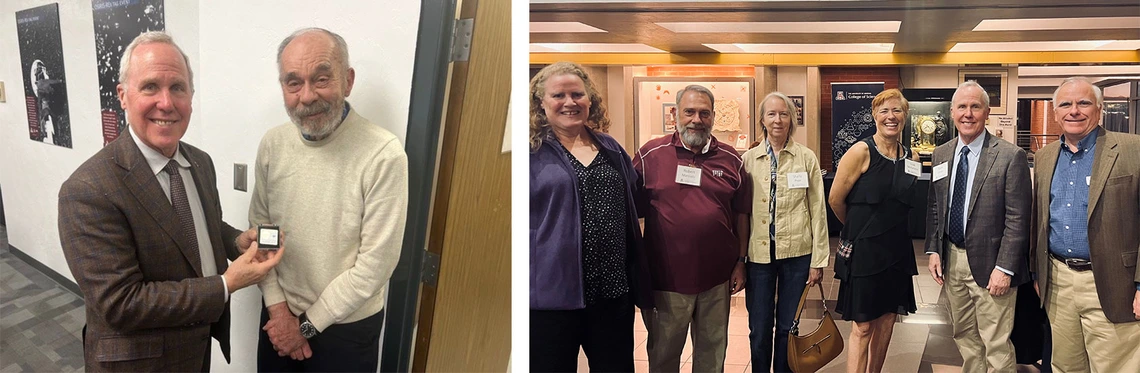
Above left: Tom Jones with his dissertation advisor, LPL Professor Emeritus John Lewis. Above right: Local alums including Ginny Gulick, Bob Marcialis, Shelly Pope, and Lisa McFarlane, in addition to LPL director Mark Marley, attended Tom’s award lecture and book signing reception.
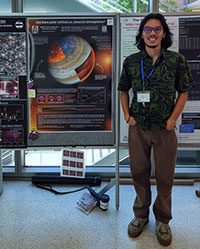
Fuda's award winning poster was titled, Are there polar vortices on ultracool atmospheres? The "best poster" award provided Fuda with the opportunity to present a talk on his research on brown dwarf variability, conducted with his advisor, Professor Daniel Apai. Fuda's excellent talk drew on solar system−brown dwarf synergies and harkens back to the work of LPL's Adam Showman.

First-year graduate student Christina Singh was awarded the Robin Fellowship by the University of Arizona College of Science. The fellowship is awarded for academic excellence, exceptional potential to advance knowledge in the discipline, and ability to broaden perspectives and inquiry based on life experiences.
Christina's research interests include astrobiology, photogrammetry, and planetary surfaces. Professor Shane Byrne is Christina's advisor.
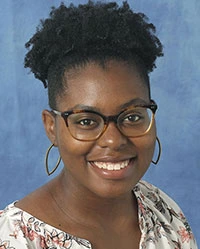
Kiana presented her award talk, entitled Size and Albedo Constraints for (152830) Dinkinesh Using WISE Data, at the Fall 2023 meeting of the National Society of Black Physicists. Her presentation described work that was critical for helping the NASA Lucy mission plan their November 2023 encounter with this small main-belt asteroid.
Ph.D. candidate Samantha Moruzzi received a 2024 Amelia Earhart Fellowship from Zonta International; she is one of only thirty scholars selected for the honor, which recognizes outstanding academic record and demonstrated initiative, ambition, and commitment to pursuing a career in space sciences.
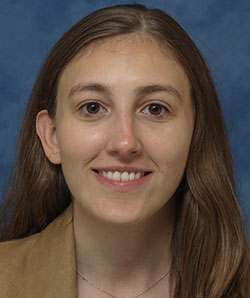 Samantha Moruzzi is developing geophysical models of impact basins in data-limited environments such as Pluto as windows into planetary interiors. She utilizes the topography data of the Sputnik impact basin and the widespread surface fractures returned from NASA’s New Horizons mission to understand the interior structure of Pluto, its formation and its geophysical evolution. The first part of her thesis showed that Sputnik basin’s topographic structure is morphologically and statistically consistent with large impact basins in inner solar system objects. This discovery has been a key study in understanding the universal processes governing impacts on rocky and icy solar system objects.
Samantha is currently generating a local gravity field over the Sputnik basin based on an approach that was once used to study the gravity signatures beneath Earth’s oceans. Her work has put constraints on surface properties and interior composition, calling into question whether Pluto has a subsurface ocean like other icy moons in the outer solar system.
After completing her Ph.D., she intends to pursue a postdoctoral position in geophysics and planetary science, pursuing a career as a research scientist at a NASA-funded research institution. In her free time, she enjoys hiking, reading and amateur astronomy.