Lunar and Planetary Laboratory & Department of Planetary Sciences
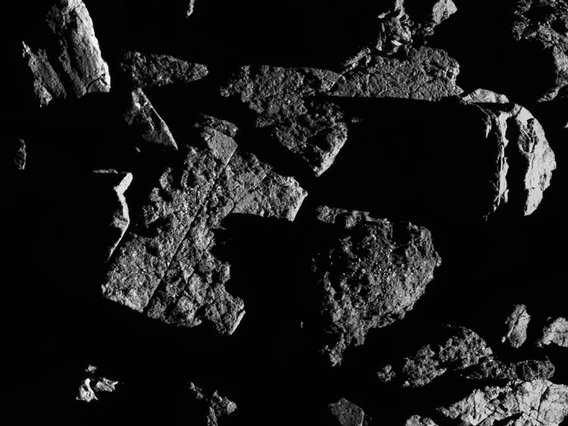
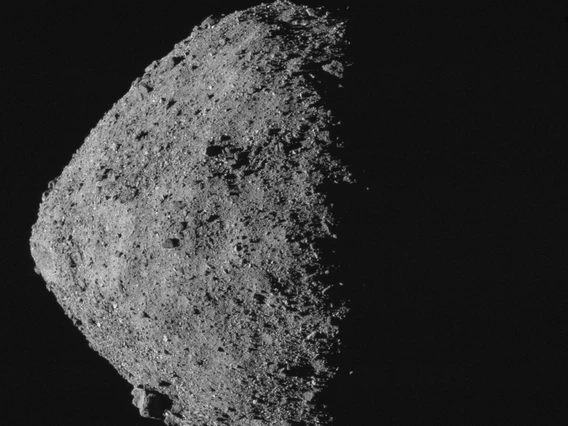
The new date allows the team more time to assess Bennu's unexpectedly rugged terrain. The event will mark NASA's first-ever asteroid sample collection.
The spacecraft of the LPL-led OSIRIS-REx asteroid sample return mission executed a series of maneuvers that brought it within a mere 200 feet of its designated sampling location on the surface of Bennu.
LPL researchers probed Martian meteorites to reconstruct Mars’ chaotic history. Their findings suggest that Mars might not have had a global magma ocean.
New mapping of the giant planet's upper atmosphere reveals a likely reason why it's so hot.
If selected as the winner, the spacecraft mission to Jupiter's volcanic, vibrant moon will determine whether a magma ocean lurks beneath its surface.
The OSIRIS-REx mission team evaluated data from four candidate sites in order to identify site Nightingale as the best option for the sample collection, with site Osprey named as the backup.
NASA's OSIRIS-REx science team has identified three possible explanations for the particles that asteroid Bennu is tossing into space.
The sun is revealing itself in dramatic detail and shedding light on how other stars may form and behave throughout the universe. LPL researchers involved in the mission report exciting findings from the Parker Solar Probe's first close encounters with our very own star.
Two LPL researchers involved in NASA's Parker Solar Probe mission are excited about the spacecraft's first close encounters with the sun.
Lunar and planetary scientist Ewen Whitaker used his incomparable knowledge of lunar geography to help NASA demonstrate a pinpoint landing on the moon with Apollo 12.