Lunar and Planetary Laboratory & Department of Planetary Sciences
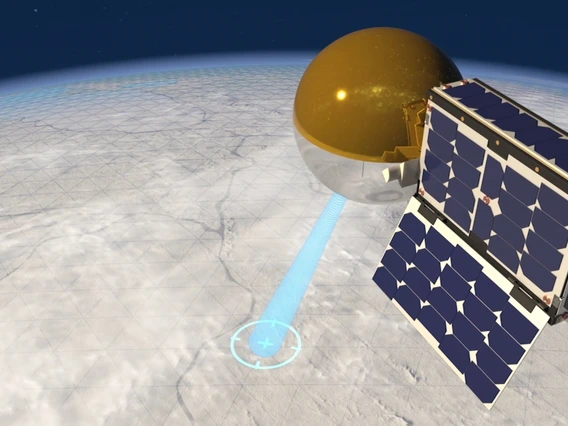
CatSat is a small satellite carrying a new communications concept – an inflatable antenna – into space. The project provides a rare opportunity for students at the University of Arizona to get hands-on experience with spaceflight technology.
A new report spotlights the significant impact of University of Arizona space sciences activities, which generate $560.5 million every year for the local economy.
NASA awarded nearly $3 million to the University of Arizona Kuiper Materials Imaging and Characterization Facility to support OSIRIS-REx sample science and much more.
UArizona saw an increase of more than $9 million over its fiscal year 2020 total and retained its No. 1 ranking in astronomy and astrophysics expenditures.
Orbital observations unveil the presence of an enormous mantle plume pushing the surface of Mars upward and driving intense volcanic and seismic activity.
Thanks to the James Webb Space Telescope, scientists have identified a "mystery molecule" that previously stumped astronomers. They've also gained insights needed to interpret potential signs of habitability on other exoplanets.
NASA Communications - November 22, 2022 In the early hours of Saturday, Nov. 19, the skies over southern Ontario, Canada
University of Arizona researchers developed a new method for analyzing rock glaciers, which could help scientists better understand these "hidden giants" on Earth and Mars.
University of Arizona planetary scientist Dani DellaGiustina was chosen because of her work to understand the past and future of the solar system by studying asteroids. Her work also includes exploring the mysterious interiors of other worlds.