EMILIA-3D
About
TEAM
Sarah Sutton, PI - University of Arizona
Chris Haberle, DPI/Camera Instrument Scientist - Northern Arizona University
Andrew Ryan, Co-I/Science Team Lead - AstroForge
Carina Bennett, Project Manager - University of Arizona
Isaac Saedi-Marghmaleki, Systems Engineer - University of Arizona
Dani DellaGiustina, Project Scientist - University of Arizona
Bellamy Faunce, Student Systems Engineer Intern
Kenneth Edmundson, Edmundson Photogrammetry
Christopher Edwards, Co-I/Camera Deputy Inst. Scientist - Northern Arizona University
Kristen Bennett, Co-I - Northern Arizona University
Matthew Siegler, Co-I - University of Hawai’i, Manoa
Phil Metzger, Co-I - University of Central Florida
Randolph Kirk, Collaborator - U.S. Geological Survey
Paul Hayne, Collaborator - Colorado University, Boulder
Daniel Pino Muñoz, Collaborator - Mines Paris
Marc Bernacki, Collaborator - Mines Paris
Additional UA Staff:
William (Bill) Verts, University of Arizona
Dave Hamara, University of Arizona
Lori Harrison, University of Arizona
Hop Bailey, Project Manager Advisor
Tisha Saltzman, Financial Manager
Nicole Bardabelias, Operations Manager
Nicole Baugh, Operations Engineer
Angela Marusiak, Documentarian
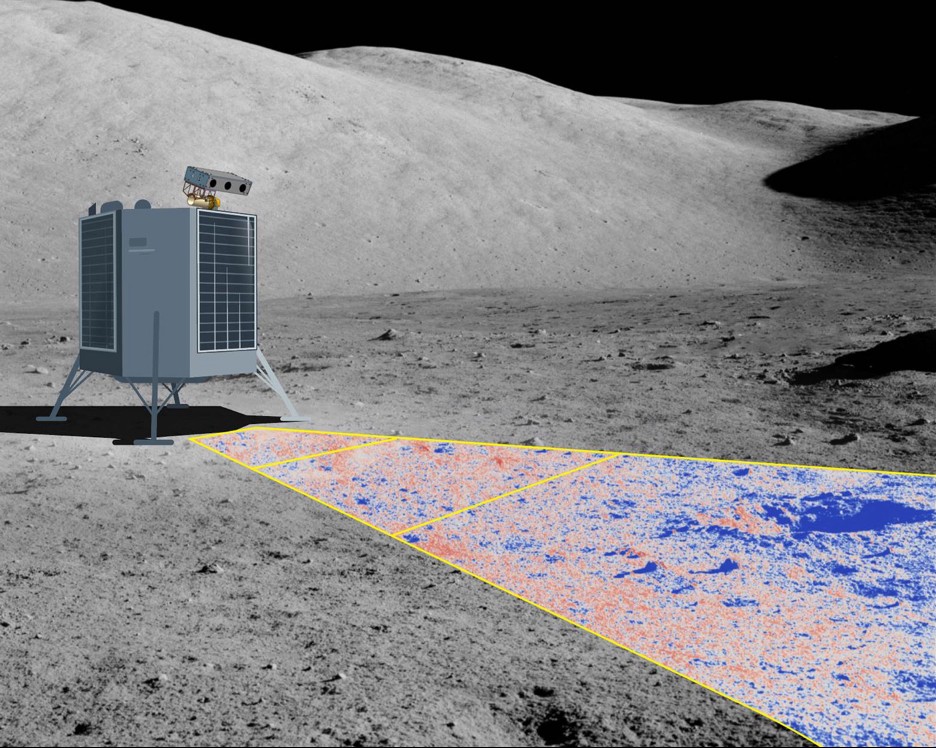
EMission Imager for Lunar Infrared Analysis in 3 Dimensions (EMILIA-3D) was one of three instruments selected for an upcoming Commercial Lunar Payload Services (CLPS) mission under the NASA solicitation for Payloads for Research Investigations on the Surface of the Moon–Stand-Alone Site-Agnostic (PRISM-SALSA).
Overview
EMILIA-3D integrates a thermal camera and a stereo pair of visible cameras on a single-axis tilt gimbal to deliver co-registered thermal and topographic data from the lunar surface. EMILIA-3D will provide unprecedented insight into near-surface regolith properties and the complex interplay between small-scale topography, illumination conditions, and near-surface temperatures.
Operations will be for the duration of one lunar day (daytime only, no survive-the-night capability) or about 2 weeks.
Instrument Payload Summary
The integrated sensor package, consisting of a thermal-IR camera and two optical stereo cameras, will be built by Northern Arizona University (NAU) and delivered to the UA for integration with a one-axis tilt gimbal provided by Rocket Lab Robotics. The UA will build the ISP and gimbal interface and instrument mounting plate and will lead integration and environmental testing, geometric calibration, and operations.
Science Objectives
1. Characterize regolith physical and thermal properties.
2. Quantify the effects of surface roughness on brightness temperature and the lunar emission phase function (EPF).
3. Constrain polar-like thermal conditions in the shadows and at grazing solar angles. 4. Evaluate the impacts of exploration on lunar surface temperatures and regolith properties.