Department News

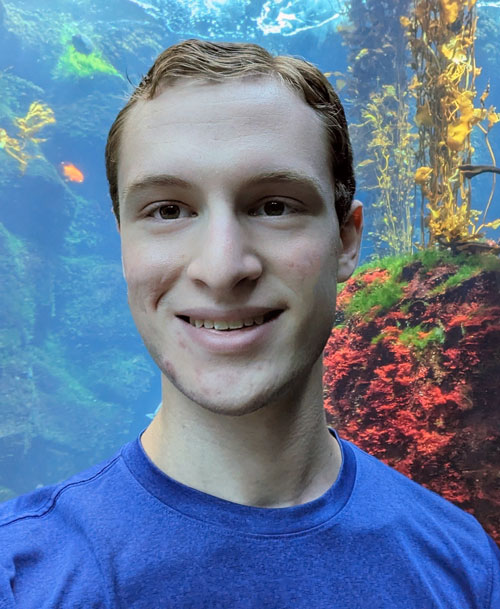
Imani Ralph Undergraduate Student Astrobiology MinorImani Ralph

Imani is majoring in Biochemistry with minors in Astrobiology and Statistics and Data Science. She discovered the astrobiology option as a first-year student and was immediately eager to explore the opportunities the program offered in support of her research interests in planetary habitability. 

Given Imani’s interests, it’s not surprising that her favorite minor course was MCB 437: Life in Extreme Environments, which was focused on extremophiles and the various conditions they can inhabit. Taught by Dr. Solange Duhamel (MCB), the class provided Imani with the opportunity to complete a project on a polyextremophile known as Deinococcus radiodurans. Known for surviving in multiple extreme environments such as those with intense infrared radiation, the bacterium provides insight into Mars’ ability to sustain life.

Imani plans to attend medical school and pursue a career as a physician in a field related to pediatrics. As part of her pre-med program, she is supplementing her course work with practical experience. Currently, Imani is working in Dr. M. Leandro Heien’s analytical chemistry laboratory to develop chronic electrodes for in vivo dopamine detection in mice under different stimuli. These types of studies can provide insight into certain conditions related to dopamine levels (e.g., Parkinson’s disease). 

When her schedule permits some free time, Imani enjoys spending time catching up with friends and her favorite Netflix programs.

The Astrobiology undergraduate minor program is administered by LPL.

So far for 2024, LPL's Space Imagery Center has conducted three workshops that train planetary scientists in how to create topography from planetary images. Workshop attendees have spanned all career stages from undergraduates to senior scientists. These workshops introduce the fundamental principles of stereophotogrammetry and structure-from-motion techniques. Thanks to investment from the Technology and Research Initiative Fund (TRIF), the Space Imagery Center possesses specialized hardware to see and edit these products in three dimensions. 

These workshops were made possible by funding from NASA’s Topical Workshops, Symposia, and Conferences program. As part of this proposal, organizers collaborate with colleagues at Arizona State University, the U.S. Geological Survey, and Cornell University in offering no-cost training in a wide range of topics related to Planetary Science data. We hope to continue offering these to the community next year – a follow-up proposal is currently under consideration at NASA. 

Professor Shane Byrne is director of the Space Imagery Center and Research Scientist Dr. Michael Phillips is the Center’s manager.

Workshop attendees in Space Imagery Center
Group of students with rain gear


By Jack Holt, PTYS 590 instructor, Spring 2024

In spite of a very windy first day and rain on the second, PTYS 590 had a successful trip to Death Valley and its vicinity. We visited and discussed a multitude of planetary-relevant sites including dunes, playas, alluvial fans, volcanics, a phreatomagmatic crater, paleo-shorelines, ventifacts, Snowball Earth glacial deposits, stromatolites, hot springs, and more. There was still a giant shallow lake at Badwater Basin, which was quite a sight. UArizona Regents Professor Victor Baker provided great insights at many stops and LPL Research Scientist Dr. Joe Schools supported the trip. 

Perhaps the most amazing, unprecedented outcome is that we had zero flat tires on the road to Racetrack Playa

Support the LPL Graduate Field Trip by donating to the Wilkening-Sill endowment.  

Students on side of hillStudents standing on dry cracked landStudents listening to lecture on sandy terrainGroup of students standing on rocksGroup of students with mountain range

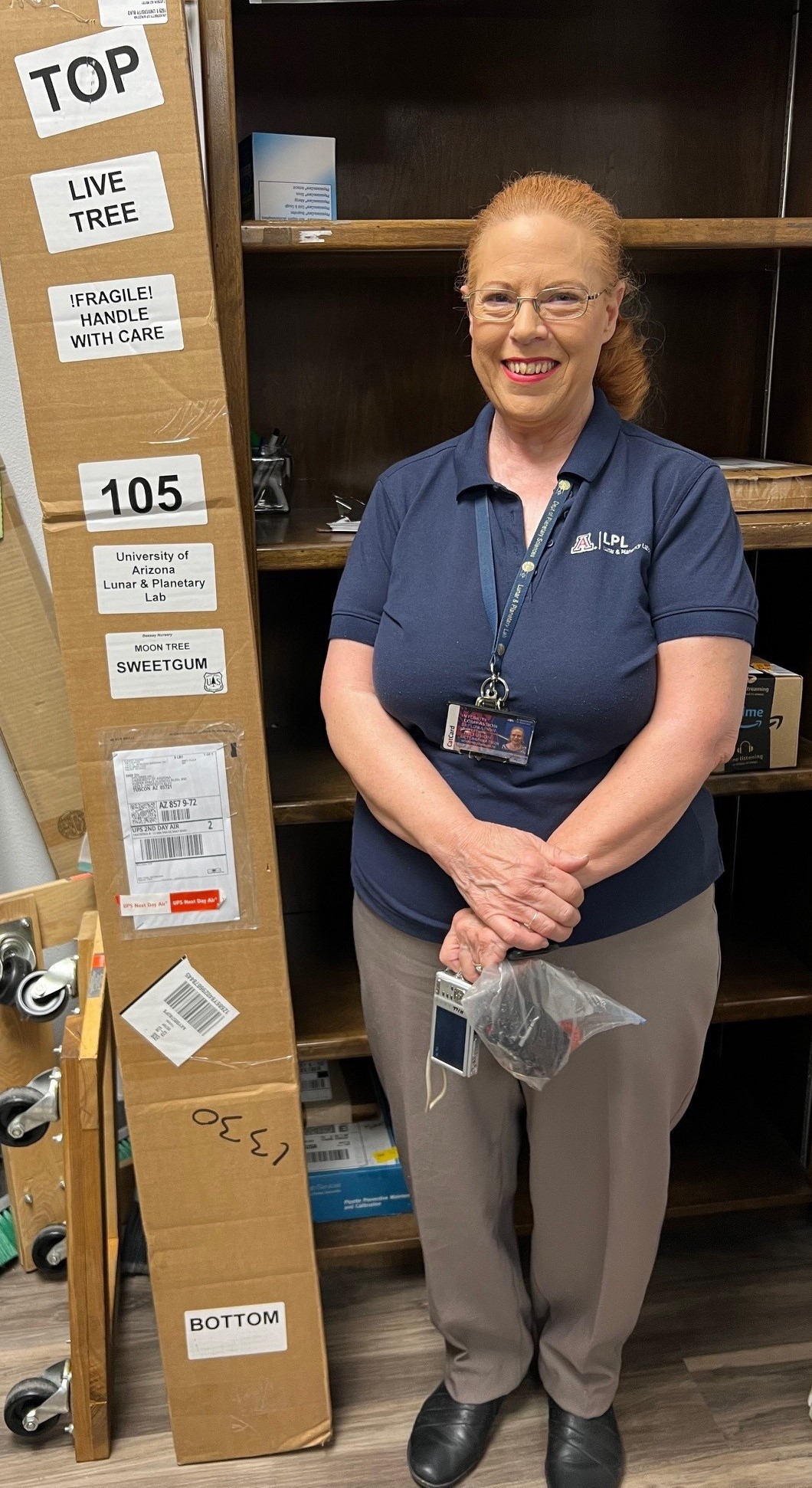
Susan Robison receiving award.Susan Robison is the recipient of the LPL Staff Excellence Award for 2024 in the category of Administrative Staff. Sue was recognized for her outstanding work in supporting a multitude of projects to achieve their highest potential. Her nominators described the diversity of her responsibilities as enormous and her performance in meeting them as exceptional. 

Sue has been a Senior Business Manager at LPL since 2012, starting her career with project support for the High Resolution Imaging Science Experiment (HiRISE) project. She currently manages finances for several spacecraft mission instrument teams at LPL, each with unique funding mechanisms and reporting requirements.  Sue creates complex proposal budgets, manages complicated subcontracts, and interfaces with business managers of several external institutions - all while doing the “routine” work of preparing required forms and reimbursements, overseeing travel reports and equipment purchases, and seeking out required approvals and submitting required reports. 

In addition to mission support, Sue plays a key role in proposal budget preparation for programs ranging from graduate-student support programs (e.g., NASA FINESST) to medium-sized data analysis proposals, to large-scale mission proposals.

Sue recently took on the role of building manager for LPL’s Sonett Building; this job grew in complexity with the moves and renovations that came with the installation of the Arizona Astrobiology Center and the anticipated arrival of the APEX mission. Sue obtained required renovation quotes, oversaw the reorganization of staff offices, and cataloged and surplussed unused equipment. All these changes involved not only a great deal of planning and logistical effort, but also the ability to work with an entirely new set of building occupants. Sue has handled all these transitions and duties with great competence, regularly going above-and-beyond to keep projects large and small, planned and unplanned, moving forward. 

Sue is an incredible asset to LPL and to the missions projects and researchers she supports.

Tyler Meng
April 22, 2024 


Geophysical Measurement and Monitoring of Planetary Rock Glacier Surface Process

Advisor: Professor Jack Holt

New position: Postdoctoral Research Associate, Washington University, St. Louis


Theodore Broeren

(Applied Mathematics)
PTYS Graduate Minor
April 3, 2024 
Multi-Spacecraft Observatory Data Analysis Techniques: Uncertainty Quantification & Comparison

Advisor: Associate Professor Kristopher Klein

New position: Raytheon (data science technologies)


UNDERGRADUATE MINORS

Astrobiology

Planetary Science

Luisa Becerra
Fernando Jaime
Shae Henley
Grace Peek

Severance Graham
Travis Matlock
Kaycee Ridenhour

Photo of Shae HenleyShae is majoring in Aerospace Engineering with a minor in Astrobiology and expects to graduate in 2024. She is interested in the study of the origin of life and research into potential life beyond Earth. Shae knew the astrobiology minor courses would allow her to gain a strong background in astrobiology and has enjoyed being able to supplement her engineering classes with courses focusing more on the biological sciences, chemistry, and geosciences, among other areas of study.

Her favorite astrobiology class has been the Coevolution of Earth and the Biosphere (GEOS 484). Shae began the course with very little knowledge about Earth's history and the field of geosciences, but through lectures, papers, and class trips, she feels that she has received a comprehensive review of the subject matter. Course outings to local mountains and plains to see fossils and historical sites were incredibly valuable and helped spark her interest in geology and the history of the Earth.

Shae plans to attend graduate school, either at UArizona to earn an M.S. in aerospace engineering or another program to conduct graduate research in bioastronautics (the support of life in space). She wants to research human-system interactions and the intersection of aerospace engineering and human health. She sees herself designing spacecraft technologies that enhance human life in space, or working on deep space missions that further our knowledge of our planet and surrounding universe.

As part of her research with Dr. Christopher Walker (Department of Astronomy/Steward Observatory), Shae serves as the Project Manager/Flight Director for the CatSat CSLI (CubeSat Launch Initiative) Mission and oversees the astrodynamics, communications, commanding, and payload teams. The team is currently preparing for the spacecraft’s upcoming launch. Shae helped to design the Artemis Infrared Explorer for Space Studies (ARIES), a proposed lunar surface instrument designed to conduct infrared astronomy from the lunar south pole, and LunaCat, a proposed lunar orbiter that aims to study and map the distribution of molecular water in the lunar regolith. In recognition of her accomplishments, the Universities Space Research Association honored her with the 2023 Thomas R. McGetchin Memorial Scholarship Award. Shae is a former Arizona NASA Space Grant intern.

Here on Earth, Shae enjoys hiking and running and has started rock climbing (bouldering).

Photo of Travis MatlockTravis Matlock is pursuing an Astronomy major with minors in Planetary Sciences and Physics. Travis chose to minor in PTYS because he has always been fascinated with the objects in our solar system. The PTYS undergraduate courses aligned with his interests and he believes the PTYS minor provides him with a well-rounded, interdisciplinary education. Travis really enjoyed the Asteroids, Comets, and Kuiper Belt Objects (PTYS 416) course with Dr. Dani DellaGiustina. He remembers the assignments imitating real work that a planetary scientist might do. For example, students used a 3D computer model of Eros to count craters and then determine the surface age from the crater size-frequency distribution. The class also spent a night at Catalina Sky Survey and participated in observing activities.

In addition to minor coursework, Travis also has an Arizona NASA Space Grant internship with LPL Research Professor, Dr. Lon Hood, working primarily on modeling the crustal magnetic anomalies on Mars. The models are constructed to reflect data from the magnetometer aboard the Mars MAVEN spacecraft. In addition to these projects, Travis also works as a student software developer with the USA National Phenology Network in the School of Natural Resources and the Environment.

Travis is currently applying for doctoral graduate programs in planetary science (or similar programs). His research interests include planetary surfaces and atmospheric processes and hopes to gain more expertise with geological data.

In his spare time, Travis likes spending time outdoors and exploring the areas around Tucson. He describes himself as “bit of a coffee hobbyist” and also enjoys small craft projects.

Zarah Brown Solar SystemFormer LPL student Zarah Brown defended her dissertation in November, but not before completing the Arizona Scale Model Solar System, a project she undertook as an Arizona NASA Space Grant Graduate Fellow and had imagined completing since childhood. Zarah led the installation of 11 plaques depicting various objects of the solar system true to scale. Designed to show the relative sizes and distances of solar system objects at a 1:5 billion scale, the outreach project aims to make space science accessible to people of all ages and backgrounds and to highlight UArizona's accomplishments exploring the solar system. Artwork for the plaques was designed by LPL alumnus James Keane.

Dedicated with a ribbon-cutting ceremony on September 8, the stations comprising the Arizona Scale Model Solar System are spaced out across two-thirds of a mile of campus between the Kuiper Space Sciences Building and the intersection of East University Boulevard and North Euclid Avenue.

project website, accessible by QR codes at each stop, will provide information via screen readers for the visually impaired, as well as additional details as new scientific discoveries are made.

The project is the result of collaborative efforts made possible by the support of the NASA Space Grant program and an anonymous benefactor. 

Read more about Zarah and the Arizona Scale Model Solar System project.

We would like to thank all those who have donated to LPL in 2023. Thanks to everyone for supporting research, education, and outreach at LPL.

Individual Donors

Corporate and Foundation Donors

Thomas Arden
Edward C. Beshore and Amy L. Phillips
Catherine Duncan Folkers and Thomas W. Folkers
Laura L. Dugie and Col. Valentine J. Dugie
William B. Hubbard and Jean N. Hubbard
Chrysantha Kapuranis
Alexander Langoussis
Ann M. Lapidus and Martin Lapidus
Colin Leach
Gloria L. McMillan and Robert S. McMillan
Dr. Kelly K. Nolan and Mr. Brian Nolan
Jani Radebaugh
Timothy D. Swindle and Kerry Swindle
Eric W. Tilenius

Arizona Senior Academy
Brinson Foundation
Cameca Instruments, Inc.
Indigo Information Services
Lockheed Martin
Northrop Grumman Corporation
Observatoire Astronomique de Strasbourg
Southwest Research Institute
Space Dynamics Lab

Carson FulsCarson Fuls was named Director of CSS in October 2023. He holds a B.S. in Physics and an M.S. in Natural Applied Sciences (Physics) from Stephen F. Austin State University and is currently completing his first semester as a doctoral student in Planetary Sciences at LPL.


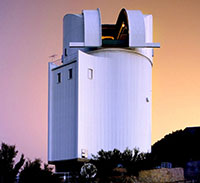
CSS Mt. LemmonThe Catalina Sky Survey is a NASA funded project supported by the Near-Earth Object Observation Program (NEOO) under the Planetary Defense Coordination Office (PDCO). The CSS mission is to discover and track near-Earth objects (NEOs) in an effort to meet the congressional mandate to catalogue at least 90% of the estimated population of NEOs larger than 140 meters, some of which classify as potentially hazardous asteroids (PHAs) which pose an impact threat to Earth. Longstanding success of the project is attributable to comprehensive sky coverage, continued development and application of innovative software and our NEO detection pipeline, and the inclusion of near real-time human attention to the NEO discovery and follow-up process. CSS has discovered most of the near-Earth asteroids found since 2005.


HOW DID YOU GET YOUR START AS AN ASTRONOMER?

I knew for as long as I can remember that I wanted to be a scientist, but I didn’t settle on astronomy for many years. When I was 17, I was at Stephen F. Austin State University and I got a job in the physics department to help set up telescopes for the freshman level astronomy classes night labs at the university’s fantastic observatory. In fact, access to the observatory’s 41” telescope was one of the main reasons I chose to attend SFA. I spent many nights out there working on the telescopes and trying to gather data in new ways. I’ve worked in other areas of science and engineering, but I’ve always come back to astronomy. To me, it is a more universally appreciated and accessible science than many others. The ability to share what I’m doing with others and have them instantly grasp what I’m working on has always appealed to me.

HOW DID YOU GET YOUR START WITH CSS?

I started at LPL and CSS in 2015 as a full-time observer. I was actually the second choice in the applicant pool, but fortunately, the team was able to add two positions. And the top choice applicant and I are now married, so everything worked out great in the end!

WHAT DO YOU LOVE ABOUT BEING AN ASTRONOMER?

As I’ve said, I love sharing with others what I do, but I also love being an observational astronomer. I love heading up to the top of a remote mountain for days at a time. Winter nights are cold and long, but peaceful, and you have the most time to make discoveries. Summer nights are short, but you have time during the day to appreciate the mountain. I’ve spent many afternoons before work hiking and rock climbing in the Catalinas. It’s hard to imagine another profession where that is your daily routine.

WHY DID YOU CHOOSE TO START GRADUATE SCHOOL AND HOW WILL THE PROGRAM CONTRIBUTE TO YOUR WORK?

I started graduate school because I was ready and up for the challenge. I also thought that it would help push my career forward. I wanted to jump into the academic side of planetary science by being involved in pushing the science forward, in contrast to what I have done with CSS, which has been focused on operations and engineering.

CSS has always been guided by the latest science. We base much of our observational strategy on the latest asteroid population models and are always considering the latest work on image processing and linking observations of asteroids. I see my role as taking in a larger swath of the current research and making connections with others in the field who may be working in similar areas and bringing that back to the survey.

DO YOU HAVE ANY TIME FOR HOBBIES?

In my ample free time, I volunteer for the Southern Arizona Rescue Association (SARA). We are responsible for search and rescue activities in Pima county and have helped those in need all over the state. Much like CSS, SARA is an incredibly dedicated and professional group that I am proud to be a part of.

HOW DO YOU FIND A WORK-LIFE BALANCE?

It is all-asteroids-all-the-time at my house as my wife, Rose Garcia, also works at LPL on the OSIRIS-APEX mission heading to the asteroid Apophis. I do have to plan my work out to make time for everything. But I try to spend as much time as possible with my daughter, River. She is 5 years old, and we have the best time playing Legos, dolls, or just sitting and watching cartoons together. If I can read to her a bedtime story, then I count that as a productive day.

HOW CAN AMATEUR ASTRONOMERS SUPPORT CSS?

For those with their own telescopes and proficient with observing asteroids, I would recommend checking out our NEOfixer site (neofixer.arizona.edu) to see which near-Earth asteroids are the most in need of observation.

Read more about Carson Fuls and the Daily Minor Planet: