Image Octocopter Set to Explore Titan, Saturn's Very Cool Moon June 30, 2020 NASA is on a mission to explore Titan — the largest moon of Saturn. To do that, scientists are building a nuclear-powered, self-driving drone (technically an octocopter) called Dragonfly, led by Principal Investigator and LPL alumna Dr. Elizabeth Turtle. Scheduled to launch in 2026 and arrive on Titan in 2034, Dragonfly could provide clues about how the building blocks of life started here on Earth. Listen to podcast Image NASA's OSIRIS-REx Discovers Sunlight Can Crack Rocks on Asteroid Bennu June 9, 2020 Dr. Jamie Molaro is lead author on a paper documenting the first evidence for thermal fracturing on an object without an atmosphere. " The phenomenon, observed by the OSIRIS-REx spacecraft on asteroid Bennu, and evidence of thermal fracturing on the asteroid can help scientists learn about the geologic history not only on Bennu, but on other planetary surfaces as well. Read more Image NASA Planetary Scientist, Barbara Cohen, Uses Samples Gathered from Rover Missions for Geochronology May 15, 2020 LPL Alum Barbara Cohen (2000), in interviewed by Purdue College of Science's Superheroes of Science. Read more Image Martian Ice Revealed: Dr. Ali Bramson April 26, 2020 Dr. Ali Bramson, a planetary scientist with expertise in spacecraft remote sensing of ice on other worlds, discusses how to find ice on Mars. Watch video Image Zibi Turtle: Titan of Exploration Oct. 22, 2019 LPL Alumna Zibi Turtle (1998) will lead the Dragonfly mission to Saturn’s moon Titan. She’ll also lead the next generation of women in planetary science. Read more Image Alumna Explores Existence of New Planet with Wittenberg Series’ Speaker Sept. 24, 2019 Wittenberg graduate Kathryn Volk is boldly going where few others have gone before – to the Kuiper Belt along the far edges of the solar system in hopes of proving the existence of a few more planets. Read more Image The Dusty Plains of Arcadia Planitia (podcast) Sept. 23, 2019 SpaceX has been requesting HiRISE images from an area called Arcadia Planitia as potential landing sites for their Starship vehicle. Dr Ali Bramson, a planetary scientist at the University of Arizona’s Lunar and Planetary Lab and expert on the region, discusses what’s going on there and why SpaceX might be interested. Listen to podcast Image Meet The Nuclear-Powered Self-Driving Drone NASA Is Sending To A Moon Of Saturn Sept. 17, 2019 On the face of it, NASA's newest probe sounds incredible. Known as Dragonfly, it is a dual-rotor quadcopter (technically an octocopter, even more technically an X8 octocopter); it's roughly the size of a compact car; it's completely autonomous; it's nuclear powered; and it will hover above the surface of Saturn's moon Titan. LPL alumna Dr. Elizabeth Turtle is the missions Principal Investigator. Read more Image Scientist Uses HPHT Presses to Study Planet Formation Oct. 4, 2018 To gemologists, the high-pressure, high-temperature (HPHT) press speaks of synthetic diamond growth or newfangled methods of diamond color treatment. For Valerie Hillgren, a research scientist at the Carnegie Institution of Washington’s Geophysical Laboratory, the presses that create these conditions are a means to another end: studying how the terrestrial planets of our solar system might have formed. Watch video Pagination « First First page ‹ Previous Previous page … 1 2 3 4 5 6 …
Image Octocopter Set to Explore Titan, Saturn's Very Cool Moon June 30, 2020 NASA is on a mission to explore Titan — the largest moon of Saturn. To do that, scientists are building a nuclear-powered, self-driving drone (technically an octocopter) called Dragonfly, led by Principal Investigator and LPL alumna Dr. Elizabeth Turtle. Scheduled to launch in 2026 and arrive on Titan in 2034, Dragonfly could provide clues about how the building blocks of life started here on Earth. Listen to podcast
Image NASA's OSIRIS-REx Discovers Sunlight Can Crack Rocks on Asteroid Bennu June 9, 2020 Dr. Jamie Molaro is lead author on a paper documenting the first evidence for thermal fracturing on an object without an atmosphere. " The phenomenon, observed by the OSIRIS-REx spacecraft on asteroid Bennu, and evidence of thermal fracturing on the asteroid can help scientists learn about the geologic history not only on Bennu, but on other planetary surfaces as well. Read more
Image NASA Planetary Scientist, Barbara Cohen, Uses Samples Gathered from Rover Missions for Geochronology May 15, 2020 LPL Alum Barbara Cohen (2000), in interviewed by Purdue College of Science's Superheroes of Science. Read more
Image Martian Ice Revealed: Dr. Ali Bramson April 26, 2020 Dr. Ali Bramson, a planetary scientist with expertise in spacecraft remote sensing of ice on other worlds, discusses how to find ice on Mars. Watch video
Image Zibi Turtle: Titan of Exploration Oct. 22, 2019 LPL Alumna Zibi Turtle (1998) will lead the Dragonfly mission to Saturn’s moon Titan. She’ll also lead the next generation of women in planetary science. Read more
Image Alumna Explores Existence of New Planet with Wittenberg Series’ Speaker Sept. 24, 2019 Wittenberg graduate Kathryn Volk is boldly going where few others have gone before – to the Kuiper Belt along the far edges of the solar system in hopes of proving the existence of a few more planets. Read more
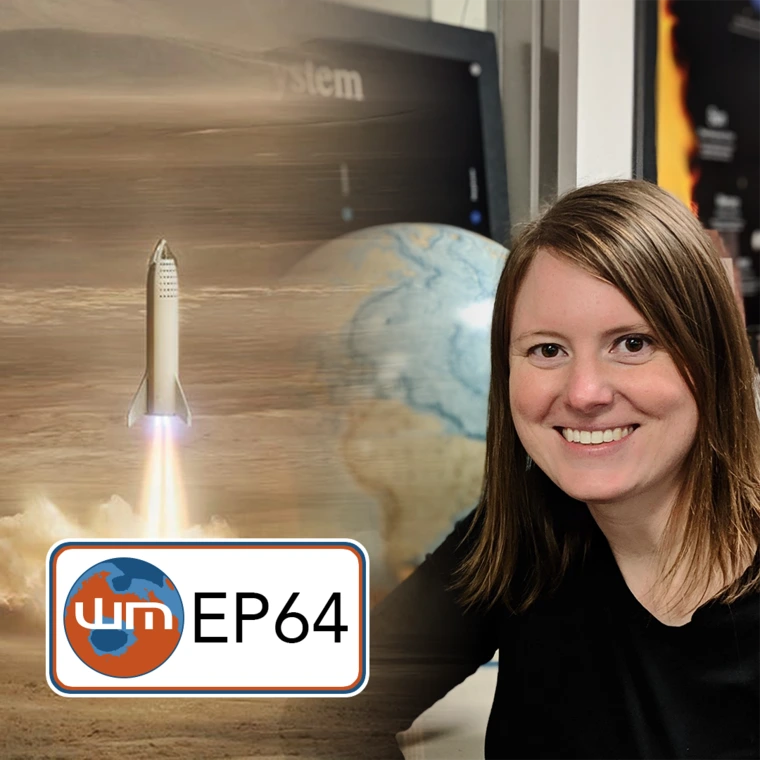
Image The Dusty Plains of Arcadia Planitia (podcast) Sept. 23, 2019 SpaceX has been requesting HiRISE images from an area called Arcadia Planitia as potential landing sites for their Starship vehicle. Dr Ali Bramson, a planetary scientist at the University of Arizona’s Lunar and Planetary Lab and expert on the region, discusses what’s going on there and why SpaceX might be interested. Listen to podcast
Image Meet The Nuclear-Powered Self-Driving Drone NASA Is Sending To A Moon Of Saturn Sept. 17, 2019 On the face of it, NASA's newest probe sounds incredible. Known as Dragonfly, it is a dual-rotor quadcopter (technically an octocopter, even more technically an X8 octocopter); it's roughly the size of a compact car; it's completely autonomous; it's nuclear powered; and it will hover above the surface of Saturn's moon Titan. LPL alumna Dr. Elizabeth Turtle is the missions Principal Investigator. Read more
Image Scientist Uses HPHT Presses to Study Planet Formation Oct. 4, 2018 To gemologists, the high-pressure, high-temperature (HPHT) press speaks of synthetic diamond growth or newfangled methods of diamond color treatment. For Valerie Hillgren, a research scientist at the Carnegie Institution of Washington’s Geophysical Laboratory, the presses that create these conditions are a means to another end: studying how the terrestrial planets of our solar system might have formed. Watch video