Spring

by Sarah Morrison

It has been a busy year for LPL Outreach, with events ranging from wowing young children with our new Pluto globe to giving popular monthly lectures at Borderlands Brewery as part of our Space Drafts Public Talk Series (in collaboration with Steward Observatory and NOAO). The Space Drafts concept expanded this year, with the result being that Tucson has its own flavor of the broader movement, called Astronomy on Tap.

LPL's Pluto globe trended on social media and our "how-to" was promoted as a guest blog entry at the Planetary Society. We also showcased planetary science with interactive exhibits at many community events such as What If? Weekends at Biosphere 2, the Connect2STEM event in Phoenix, Tucson Festival of Books, Tucson Hebrew Academy’s Community STEM Festival, and SARSEF Future Innovator’s Night. These were often group outreach efforts including Maria Schuchardt (Space Imagery Center), Dolores Hill (OSIREX-REx), Sarah Morrison (LPL graduate outreach coordinator), and the rest of our outreach volunteers. The LPL graduate students themselves have talked directly with over 4,500 people so far this year about our Solar System and beyond, growing our ties to the community and developing better ways to communicate our science! Most recently, LPL graduate students have discussed their research and career paths with several hundred college-bound high schoolers at UA’s STEAMworks expo held April 14, 2016. We have had a great year for outreach so far, and we continue to develop our community connections for more to come!


LPL graduate student Sarah Morrison making a Pluto globe for outreach activities. Image credit: LPL graduate student Alessondra Springmann.


April’s Space Drafts audience enjoys 3D HiRISE anaglyphs presented by LPL graduate student Margaret Landis (off screen) in her discussion of the climate history on Mars. Image credit: LPL graduate student Sarah Morrison.


Maria Schuchardt (far right) shows the world to a family at Connect2STEM on Jan. 9, 2016. Image credit: UA College of Medicine-Phoenix.


LPL graduate student Donna Viola discusses her research on Mars at STEAMworks on April 14, 2016. Image credit: University of Arizona.

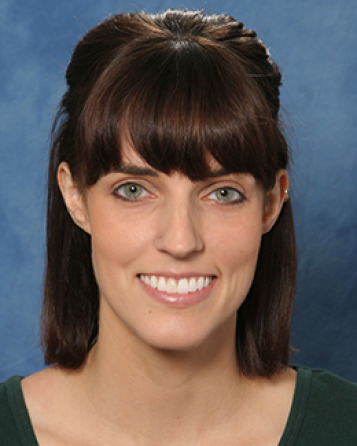
Jennifer Fernando joined LPL in November 2015 as a postdoctoral researcher working on the High Resolution Imaging Science Experiment (HiRISE) processing and analysis with Dr. Alfred McEwen and Dr. Shane Byrne. As a planetary geologist, her research focuses on the characterization of the martian past (e.g., volcanic, sedimentary) and present (seasonal processes linked to the surface-atmosphere exchanges) processes in order to better understand the planet's internal (volcanism) and external (climate) dynamic systems and to evaluate their impact in surface changes. To constrain these processes, Jennifer uses orbital visible and near-infrared remote sensing observations to derive quantitative information about the chemical (e.g., composition, mineral abundances) and physical properties (grain size, morphology, internal structure) of surface materials. On the HiRISE team, Jennifer is working on the development of an innovative and quantitative processing tool that includes a sophisticated correction for the atmospheric and surface scattering contributions of the HiRISE color images in order to estimate quantitative information about the surface materials. This development will also enable analysis of images taken under variable geometric acquisitions and atmospheric conditions useful to track current surface changes (e.g., CO2 defrosting and Recurring Slope Lineae features).

Jennifer is from Paris, France. She earned a B.S. and a M.S. in Earth and Universe Science with a specialty in Planetary Science (2011) at the University of Pierre and Marie Curie (Paris, France). She earned her Ph.D. in 2014 from the University of Paris-Sud 11 (Orsay, France). Her thesis focuses on the estimates of the martian surface microtexture using visible hyper spectral and multi-angular data in order to give new constraints about the geological processes responsible for Mars evolution. Jennifer enjoys traveling, hiking and cooking (bon appétit!). 

Sixth-year graduate student Ethan Schaefer (advised by Professor Alfred McEwen) is the recipient of a $500 travel award courtesy of Mr. Dan Cavanagh, member of the LPL Advisory Board. Ethan will use the funds to support a field campaign to study lava flows in Hawaii. The study, advised by Assistant Professor Christopher Hamilton, will build on earlier field work to answer the question, "If all we can see in coarse, remotely-sensed data is the outline of a lava flow, what can we meaningfully infer, if anything, about that flow?” Ethan writes that this question has direct application to bodies such as Io and Venus. If Ethan's hypotheses are confirmed, he will have developed a fractal-based technique to infer both the extant and primary sub-meter roughness of a lava flow and estimate the degree of sediment mantling, if present, all from the flow’s outline at resolutions at least as coarse as 100 m. 


The Department of Planetary Sciences/Lunar and Planetary Laboratory was pleased to honor the following students as recipients of the 2016 College of Science Graduate Student Awards. Each student received $100 and recognition at a reception held on April 14.

Outstanding Scholarship: Michelle Thompson

Michelle Thompson will defend her dissertation, focused on deciphering the microstructural signatures of space weathering in lunar soils and samples returned from asteroid Itokawa by the Hayabusa mission, in May. She will leave graduate school having  accumulated an unusually rich collection of honors and awards, including a Canadian NSERC, a NESSF, a Berkner Internship, the LPI Career Development Award, a Dwornik Award (2014 LPSC), a Galileo Circle Scholarship, a Shandel Travel Award, the Wiley Award for Outstanding Student Presentation (2015 GSA), the Microbeam Analysis Society Scholar Award (2014 Microscopy and Microanalysis conference). Michelle recently served as co-lead for  the Workshop on Space Weathering of Airless Bodies and she is active in various workshops and graduate-student initiatives within our department (e.g., LPLC, Academic Careers Seminars). She has given invited talks at both the 2013 Symposium on Hayabusa Samples and the 2015 Microscopy and Microanalysis Society meetings.

Michelle's dissertation research required her to master advanced transmission electron microscopy techniques to analyze the crystal structure and chemistry of the lunar and asteroidal materials to gain new insights into the modification of the surfaces of airless bodies to develop a comprehensive model for space weathering in the solar system. This is an important problem for understanding remotely sensed spectra of asteroids and correlating meteorites with their parent bodies. Michelle's work has resulted in two journal articles, and she is working on a third for her dissertation; a fourth publication is likely, post-dissertation.  All of this is even more impressive when coupled with the fact that her work had to be done using transmission electron microscopes at other research institutes because the UA did not have one capable of the kind of analyses she required.

Michelle's advisor is Assistant Professor Tom Zega, who describes his student as "a rising star in the field."


Outstanding Service and Outreach: Donna Viola

Donna Viola is this year's recipient of the LPL award for service and  outreach, which includes attention to broader impacts and involvement in activities outside of academic responsibilities that benefit the department, university and the larger community.  Her outreach development and leadership efforts have exceeded what may be expected of a full-time graduate student, and these efforts are in addition to volunteering her time for hands-on activities at various STEM-related festivals and summer camps over the past few years as well as her service representing LPL graduate students on the Associate Graduate Council for the College of Science from 2012-2015. 
 

For three semesters, Donna has led workshops for middle and high school students in the Expanding Your Horizons conferences held at local schools. Donna’s high school workshop on choosing landing sites for the future ExoMars rover mission was particularly ingenious. To give the students a glimpse into what it was like to be a planetary scientist, she guided the students using the same datasets that the European Space Agency was using to choose landing sites. She also developed and led an activity regarding Mars in an astrobiological context for the Sci-Fi versus Sci-Fact book club we held over the summer at the Dusenberry-River Library (Tucson) for children ages 9-12 in collaboration with the library's Children’s Librarian. 

Donna has been described by peers as a dependable volunteer and versatile outreach activity developer and leader for all audiences. She has shown an ease at adapting her hands-on activities to different types of audiences, such as modifying her Mars rover landing site activity successfully for both lifelong learners and middle/high school students. She is skilled at marketing her research regarding craters on Mars, as demonstrated by her presentation to a standing-room only crowd in February 2015, the most well attended Space Drafts talks for the entire spring 2015 semester.  

Donna has distinguished herself through her initiative in developing and leading engaging outreach activities, leveraging her expertise on both Mars and astrobiology along with her previous outreach experiences. 


Outstanding Teaching and Mentoring: Ethan Schaefer

Ethan Schaefer earned the LPL Outstanding Graduate Teaching Assistant (GTA) Award for Spring 2015 and is the 2016 department recipient of the College of Science Teaching and Mentoring award. Ethan earned the LPL GTA award for his work as a GTA with Professor Joe Giacalone in the PTYS/ASTR 206 class, which is a General Education Natural Sciences Tier II  course. He is a sixth-year graduate student working with Professor Alfred McEwen.

The nominating comments from Ethan's students cited his mentoring and thoughtful grading, which included taking the time to explain how to improve the answers to homework problems and why a particular answer was incorrect. The students noted that he was always available and open to suggestions—one student wrote, "I always come away with a much richer understanding after going over lecture topics with him. One of the best TAs I've had."  Ethan gave three lectures during the semester, augmenting the instructor's material with  numerous well chosen online videos; students were impressed with his lecturing, praising him as a "phenomenal lecturer." Ethan also independently managed an in-class project that required students to present a report describing how science news is depicted in the media depending on the outlet. 

Congratulations to LPL graduate student Sarah Sutton, recipient of a NSF Graduate Research Program Fellowship (GRPF). This prestigious fellowship provides funding and tuition deferment for 3 years. Sarah's academic advisor is Assistant Professor Christopher Hamilton. As an incoming graduate student, Sarah was the recipient of a University Fellows Award from the Graduate Center at the University of Arizona. This prestigious fellowship provides a generous recruitment package to incoming students.

Sarah is a first-year PTYS graduate student, but has been a member of the HiRISE team since 2006. She works as a Photogrammetry and Image Processing Scientist, developing  methods to correct geometric distortions of images (produced by spacecraft pointing jitter), which not only improve digital terrain models and orthoimages, but are also valuable and applicable to other scientific studies and to certifying landing sites.


Congratulations to the 2016 recipients of the LPL Outstanding Staff Awards: Anjani Polit (Appointed Personnel) and Joshua Sosa (Classified Staff Excellence Award)!


Anjani Polit became Uplink Operations Lead for the HiRISE project in 2010, but had a decade of HiRISE targeting and uplink operations experience before that.

Anjani's work is complex; each observation requires individual attention in terms of targeting and camera parameters; instrument temperatures require constant modeling and monitoring to avoid noise or shutdown; and the spacecraft recorder's data storage requires constant modeling and monitoring to avoid underutilizing the downlink or overfilling the recorder. All of this in addition to the complex targeting process, which entails interacting with the project over landing site images and 4 other experiment teams with conflicting ideas on how to point the spacecraft. Anjani must juggle overlapping planning cycles (every 2 weeks, HiRISE initiates a new 2-­week planning cycle, a process that takes about 6 weeks---resulting in 3 overlapping cycles); communicate with the science team, other HiRISE operations staff, staff from other science experiments, and the MRO project personnel at JPL and Lockheed-­Martin. This means she must remain available for communication on nights and weekends. Anjani also contributes often to education and public outreach efforts (talks, tours), and is described as a "terrific" role model for children and young adults. When not on duty with HiRISE, Anjani volunteers for the Southern Arizona Rescue Association.

Anjani's nominating letters cited her astounding competence and reliability, good humor, dedication, attention to detail, and patience in educating inexperienced scientists on the operations process. Anjani's ongoing efforts to improve performance to maximize science returns and improve procedure efficiencies, including overseeing the automation and simplification of many HiRISE processes, are further examples of what makes her an outstanding member of the LPL staff.


Since 2010, Joshua Sosa has supported Susan Brew and Arizona Space Grant Consortium (ASGC) as an assistant and program webmaster. In 2013, he assumed duties as Web Site Designer/Developer for LPL. And in 2014, Joshua's job description expanded to include AV support for LPL and the Kuiper Building.

With Space Grant, Joshua helps Program Manager Susan Brew carry-out the day-to-day ASGC program business—everything from clerical jobs, to redesigning and programming the statewide website in Drupal and continuously finding ways to enhance its usefulness for managers and participants. Joshua has been key in helping AZSGC managers work smarter and more efficiently by identifying solutions and updating and improving online systems for conducting daily business. He built online forms, databases, and other systems to help streamline and systematize data collection for NASA reporting, selecting interns and fellows, tracking students and more. He trains ASGC members in system use, allowing Space Grant to share programs across Arizona colleges and universities while minimizing administrative burdens. The Arizona web site has been positively reviewed by NASA; moreover, the website built for the National Space Grant Directors’ Council Meeting (Tucson, fall 2015), was well received. Joshua also provided the AV support for this large meeting, saving the nation’s 52 Space Grant Consortia many hundreds of dollars.

Beginning in 2013, Joshua has worked as web designer for LPL, upgrading the site by implementing a user-friendly Drupal system. Joshua provided training and documentation for the upgrades and patiently supported and addressed a wide variety of cosmetic and internal maintenance issues. He integrated existing FileMakerPro databases, with which he previously had little experience. Implementation of web forms has simplified service requests, information sharing, and record keeping. In 2015, LPL began a web site re-design to take advantage of UA design templates. Joshua attended meetings of the UA Web Developers Group and worked with UITS Systems Integration and Architecture team to learn about the new web modules and how to implement them.

In 2014, Joshua’s job description expanded to include AV support for LPL/Kuiper. This demanding responsibility supports a wide-ranging set of tasks: regular equipment maintenance; recording lectures; researching equipment; improving output quality; supporting tele/video conferencing, and much more. He was faced with several challenges at the start (lack of documentation, out-of-date equipment, etc.), but got his hands dirty (literally) and began cleaning up AV systems in classrooms and conference rooms. Joshua is “on-call” for most of the day in the event something goes wrong. He makes himself available to support off-campus and after-hours events, e.g., special lectures, outreach events, LPLC, faculty retreats. He has made significant improvements to the quality of AV in Kuiper rooms, upgrading to HDMI signals, replacing cabling, and virtualizing Windows in lecture halls to improve system stability.