Fall

Oct. 4, 2022
By Scott Coleman, UArizona College of Science
 

LPL Assistant Professor Dr. Kristopher Klein received the 2022 Landau-Spitzer Award for Outstanding Contributions to Plasma Physics from the American Physical Society (APS). 

The Landau-Spitzer Award recognizes an individual or group of researchers for outstanding theoretical, experimental, or technical contributions in plasma physics and for advancing the collaboration and unity between Europe and the United States of America by joint research or research that advances knowledge that benefits the two communities in a unique way.

Dr. Klein was recognized as part of a team with colleagues in Iowa and London for the theoretical development of the field-particle correlation technique and its application to spacecraft measurements directly showing that Landau damping heats electrons in turbulent plasmas that comprise Earth's magnetosheath.

"This work represents years of collaborations spanning a number of domestic and international institutions, combining theoretical predictions with measurements of near-Earth space in order to better understand fundamental processes at play in our solar system and throughout the Universe," said Dr. Klein. "I am honored to have been a part of this effort and am thankful that APS selected my colleagues and me for the 2022 Landau-Spitzer Award."

Dr. Klein's research focuses on studying fundamental plasma phenomena that govern the dynamics of systems within our heliosphere as well as more distant astrophysical bodies. He has particular interest in identifying heating and energization mechanisms in turbulent plasmas, such as the Sun's extended atmosphere known as the solar wind, as well as evaluating the effects of the departure from local thermodynamic equilibrium on nearly collisionless plasmas which are ubiquitous in space environments.

These systems are studied with a combination of analytic theory and numerical simulation, including large-scale nonlinear turbulence codes such as AstroGK, HVM, and gkyell. These theoretical predictions are compared to in situ observations from spacecraft including NASA's Helios, Wind, MMS, and Parker Solar Probe missions. Comparing theory with local plasma measurements enables answering a variety of questions about the behavior of plasma in our solar system.

Dr. Klein is also helping to lead the design of future heliospheric missions, and is serving as the Deputy Principal Investigator for the HelioSwarm mission, a planned observatory to launch by the end of this decade nine spacecraft to measure the dynamics and evolution of turbulent plasmas at multiple points across multiple scales.

“This award recognizes what we in LPL have long recognized: Dr. Klein is an exceptional young scientist who is making a major impact in the study of the Solar wind,” said Dr. Mark Marley, Director of the Lunar and Planetary Laboratory at UArizona. “Kris' research not only helps us to understand the complex dynamics of the plasma flowing through the Solar System, but he is also helping to build new collaborations between scientists in the United States and Europe. We are very fortunate to have him here at the University of Arizona."

The American Physical Society (APS) is a nonprofit membership organization working to advance and diffuse the knowledge of physics through its outstanding research journals, scientific meetings, and education, outreach, advocacy, and international activities. APS represents more than 50,000 members, including physicists in academia, national laboratories, and industry in the United States and throughout the world. 

Associate Professor Lynn Carter, a UArizona Distinguished Scholar, was selected to be the Science Team Lead for the NASA JPL VenSAR radar system onboard the EnVision mission to Venus. EnVision, a low-altitude polar orbiter, is the M5 mission candidate in the ESA Science Program. It will carry 5 instruments and 1 experiment (an S-band Synthetic Aperture Radar, a Subsurface Radar, 3 spectrometers and a radio science experiment). EnVision will investigate Venus from its inner core to its atmosphere at an unprecedented scale of resolution, characterizing in particular, core and mantle structure, signs of active and past geologic processes and looking for evidence of the past existence of oceans. EnVision will help understanding why the most Earth-like planet in the solar system has turned out so differently, opening a new era in the exploration of our closest neighbor.

Spacewatch is enjoying the return to full-time regular operations, which resumed on December 7 after recovery from the Contreras Wildfire in June. Kitt Peak had previously been closed from March 2020 through October 2020 due to COVID, allowing only remote observing and daytime visits until June 2021.

Lightning caused the fire on June 11 in the Baboquivari Mountain range. Kitt Peak was evacuated on June 14 when high winds and dry conditions greatly accelerated the approach of the fire toward the observatory. Heroic efforts from the firefighter and flight crews and incident management teams preserved all of the science facilities. Only four structures were lost: two outbuildings, a residence, and the Arizona Radio Observatory (ARO) dorm. This is remarkable considering the fire swept over the southwest ridge that includes the ARO, Very Long Baseline Array antenna, and MDM. The official incident burn size was 29,482 acres.

The fire was deemed contained on June 24 and Bureau of Indian Affairs Type 4 Incident Management Team and National Burned Area Emergency Response Team took over. The Arizona Department of Transportation and the Tohono O’odham Utility Authority began work on the road and electrical infrastructures. Helicopters were required to fly in new electrical poles sited away from the road.

Spacewatch staff were allowed to begin clean-up operations in August, while on alert for emergency evacuation in case of a monsoon. After Kitt Peak National Observatory (KPNO) installed temporary extra generators and a Starlink dish, Spacewatch was able to restart operations on September 6, although operations were hampered by the unreliability of generators — dome shutters are not opened unless there is some form of backup power. Line power was restored to the summit on October 7. With extremely limited bandwidth for the summit, Spacewatch was restricted to onsite observing and experienced frequent blips in connectivity. The internet fiber connection was restored on December 8, bringing Spacewatch back to full strength. However, the road is still closed to traffic, with only staff or experienced tenant drivers permitted to navigate the road without an escort vehicle.

Photo caption: August 22, boulder on Hwy 386 near mile 10.5. Boulder size was reported to be 12'x8'. Without vegetation, many rocks and boulders washed down and into culverts. There were many rockslides reported during the monsoon season. In addition, the posts for the road guardrails burned along the top several miles of the road. Many electrical poles burned or were damaged, severing the line power and internet cables. Photo courtesy: Michelle Edwards, Associate Director of Kitt Peak National Observatory.

In the early hours of Nov. 19, the skies over southern Ontario, Canada, lit up as a tiny asteroid harmlessly streaked across the sky high in Earth’s atmosphere, broke up, and likely scattered small meteorites over the southern coastline of Lake Ontario. Roughly 1 meter (3 feet) wide, the asteroid was detected 3.5 hours before impact, making this event the sixth time in history a small asteroid has been tracked in space before impacting Earth’s atmosphere.

Asteroid 2022 WJ1 was discovered by LPL's Catalina Sky Survey (CSS) on the evening of Nov. 18 during routine search operations for near-Earth objects. CSS observations were quickly reported to the Minor Planet Center and the data were then automatically posted to the Near-Earth Object Confirmation Page.

NASA’s Scout impact hazard assessment system automatically fetched the new data from that page and began calculating the object’s possible trajectory and chances of impact. Seven minutes after the asteroid was posted on the confirmation page, Scout had determined it had a 25% probability of hitting Earth’s atmosphere, with possible impact locations stretching from the Atlantic Ocean off the East Coast of North America to Mexico. More observations were then provided by the astronomical community to better refine the asteroid’s trajectory and possible impact site.

As CSS continued to track the asteroid over the next few hours, Scout used this new data to update the asteroid’s trajectory and the system’s assessment of the chance of impact, posting those results on the hazard-assessment system’s webpage.

2022 WJ1 is the fourth pre-impact asteroid discovered so far by CSS and attests to the ability of the survey to rapidly find and enable the orbit characterization of potentially hazardous objects.

Brooke Carruthers (Molecular and Cellular Biology major, Astrobiology minor) was been selected as a Universities Space Research Association (USRA) Distinguished Undergraduate for 2022 based on the strength of her academic accomplishments and leadership qualities. She was one of 5 recipients chosen from 85 applicants. Brooke was selected to receive the James B. Willett Education Memorial Scholarship, which recognizes the efforts of the late James B. Willett, a noted astrophysicist who worked with USRA through the Jet Propulsion Laboratory and NASA Headquarters. 

The USRA awards are granted to students who tackle challenging problems in aerospace engineering, space science research and exploration, demonstrate leadership, promote diversity in science and engineering, and are poised to make significant contributions to their fields. Faculty from USRA’s member universities reviewed the applications and made their recommendations for selection to the USRA President and CEO, Dr. Jeffery Isaacson.

The research award consists of a certificate, an award letter, and a scholarship in the amount of $5,000. Regents Professor Renu Malhotra, current chair of USRA Council of Institutions, presented the award to Brooke on behalf of USRA and UArizona. Read more about Brooke in the Spring 2022 LPL Newsletter.

Emileigh Shoemaker is a 2022 recipient of an Amelia Earhart Fellowship. Emileigh is a fifth-year Ph.D. student advised by Dr. Lynn Carter. Her research focuses on investigating the subsurface of volcanic environments on Mars and Earth using orbital and ground penetrating radar (GPR) systems. Eruptive products like lava flows from effusive volcanic activity or ash and pumice from explosive activity provide a glimpse into the evolution of the interior of a planet. On Mars, volcanic activity is primarily effusive—resulting in shield-like volcanic edifices and extensive lava flows similar to those seen in Hawaii. Explosive activity is less common; however, there is evidence on the surface that these types of eruptions have taken place in the past.

Emileigh uses the Shallow Radar (SHARAD) instrument currently orbiting Mars to investigate the subsurface and the stratigraphy of the largest volcanic province on the planet known as Tharsis. This region has been volcanically active for most of Mars’ history which makes it an excellent site to study the evolution of the planet over time. SHARAD has assisted Emileigh in making measurements of the thickness of lava flows and ash deposits there.

Emileigh has taken part in several NASA field expeditions to the Icelandic Highlands, where she mapped ice buried by ash and pumice from two eruptions of the Askja Volcano using GPR. This area was used to test operational methods to map subsurface ice using these handheld radar systems for future astronauts who will need to access this precious resource during missions on other terrestrial bodies like Mars and the Moon. During these expeditions, Emileigh is able speak to the general public and hopes these interactions will encourage other students to participate in planetary field geology and geophysics in the future. Read more about Emileigh's research with the NASA GIFT Team in Iceland in the Fall 2021 LPL Newsletter.

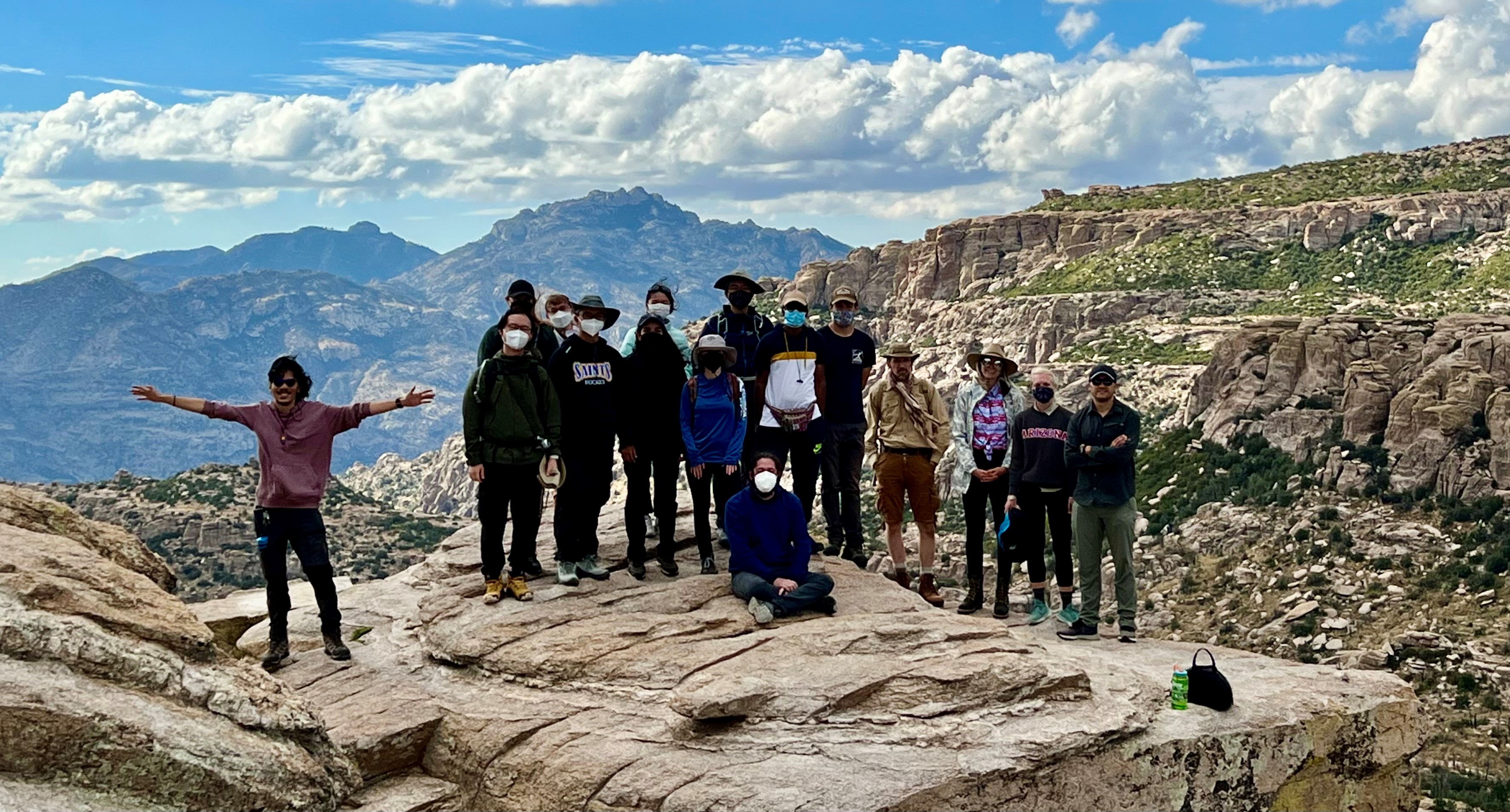
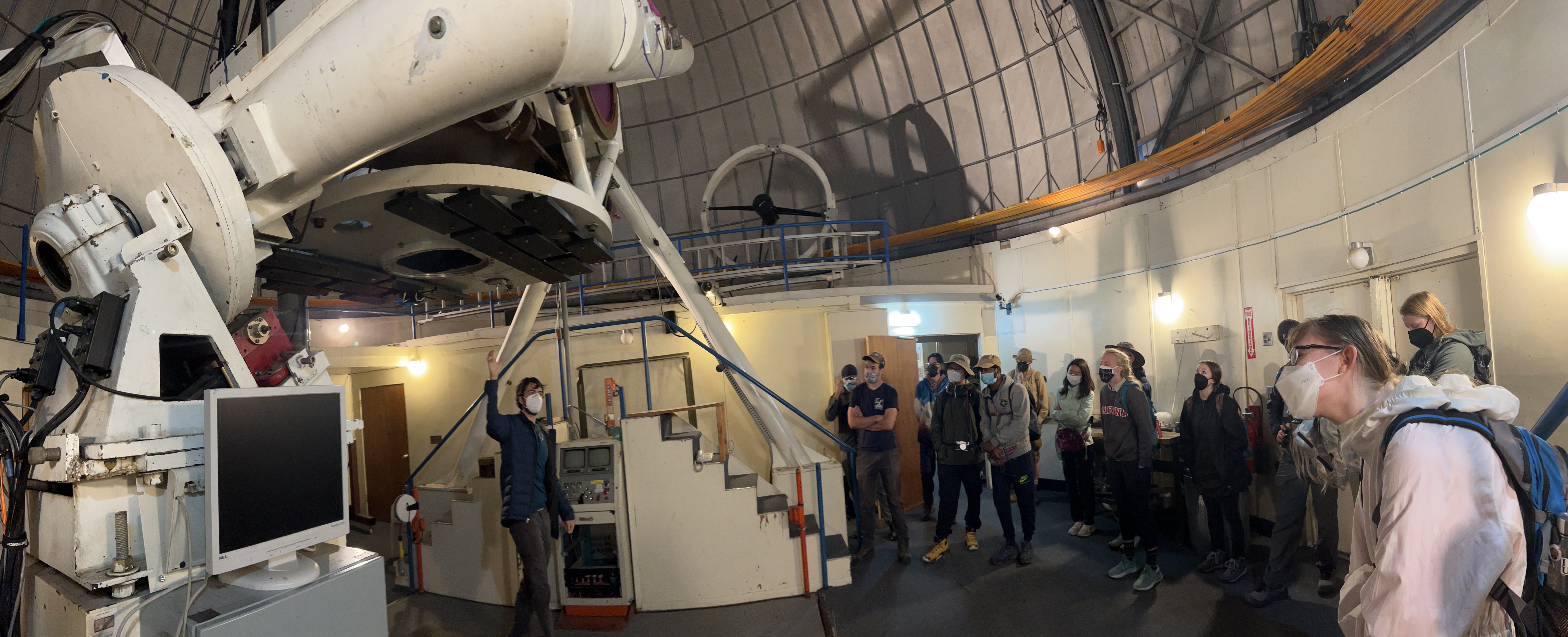
LPL welcomed 13 new graduate students in Fall 2022.

David Cantillo is the recipient of the 2022 Carson Fellowship Award, which provides one academic year of support, including salary, tuition, and a supply stipend. David is a first-year graduate student at LPL.  

David earned a B.S. from the University of Arizona in Spring 2022 with a major in Geosciences and minors in Math and Planetary Sciences. As an undergraduate, David began working with LPL professor Vishnu Reddy, who he had met while working as a high school intern at the Johns Hopkins Applied Physics Laboratory. Their collaboration led to David's first first-author paper that better constrained the surface regolith of asteroid 16 Psyche.

In recognition of his undergraduate work, David received the Spring 2022 Excellence in Undergraduate Research Award for both the UArizona Department of Geosciences and the entire College of Science, as well as the Outstanding Senior Award for the UArizona Honors College (honors thesis: Spectral Characterization of the Near-Earth Environment with the RAPTORS II Telescope.

David joined the LPL graduate program in fall 2022 with research interests in asteroids and space situational awareness. His current research involves using laboratory spectroscopy to better interpret the surfaces of near-Earth asteroids as well as taking direct observations of near-Earth asteroids with the NASA IRTF in Hawaii. For summer 2023, David plans on traveling to Australia to help construct a new observatory for remote observations of artificial satellites.

When he's not doing science, David is focused on music. He is the singer and lead songwriter for the alternative Tucson rock band, Daytrails. David appreciates the intersection of science and art and has been a regularly supporter and contributor to The Art of Planetary Science events sponsored by LPL.

David was featured as a PTYS undergraduate minor in the Fall 2021 newsletter.


You can support PTYS graduate students by donating to the Carson Graduate Fellowship endowment.     


The Lt. Col. Kenneth Rondo Carson and Virginia Bryan Carson Graduate Fellowship is an endowment established by the estate of Virginia B. Carson, honoring her husband, a former member of the "Flying Tigers," a former member of the Joint Strategic Target Planning Staff Strategic Air Command, retired master navigator and enthusiast of space exploration. Colonel Carson greatly admired the professionalism and accomplishments of NASA's space program. The Carson Fellowship is awarded to students pursuing degrees in the Department of Planetary Sciences, Lunar and Planetary Laboratory, selected on the basis of academic achievement and the promise of further scholarly endeavor.  You can help support students at LPL with a gift to the Carson Graduate Fellowship.