Faculty News

Image
Mark Marley

The 2026 Lecar Prize was endowed by a generous gift from the estate of Myron S. Lecar to encourage and recognize exceptional contributions to the study of extrasolar planets, in particular and theoretical astrophysics in general. Dr. Marley received an honorarium and delivered a lecture at the Harvard-Smithsonian Center for Astrophysics in April. 

Image
Mihailo Martinovic

Dr. Mihailo Martinović joined the LPL faculty in March as an Associate Research Professor. Mihailo received his Ph.D. in Astronomy and Astrophysics in co-mentorship between the Laboratory for Instrumentation and Research in Astrophysics at the Paris Observatory and the Faculty of Mathematics, University of Belgrade on the topic of “Quasi-Thermal Noise Spectroscopy in Space Plasmas.” He has been a Research Scientist at LPL since 2018. Mihailo studies and develops instruments to characterize electrons in space plasmas. He has developed new methods for electric field measurement that are moving towards commercialization with application to both heliophysics and national security. 

Dani Mendoza DellaGiustina

Dr. DellaGuistina investigates the surface and near-surface structure of small airless worlds across the solar system. To do so, she develops and uses remote-sensing and geophysical instruments deployed by spacecraft. She also enjoys field testing and validating instrumentation techniques at analog sites in extreme environments across our own planet. Dani is especially interested in water distribution throughout the solar system and how we establish its presence using remote-sensing and in-situ techniques.

Dr. Hamilton's research focuses on geological surface processes to better understand the evolution of the Earth and other planetary bodies. His specialty relates to volcanology and specifically to lava flows, magma-water interactions, and explosive eruptions using a combination of field observations, remote sensing, geospatial analysis, machine learning, and geophysical modeling. These topics provide insight into the evolution of planetary interiors, surfaces, and atmospheres through magma production, ascent, and volcanism.

Image
Photo of Ilaria Pascucci.

Professor Ilaria Pascucci won the 2025 University of Arizona Koffler Prize in the category of Research and Scholarship for her transformative contributions to our understanding of the formation and evolution of planetary systems.

Professor Pascucci's research is directed towards understanding how planets form and evolve and how common are planetary systems like our own Solar System. Her group carries out observations aimed at characterizing the physical and chemical evolution of gaseous dust disks around young stars, the birth sites of planets. In addition, they use exoplanet surveys to re-construct the intrinsic frequency of planets around mature stars. By linking the birth sites of planets to the exoplanet populations, they contribute to building a comprehensive and predictive planet formation theory, a necessary step in identifying which nearby stars most likely host a habitable planet like Earth.

In 2023, Dr. Pascucci's teaching was recognized with receipt of the Professor Leon and Pauline Blitzer Award for Excellence in the Teaching of Physics and Related Sciences. She was elected as a Fellow of the American Astronomical Society in 2022.


The University of Arizona Koffler Prizes recognize outstanding accomplishment in the areas of teaching; research/scholarship/creative activity or public service/outreach with an emphasis on originality and international recognition.

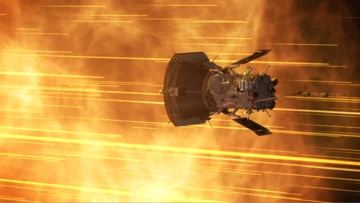
The Parker Solar Probe team was honored with the 2024 Robert J. Collier Trophy by the National Aeronautic Association. This annual award recognizes the most exceptional achievement in aeronautics and astronautics in America with respect to improving the performance, efficiency, and safety of air or space vehicles in the previous year. Professor Joe Giacalone and Associate Professor Kris Klein are both co-investigators on this mission.

Image
Parker Solar Probe in solar wind

Dr. Giacalone's core research interests include understanding the origin, acceleration, and propagation of cosmic rays, and other charged-particle species in the magnetic fields of space, and general topics in space plasma physics, and astrophysics.

Dr. Klein's research focuses on studying fundamental plasma phenomena that governs the dynamics of systems within our heliosphere as well as more distant astrophysical bodies.

LPL Research Scientist Dr. Mihailo Martinovic is an Affiliate with the Parker Solar Probe mission.


Image
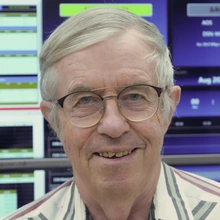
George Rieke

Regents Professor George Rieke has been named a University of Arizona Galileo Circle Fellow.

Dr. Rieke holds a B.A. in Physics from Oberlin College, and both an M.A. and Ph.D. in Physics from Harvard University. In 1970, he joined the Lunar and Planetary Laboratory (LPL) as a postdoctoral researcher, marking the beginning of a distinguished career at the University of Arizona. Throughout his tenure, Dr. Rieke has held several key roles in LPL, the Department of Planetary Sciences, the Department of Astronomy, and the Steward Observatory. In 2004, he was named Regents Professor for his exceptional abilities and achievement of national and international distinction. 

Professor Rieke is the Science Team Lead for the Mid-Infrared Instrument on the James Webb Space Telescope. He previously led the development of the Multiband Imaging Photometer for SIRTF instrument for the Spitzer Space Telescope. His current science is focused on the capabilities of these instruments. 

A prolific scholar, Dr. Rieke has co-authored more than 580 peer-reviewed publications which have received more than 58,000 citations, making him one of the most highly cited faculty members at the University of Arizona. Throughout his career, Dr. Rieke has mentored 29 Ph.D. students and supervised more than 30 postdoctoral fellows. In 2023, he was awarded the NASA Distinguished Public Service Medal, the highest honor NASA bestows on non-government employees. He is a member of the National Academy of Sciences.


Galileo Circle Fellows are academic scholars who demonstrate a deep understanding over a broad range of science, a willingness to think in a truly interdisciplinary way, and an ability to inspire colleagues and students alike.

Image
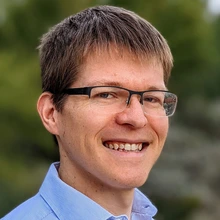
Kris Klein

Associate Professor Kristopher Klein has been named a University Distinguished Scholar.

Dr. Klein's research focuses on studying fundamental plasma phenomena that governs the dynamics of systems within our heliosphere as well as more distant astrophysical bodies. He has particular interest in identifying heating and energization mechanisms in turbulent plasmas, such as the Sun's extended atmosphere known as the solar wind, as well as evaluating the effects of the departure from local thermodynamic equilibrium on nearly collisionless plasmas which are ubiquitous in space environments. As part of this work, Prof. Klein is a co-developer of the Arbitrary Linear Plasma Solver (ALPS) numerical dispersion solver, an open source code used for quantifying the behavior of such non-equilibrium systems.

These systems are studied with a combination of analytic theory and numerical simulation, including large-scale nonlinear turbulence codes such as AstroGK, HVM, and gkeyll. These theoretical predictions are compared to in situ observations from spacecraft including NASA's Wind, MMS and Parker Solar Probe mission, as well as the upcoming HelioSwarm mission, which will fly nine spacecraft between the Earth and Moon to characterize the transport and dissipation of turbulent energy in space plasmas. By comparing theory with local plasma measurements, we aim to answer a variety of questions about the behavior of plasma in our solar system. Dr. Klein is the Deputy Principal Investigator of the HelioSwarm mission. 

Dr. Klein has advised multiple graduate students, two of whom have successfully defended their Ph.D.s at LPL. He advised a postdoctoral research associate who has since become a research scientist, and has taught four courses at U of A, ranging from introductory 100-level courses through advanced 500-level graduate courses. He has published 118 Articles and has an h-index of 38; his papers have accumulated over 4700 citations. 

Dr. Klein has been the recipient of both NASA’s Early Career Investigator Program Award and the American Physical Society’s Landau and Spitzer award for Outstanding Contributions in Plasma Physics. In 2024, Dr. Klein was awarded the Harvey Prize from the American Astronomical Society, in recognition of significant contributions in solar physics research made by an early career scientist. Dr. Klein was awarded for his outstanding contributions to the understanding of space plasma turbulence.


University of Arizona Distinguished Scholar Awards are granted to recently tenured and mid-career faculty who are making transformative contributions to their disciplines and to the university’s purpose, mission and values.

Image
Steve Kortenkamp

Dr. Steve Kortenkamp has been promoted to (full) Professor of Practice. Steve's research  focuses on science education, with an emphasis on developing and exploring techniques, including development of 3D tactile resources, for teaching astronomy to students who are blind. He is also interested in planet formation and orbital dynamics of asteroids, dust particles, planetesimals. Steve has authored children’s science books for struggling readers in grades K-8. Dr. Kortenkamp teaches Planetary Sciences General Education classes, leads the Teaching Teams program and has been actively engaged with revising the General Education curriculum at the University of Arizona.