


In Memoriam
Memoriam
Tom Teska

Former longtime LPL staff member Tom Teska passed away on March 15, 2013. Tom was the Manager for Mike Drake's Microprobe Lab from the early 1970s until 1998, when he retired.
Thomas M. Teska 79, passed away March 15, 2013. He was born in Chicago in 1933 to Emma and Thomas Teska. Surviving are his wife, Shelley Esterquest; son, John Teska; daughter, Jennifer Teska; grandson, Andrew and five stepchildren. Tom will be remembered by the many people with whom he shared his life in loving marriages, service to the Unitarian Church, and work at the University of Arizona. Through his hobbies, his gifts of charity, his good humor and his love, Tom gave so much to the people around him. He will be dearly missed.
A Memorial Service and Celebration of his life was held on Tuesday, March 26, 2013, at the Unitarian Universalist Church, 4831 E. 22nd St., Tucson. Memorial gifts in Tom's honor may be made to the charity of your choice.
PermalinkRandy Tufts

Randy Tufts, the co-discoverer of Kartchner Caverns who helped keep the underground wonder a secret for 14 years to guarantee its preservation, died Monday. He was 53. Tufts died at University Medical Center after a long battle with the rare blood disease known as myelodysplastic disorder syndrome, according to a statement issued by friends and family members.
Tufts was born in Tucson and graduated from Palo Verde High School. He went on to graduate in 1972 from the University of Arizona, majoring in geology and serving as student association president. While at the university, Tufts helped create and lead the Arizona Student Services Corp., which founded several student businesses to provide income for student services.
Tufts embarked on a 12-year career in public policy after leaving the UA. He helped lead the grass-roots organization Citizens Take the Initiative and helped found and direct Tucson Public Power, which challenged proposed rate increases of former utility Tucson Gas and Electric Co.
During the late 1990s, Tufts turned his attention to conducting research as a UA planetary scientist studying Europa, one of Jupiter's moons. He is credited with discovering the 600-mile San Andreas-like fault "Astypalaea" on Europa. Tufts earned a Ph.D. in geosciences at the UA at age 50.
He was diagnosed with MDS two years ago, and in November 2000 he received a bone-marrow transplant from his only sibling, Judy Rodin. The transplant took, and Tufts began to recover. Then in late January of this year, his body unexpectedly rejected the transplant and he fell ill.
Besides his wife and sister, Tufts is survived by his mother, Carol Tufts, of Tucson. Memorial donations may be made to the Tucson Light the Night Walk of the Desert Mountain States Chapter of The Leukemia & Lymphoma Society, Suite E-100, 2990 E. Northern Ave., Phoenix, AZ 85028.
Randy Tufts, Spelunker Who Kept a Secret, Is Dead at 53
Randy Tufts, 53; Discovered Kartchner Cave Complex
Dr. Bruce Randall "Randy" Tufts
Remembering Randy Tufts
Robert Watson

Robert E. Watson Jr., known to friends and family as "Bob," passed away on August 2nd, 2018, at the age of 72 years, in Tucson, AZ. Bob loved Tucson and spent many years there until his passing. He did move about the United States during his military years and settled in Minnesota working for Sperry Univac and other companies where he traveled around the world before moving back to Tucson. He loved his furry friends and had many pets over the years. As an advocate for the Humane Society he enjoyed supporting them with donations as well as a few adoptions. He also loved to take his dog Sadie everywhere he went, including to the Tucson Botanical Gardens. He enjoyed reading, using the internet, and watching movies on the subjects of Science Fiction and Fantasy, but loved all kinds. You can tell this by the hundreds (literally) of movies he had in his collection.
He served as a Captain and Missile Launch Officer in the Air Force, after which he obtained a Master’s Degree in computer science from the University of AZ. He spent most of his career developing computer programs and his last employer (before retiring) was the University of AZ where he worked at the Lunar Planetary Lab as Staff Engineer, specifically working on the Cassini project. Bob will be forever remembered by his family, daughters, Barbara (Shawn) Knoth and Sheron (Tim) Prinsen, brother, Edward (Cynthia) Watson. Bob will also be forever remembered by his numerous nephews and extended family and dear friends. He was preceded in death by his wife Sandra Watson (Clark), his parents, Robert Watson Sr. and Margarita Watson, Wayne L. Clark Jr and Elsa Clark and Grandparents.
PermalinkEwen Whitaker

Ewen A. Whitaker came to Tucson in 1960 with Gerard P. Kuiper to conduct a lunar mapping project. Whitaker soon found that his work was just what NASA needed, and played a pivotal role in the first lunar missions: Ranger, Surveyor, and Lunar Orbiter. The mapping project produced the first compositional maps of lava flows on the moon—maps made possible by Whitaker's pioneering use of groundbased differential UV/Infrared lunar photography. These maps were instrumental in the selection of landing sites for the Surveyor and Apollo missions. Along the way, Whitaker worked with Kuiper to build and grow the Lunar and Planetary Laboratory (LPL) into a leader in the field of planetary science. Ewen retired from LPL in 1987, but never gave up his research in lunar selenography and nomenclature (the subject of Whitaker's Mapping and Naming the Moon is the history of lunar maps and nomenclature).
Following his retirement, Ewen was a regular visitor to LPL, taking time away from hobbies like clock repair to participate in outreach events and help to answer questions about the moon or LPL history, fulfill requests for information, and archive lunar maps and glass observing plates. Scientists, reporters, amateur astronomers, and historians sought him out for his expertise. In 2011, he was awarded an honorary doctorate degree by the University of Arizona's College of Science, which recognized his "contributions to the UA, mankind and science." In 2014, he was interviewed extensively in the documentary Desert Moon.
For more information about Ewen Whitaker, visit:
Lunar and Planetary Laboratory: Its Founding and Early Years
Remembering Ewen A. Whitaker, 1922-2016
Ewen Whitaker remembers Gerard Kuiper (audio recording, 1974) (MP3)
Apollo & the BAA Lunar Section
PermalinkLaurel L. Wilkening
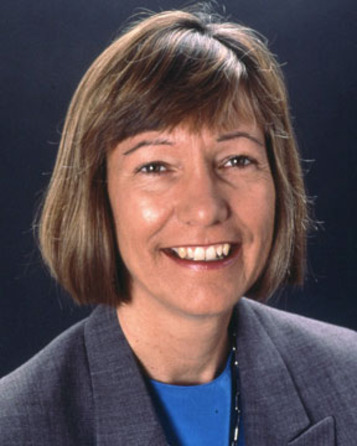
Cosmochemist Laurel L. Wilkening (1944-2019) began her career at LPL in 1973, joining the faculty as an Associate Professor. Her research focus was comets and meteorites; she was editor of the University of Arizona Press Space Science volume, Comets (1982). Professor Wilkening served as LPL Department Head and Director from 1981-1983 before moving on to other prestigious administrative positions, including service as Dean of the UA Graduate College (1987-1989) and also as Vice President for Research, Vice Provost, and Acting Dean of Sciences. During her scientific career, she served on many national commissions and committees related to the U.S. space program, including terms as Vice Chair of the National Commission on Space, Vice Chair of the Advisory Committee on the Future of the U.S. Space Programs, and Chair of the Space Policy Advisory Board.
From the beginning of her faculty career, Professor Wilkening was instrumental in the development of women's studies at the University of Arizona, teaming with Professor Myra Dinnerstein to advocate for creating an academic department; she served on the Women's Studies Advisory Council, which formed to generate financial and political support for the Women's Studies department. Professor Wilkening endowed The Myra Dinnerstein International Travel Fund for Dissertation Research on Women and made the lead monetary gift in support of the Women's Plaza of Honor, where she was honored with a gift by her husband, Godfrey Sill. Today, the Department of Gender and Women's Studies offers a B.A. with optional concentrations in Chicana/Latina Studies and Sexualities and Queer Studies concentrations; J.D./M.A. in conjunction with Rogers College of Law; a graduate certificate program and, since 2008, a Ph.D. program in Gender and Women's Studies that is already within the top six nationally.
Professor Wilkening achieved a number of firsts: at the University of Arizona, a she was the first person to serve as Dean of Sciences and first woman to serve as a Vice President. She was also the first woman to serve as Provost at the University of Washington, the first woman to serve as Chancellor at the University of California, Irvine, and the third woman to serve as a Chancellor of a University of California campus.
In 2001, Professor Wilkening was interviewed for the NASA Johnson Space Center Oral History Project. News of a bequest made by Dr. Wilkening in support of the LPL field trip program was announced in 2013.
Reed College Magazine Obituary
PermalinkWiesław Wiśniewski

Dr. Wieslaw Z. Wisniewski of the Lunar and Planetary Laboratory at the University of Arizona died suddenly and unexpectedly on February 28, 1994 at 62 years of age. He is survived by his wife and adult son who both live in Tucson. Born on May 2, 1931 in Poland, Wisniewski endured many hardships while surviving the Nazi occupation of Poland as a young boy, and later during the communist regime there.
In 1951 he began working as a High School Mathematics teacher. In 1952 he received an M.A. in Astronomy from Poznan University in Poland. Wisniewski then joined the staff at the Cracow Observatory at the Jagiellonian University as a Research Assistant in 1953, advancing through the ranks to Lecturer in 1954. From 1957 to 1959, he participated as a Scientist of the International Geophysical Year Expedition to Spitsbergen. He returned to the Cracow Observatory staff as a Senior Lecturer in 1959. During a leave of absence from the Cracow Observatory, starting in 1963, Wisniewski joined the staff at the recently established Lunar and Planetary Laboratory in Tucson, Arizona as a Research Associate, becoming an Assistant Professor in 1965. In 1967, he returned to the Cracow Observatory as an Assistant Professor before returning to the Lunar and Planetary Laboratory in 1971 where he remained for the rest of his career. He was a member of the American Astronomical Society, the Polish Astronomical Society, the Royal Astronomical Society, and the International Astronomical Union.
Wisniewski's scientific research interests during his lifetime were varied. His earliest works, between 1954 and 1956 were computing predictions for the occultations of stars by the Moon, published in the Cracow International Almanac. In 1957, he published work on the orbit of comet Harrington (1951k) in the I.A.U. Circulars. His work in the IGY Expedition to Spitsbergen resulted in a paper on the radioactive fallout there. Also resulting from this expedition was a paper on aurora observations from Spitsbergen. In 1964, Wisniewski confirmed that comets Harrington (1952 II) and Wolf (1925 I) were identical by computing the perturbations of the 1952 II elements back to 1925. The comet was subsequently renamed P/Wolf-Harrington.
Upon his arrival at the Lunar and Planetary Laboratory, he began work with Harold Johnson, observing often with a 28 inch telescope near Mount Bigelow in the Santa Catalina mountains north of Tucson. The landmark study of over 5000 bright stars in UBV and some stars in as many as 8 wavelengths was published in 1966. During the course of this work, observations were obtained for many other interesting objects, including observations of Seyfert Galaxies, RR Lyrae stars, and supernovae. His expertise and reputation as an observer became well known to his colleagues during this time.
Wisniewski's interests in the Solar System began to re-emerge when he participated in some observations of comet Kohoutek and later of minor planets. He collaborated with T. Faÿ in the first study of the nucleus of a comet, examining the light curve of P/d'Arrest in 1978. Most recently, he worked on the light curve and taxonomic observation of small solar system bodies, especially the near-Earth asteroids and comets, providing light curve observations of hundreds of asteroids and multi-color photometry of many others. He often participated in global campaigns to observe a particular object, the best examples being the campaigns to observe (951) Gaspra and (243) Ida which were both visited by the Galileo spacecraft as it made its way to Jupiter. He was able to obtain one of the early images of comet P/Shoemaker-Levy 9 a few nights after its discovery and was very much involved in the excitement of observing and learning about this unique comet. He would have been part of a global network of observers from the Lunar and Planetary Laboratory making optical coronographic observations and he would have been very pleased and thrilled by all the surprises that comet provided as it plunged into Jupiter this past July.
In his later years, Wisniewski spent a great deal of time at the telescope making single channel photometric observations of various objects and more recently began using CCD detectors in his work. Most of his recent observations were made using the 60 inch telescope at Mt. Lemmon near Tucson, the 61 inch telescope at Mt. Bigelow, and the 90 inch telescope at Kitt Peak, all of the Steward Observatory. He also traveled to the southern hemisphere, especially to Cerro Tololo. Always one on the lookout for humor in the world around him, shortly after learning of the impending impact of P/Shoemaker-Levy 9 on Jupiter, he found the following quote in a book review: " … the astronomer Jérôme Lalande was arrested in 1773 for a breach of the peace, when he alarmed the French public with a prediction of a cometary collision." That was Wieslaw's way of warning colleagues to take care in their dealings with the public as the impact time approached.
Wieslaw was a dear friend to all those around him. His wit, wisdom, and willingness to help and encourage those around him will be greatly missed by all who knew him.
American Astronomical Society Obituary: Wieslaw Z. Wisniewski (1931–1994)
UA Library Special Collections: Wieslaw Z. Wisniewski papers
Benjamin Zellner

Dr. Benjamin Holmes Zellner III of Culloden passed away December 6, 2021.
Dr. Zellner was the son of the late B. H. Zellner II and Euna Dumas Zellner Pippin. He was born in Forsyth, GA. April 16, 1942. His wife Ida Abercombie Zellner preceded him in death. He was a member of Sharon Primitive Baptist Church.
Survivors include his daughter, Susan Mundy (Jay) of Churchville, VA. and son Andrew Zellner of Bridgeport, AL, and brother Jimmy Zellner of Culloden, GA. along with three grandchildren.
He was senior class president of the Mary Person High School class of 1960. In 1964 he graduated from Georgia Tech with a bachelor in physic. He then received a doctorate in astronomy from the University of Arizona. Dr. Zellner then spent a number of years doing research for the University of Arizona. Next he worked for a NASA contractor on the Hubbard Space Telescope out of Baltimore Maryland. He then spent his final working years as a professor of astronomy at Georgia Southern University, Statesboro Georgia.
Benjamin H. Zellner, III (1942-2021) - American Astronomical Society
Permalink